Snow Removal
Best Snow Shovels and Pushers (2026): Ergonomic, Wheeled and Wide
Quick answer
The best snow shovel for most driveways is a pusher you never lift, and the Snowcaster 30SNC leads: a 36-inch wheeled, bi-directional blade that windrows snow aside. For steps and scooping, the Snow Joe Shovelution adds a spring-assist handle. One shovelful of average snow weighs about 3 pounds; wet snow doubles it.
The best shovel is the one that moves snow with the least lifting. Pushers slide snow to the edge of the driveway, ergonomic shovels reduce bending when you must lift, and steel blades break up the packed ridge a plow leaves behind. Most homes are best served by two tools: a wide pusher for flat surfaces and a smaller shovel for steps and the final pile.
Our top pick is the The Snowcaster 30SNC 36 in. Wheeled Snow Shovel Pusher at $131.99. The Snow Joe Shovelution ($59.97) is the best lifting shovel for back concerns, the Snowplow 36-inch is the best straight pusher and the True Temper 18-inch combo ($34.99) is the dependable everyday shovel. If shoveling is starting to feel like too much, the snow blower size calculator shows what machine would replace it.
On this page
- How much does a shovelful of snow weigh?
- Is snow shoveling hard on your heart?
- What is the difference between a snow shovel and a snow pusher?
- Beginner picks: everyday snow shovels under $60
- Intermediate picks: pushers for driveways and ice
- Expert picks: the least strain for the most snow
- How do the snow shovels compare?
- How do I shovel snow without hurting my back?
- When should I stop shoveling and buy a snow blower or electric shovel?
- What else do I need besides a snow shovel?
How much does a shovelful of snow weigh?
More than it looks. The National Weather Service describes snow by its snow-to-liquid ratio, and since water weighs 62.4 pounds per cubic foot, those ratios convert to weight. A moderately loaded 18-inch blade holds about half a cubic foot. Clearing 6 inches from a 24 by 24-foot driveway moves 288 cubic feet of snow, around 576 shovelfuls if every scoop were lifted.
| Snow type | Snow-to-liquid ratio | Weight per cubic ft | Per half-cubic-foot shovelful | 6 in on a 24 x 24 ft driveway |
|---|---|---|---|---|
| Dry powder | 20:1 | 3.1 lb | About 1.6 lb | About 900 lb |
| Average snow | 10:1 | 6.2 lb | About 3.1 lb | About 1,800 lb |
| Heavy wet snow | 5:1 | 12.5 lb | About 6.2 lb | About 3,590 lb |
Weight = 62.4 lb per cubic foot of water divided by the snow-to-liquid ratio. Plow berms and settled snow are heavier.
Is snow shoveling hard on your heart?
It can be. The American Heart Association warns that shoveling heavy snow can strain the heart, especially for people with heart disease or risk factors such as high blood pressure, diabetes, smoking or a sedentary lifestyle, and older adults. Cold air, sudden heavy exertion and lifting with the arms while holding your breath combine to raise heart rate and blood pressure quickly. The same guidance points to simple habits:
- Push rather than lift. A wide or wheeled pusher moves snow without the lifting that strains the heart and back.
- Pace yourself. Take frequent breaks, clear in stages during the storm and do not try to finish in one push.
- Lift small loads when you must lift. Fill the blade partway, bend your knees and do not twist to throw.
- Skip heavy meals and alcohol right before or after shoveling.
- Know the warning signs. Chest pain or pressure, pain spreading to the arm, back, neck or jaw, shortness of breath, lightheadedness or nausea mean stop and call 911.
- Talk to your doctor before shoveling if you have a heart condition or risk factors. If you have been told to avoid heavy exertion, use a snow blower or hire help.
This is research-based guidance, not medical advice.
What is the difference between a snow shovel and a snow pusher?
A snow shovel has a deeper, cupped blade designed to scoop and lift. A snow pusher has a wide, shallow blade designed to slide snow along the ground to the edge of the driveway without lifting. Pushers are faster and easier on flat pavement in snow up to about 6 inches; shovels are necessary for steps, tall piles and throwing snow over a bank. See snow pusher vs snow shovel for the head-to-head.
| Type | Example | Blade width | Lifting required | Best for | Watch out for |
|---|---|---|---|---|---|
| Wheeled bi-directional pusher | Snowcaster 30SNC | 36 in | None | Driveways, people who should not lift | Needs a flat, open surface |
| Wide straight pusher | The Snowplow 36 in | 36 in | None | Concrete, pavers, decks | Heavy wet snow builds up fast |
| Wide pusher, steel core | Suncast 36 in | 36 in | None | Light snow on wide surfaces | Too wide for deep snow |
| Steel blade pusher | Garant Nordic 24 in | 24 in | Little | Packed snow, thin ice, plow ridge | Can scratch decks and pavers |
| Ergonomic bent-handle shovel | Garant Yukon 18 in | 18 in | Some, less bending | Frequent shovelers | Keep loads small |
| Spring-assist shovel | Snow Joe Shovelution | 18 in | Some, with leverage | Back concerns, medium to heavy snow | Learning the two-handle motion |
| Combination shovel and pusher | True Temper 1603400 | 18 in | Some | Steps, walks, decks | Small loads only in wet snow |
Beginner picks: everyday snow shovels under $60
For steps, walks, decks and small driveways, and as the second tool beside a pusher or snow blower.

True Temper 1603400 18 in. Poly Snow Shovel/Pusher
$34.99An 18-inch combination blade that both scoops and pushes, a nylon wear strip that will not mar decks or patios, an oversized D-grip for gloved hands and a 37.4-inch ergonomic steel handle.
Best for: steps, walks and decks
Check price on Amazon
Snow Joe Shovelution SJ-SHLV02 Strain-Reducing Snow Shovel
$59.97A spring-assist second handle acts as a fulcrum that gives the lower hand lifting leverage, so you bend less on each lift, on an 18-inch poly blade with an aluminum strip and dual D-ring grips.
Best for: people who must lift but want less bending
Check price on AmazonIntermediate picks: pushers for driveways and ice
For clearing full driveways and sidewalks by hand in light to moderate snow, and for breaking up the packed ridge at the curb.

The Snowplow Original 36 in. Snow Pusher
$75.98A USA-made 36-inch pusher with a virgin UHMW polyethylene blade that the maker says sheds snow and self-sharpens with use, on a metal handle with twice the wall thickness of typical shovels and a patented brace.
Best for: concrete, pavers and decks
Check price on Amazon
Suncast 36 in. Steel Core Snow Pusher
$81.90A 36-inch non-stick graphite blade with a galvanized steel wear strip and a vinyl-wrapped steel core shaft, sized to clear wide driveways and sidewalks in fewer passes after light snowfalls.
Best for: wide driveways after 1 to 4 inches
Check price on Amazon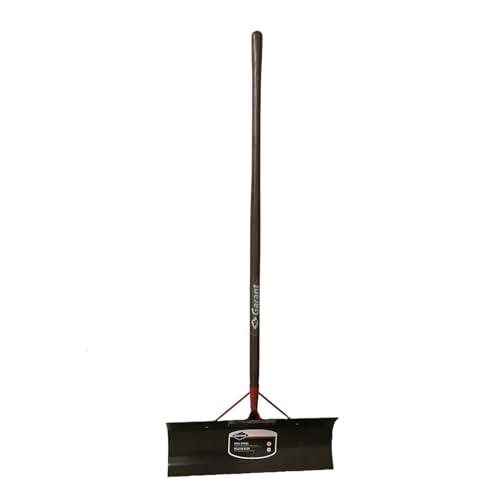
Garant Nordic NSP24D 24 in. Steel Blade Snow Pusher
$79.17A single-piece steel blade with steel reinforcements, a varnished hardwood handle that absorbs shock and a D-grip sized for gloves, built for scraping packed snow and thin ice off concrete.
Best for: the plow ridge and packed tire tracks
Check price on AmazonExpert picks: the least strain for the most snow
For people who clear a full driveway by hand all season and want to minimize lifting and bending.

The Snowcaster 30SNC 36 in. Wheeled Snow Shovel Pusher
$131.99Wheels carry the load and a 36-inch angled, bi-directional polypropylene blade windrows snow to either side, so you walk the driveway instead of lifting. USA-made, contractor-grade and backed by a limited one-year warranty.
Best for: clearing a driveway without lifting
Check price on Amazon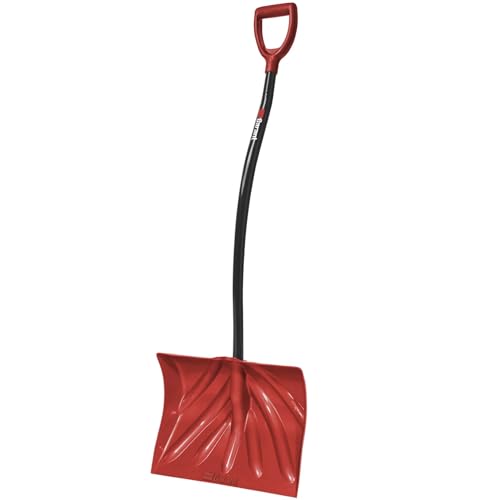
Garant Yukon YPM18EAKD 18 in. Ergonomic Snow Shovel
$92.58A curved, lightweight aluminum handle designed to reduce back strain on an 18-inch blade that both pushes and scoops, with a knock-down design and materials rated for very low temperatures.
Best for: frequent shovelers who still need to lift
Check price on AmazonWho should not buy this tier: Anyone with a heart condition, recent heart event or a doctor's advice to avoid heavy exertion, and anyone clearing a large driveway of regular 8-plus-inch or wet storms. No shovel design removes the exertion of moving 1,800 to 3,600 pounds of snow; a battery snow blower or a plow service is the safer choice.
How do the snow shovels compare?
| Model | Price | Type | Width |
|---|---|---|---|
| The Snowcaster 30SNC 36 in. Wheeled Snow Shovel Pusher | $131.99 | wheeled bi directional pusher | 36 in |
| Garant Yukon YPM18EAKD 18 in. Ergonomic Snow Shovel | $92.58 | ergonomic scoop shovel | 18 in |
| The Snowplow Original 36 in. Snow Pusher | $75.98 | wide pusher | 36 in |
| Suncast 36 in. Steel Core Snow Pusher | $81.90 | wide pusher | 36 in |
| Garant Nordic NSP24D 24 in. Steel Blade Snow Pusher | $79.17 | steel blade pusher | 24 in |
| Snow Joe Shovelution SJ-SHLV02 Strain-Reducing Snow Shovel | $59.97 | spring assist ergonomic shovel | 18 in |
| True Temper 1603400 18 in. Poly Snow Shovel/Pusher | $34.99 | combination shovel and pusher | 18 in |
How do I shovel snow without hurting my back?
- Warm up first. Walk around for a few minutes and stretch before picking up the shovel. Cold muscles strain more easily.
- Push whenever possible. Push snow to the edge of the driveway with a wide pusher and lift only the final pile.
- Keep loads small. Fill the blade partway, especially in wet snow where a full blade can weigh over 6 pounds.
- Lift with your legs. Bend at the knees, keep your back straight and the load close to your body.
- Turn your feet, not your spine. Step in the direction you are throwing. Never twist or throw snow over your shoulder.
- Clear in stages. Clear every few inches during a long storm rather than waiting for a foot of settled snow, and rest often.
- Treat the surface afterward. Spread a pet-safe deicer such as Safe Paw so you do not slip on refrozen patches.
When should I stop shoveling and buy a snow blower or electric shovel?
When shoveling takes longer than about 30 minutes per storm, when storms regularly exceed 6 inches or are wet, when there is a plow berm every time, or when your doctor has told you to avoid heavy exertion. An EGO SNS1201 cordless snow shovel removes the lifting on steps and walks for about $359.00. For driveways, a 21-inch EGO SNT2122 clears a two-car driveway in about 8 minutes, and a two-stage handles berms; see snow blowers for small driveways and the beginner snow removal setup.
What else do I need besides a snow shovel?
- Ice melt and a spreader. Safe Paw is salt-free and chloride-free, effective to -2 degrees F, and a Chapin SaltPro hand spreader spreads it evenly on steps and walks.
- A roof rake. Heavy snow on low-pitch roofs can cause ice dams. The Extreme Max 21-foot roof rake and SNOWPEELER 30-foot rake work from the ground, with no ladder.
- Driveway markers. Reflective stakes show where the edges are when snow covers them.
- Boots with traction. Most shoveling injuries are slips; wear ice cleats on packed snow.
Snow tools also make good gifts for older parents; see snow season gifts.
How we chose
We did not test these products in person. Picks are researched from manufacturer specifications and owner manuals, engine and safety certifications where they apply, warranty terms, public recall records, and the recurring themes in verified owner reviews. We favor established brands with large review counts and parts support, match each pick to a real yard size or task, and place it in the tier where its price and capability actually belong.
Frequently asked questions
What is the best snow shovel for a driveway?
A wide pusher is best for a driveway because it moves snow without lifting. The Snowcaster 30SNC wheeled pusher has a 36-inch angled, bi-directional blade that windrows snow to the side while wheels carry the load. For straight pushing on concrete or pavers, The Snowplow 36-inch pusher is a strong choice. Keep a smaller shovel for steps and the final pile.
What is the best snow shovel for bad backs?
A wheeled pusher such as the Snowcaster 30SNC is the easiest on a back because it removes lifting entirely. When you must lift, the Snow Joe Shovelution spring-assist shovel gives the lower hand extra leverage so you bend less, and the Garant Yukon uses a curved aluminum handle designed to reduce back strain. Keep loads small either way.
Is shoveling snow dangerous for older adults?
It can be. The American Heart Association warns that shoveling heavy snow strains the heart, particularly for people with heart disease or risk factors and older adults. Push rather than lift, take frequent breaks and stop if you feel chest pain, shortness of breath or dizziness, and call 911. Anyone with a heart condition should talk to a doctor before shoveling.
Are wheeled snow shovels worth it?
Wheeled pushers are worth it for flat driveways and long walks in snow up to about 6 to 8 inches. The wheels carry the weight and an angled blade rolls snow to the side, so you walk instead of lifting. They are less useful on steps, gravel, narrow paths and deep or heavy wet snow, where a regular shovel or a snow blower is better.
What size snow shovel should I get?
Get an 18-inch shovel for scooping and steps, and a 24 to 36-inch pusher for driveways and sidewalks. Wider blades clear flat surfaces in fewer passes but become too heavy to push in deep or wet snow. An 18-inch blade loaded with half a cubic foot of wet snow weighs about 6 pounds, so smaller blades are easier on the body.
Is a steel or plastic snow shovel better?
Plastic and polyethylene blades are lighter and shed snow better, and they are gentler on decks and pavers. Steel blades such as the Garant Nordic pusher are better for breaking up packed snow, plow ridges and thin ice on concrete, but they are heavier and can scratch softer surfaces. Many homes keep one of each.
Researched, not professional advice. This page is compiled from published specifications, manuals, labels and owner-review consensus, not hands-on testing. Follow the manufacturer's instructions and product label, and consult a qualified professional where safety, chemicals, fuel or structures are involved. As an Amazon Associate we earn from qualifying purchases.