Mowers
Lawn Mower Maintenance: Schedule by Hours for Walk-Behinds and Riders
Quick answer
Change walk-behind mower oil after the first 5 hours, then every 50 hours or each season; clean the air filter every 25 hours; replace the spark plug yearly; sharpen blades every 20 to 25 hours; and clean the deck after each mow. Riders add oil filters, belts, grease points and tire pressure on the manual schedule.
Mowers rarely fail suddenly. They fail slowly from dirty oil, a clogged air filter, stale fuel, a dull blade or a caked deck, and every one of those is cheap to prevent. Basic maintenance also improves the cut, because a sharp, balanced blade on a clean deck lifts and slices grass instead of tearing it.
This guide gives the schedule by hours for walk-behind, riding and battery mowers, then each job: oil and filter, air filter, spark plug, blade sharpening and balancing, deck cleaning, tires and belts, battery mowers, fuel stabilizer and end-of-season care. The intervals are typical figures from Briggs & Stratton, Honda, Kohler and Kawasaki owner manuals. Your mower's manual sets its own numbers, and those win. If you are weighing ownership costs, the gas vs battery cost calculator adds up fuel and maintenance.
On this page
- What maintenance does a lawn mower need?
- How often should you service a lawn mower?
- How do I change the oil in a lawn mower?
- How often should I clean or replace the mower air filter?
- When should I replace the lawn mower spark plug?
- How do I sharpen and balance a lawn mower blade?
- How do I clean under a mower deck?
- How do I maintain belts, tires and grease points on a riding mower?
- What maintenance does a battery lawn mower need?
- Should I use fuel stabilizer in my lawn mower?
- How do I winterize a lawn mower at the end of the season?
- When is a lawn mower worth repairing instead of replacing?
- What mower maintenance gear is worth buying?
- How do I tune up a lawn mower step by step?
What maintenance does a lawn mower need?
Lawn mower maintenance is the routine care of the engine or motor, blade, deck and drive that keeps a mower starting, cutting cleanly and running safely. For a gas mower that means oil, air filter, spark plug, fuel and blade care. Riding mowers and zero-turns add an oil filter, fuel filter, belts, grease fittings, tires, a 12-volt starting battery and, on some models, transmission service. Battery mowers drop all the engine work but still need blade, deck and battery care.
Most homeowners mow 20 to 40 hours a season on a walk-behind and more on a rider for larger properties, so many hour-based jobs line up with once or twice a year. Do whichever comes first, the hours or the season.
How often should you service a lawn mower?
| Task | Gas walk-behind | Riding mower or zero-turn | Battery mower |
|---|---|---|---|
| Check oil level | Before each use | Before each use | Not applicable |
| First oil change | After the break-in hours in the manual, often 5 | After the break-in hours in the manual, often 5 to 8 | Not applicable |
| Oil change | Every 50 hours or each season | Every 50 to 100 hours or yearly, per manual | Not applicable |
| Oil filter | Most have none | At each oil change or every other, per manual | Not applicable |
| Air filter | Clean every 25 hours; replace yearly or sooner in dust | Pre-cleaner every 25 hours; cartridge about every 100 hours or yearly | Not applicable |
| Spark plug | Inspect; replace yearly or every 100 hours | Same; V-twins have two | Not applicable |
| Blade sharpening | Every 20 to 25 hours | Every 20 to 25 hours, all blades as a set | Every 20 to 25 hours |
| Deck cleaning | After each mow | After each mow | After each mow, per the water rating |
| Drive and deck belts | Inspect drive belt each season (self-propelled) | Inspect every 25 to 50 hours; replace when cracked or glazed | Inspect drive belt if fitted |
| Grease fittings | Wheels or height adjusters if the manual lists them | Spindles, front axle and pivots, often every 25 to 50 hours | Per manual |
| Tire pressure | Pneumatic tires only | Every 25 hours; front and rear differ | Pneumatic tires only |
| Fuel filter | Some models; per manual | Yearly or every 100 hours | Not applicable |
| Battery care | Starter battery on electric-start models | 12V battery: clean terminals, maintain charge in storage | Charge per manual, store indoors |
Typical intervals drawn from major engine and mower manufacturer manuals. Dusty, sandy or heavy-use conditions shorten them. Your operator manual takes priority.
How do I change the oil in a lawn mower?
Walk-behind mowers often have no drain plug. Run the engine a few minutes so the oil flows, shut it off, disconnect the spark plug wire and let the muffler cool. Then either use an oil extractor pump through the fill tube, or tip the mower the way the manual shows, usually with the air filter and carburetor side up so oil does not soak the filter, and drain through the fill tube into a pan. Refill slowly with the oil the manual lists (commonly SAE 30 for warm weather or 10W-30 for varying temperatures) to the full mark. Capacities are small, often about a pint or less, so add a little at a time and check the dipstick.
Riding mowers and zero-turns usually have a drain valve or hose. Warm the engine, park on level ground, set the brake, remove the key, and drain into a pan. Replace the oil filter if due, wiping a film of fresh oil on the new gasket and tightening by hand as directed. Refill to the full mark and check for leaks. Recycle used oil and filters at an auto parts store.
How often should I clean or replace the mower air filter?
Clean or check it every 25 hours and replace a paper filter at least once a year, more often if you mow dry, dusty or sandy lawns or collect leaves. A clogged filter starves the engine of air, which causes hard starting, black smoke, lost power and wasted fuel. A torn filter is worse, because dirt goes straight into the engine.
Tap paper cartridges gently to remove loose dirt; do not blow compressed air through them or wash them. Foam pre-cleaners and foam filters can be washed in warm soapy water, rinsed and dried completely, and lightly oiled only if the manual says so. Never run the engine without the filter installed. Buy the exact filter part number for your engine model.
When should I replace the lawn mower spark plug?
Replace it once a year or every 100 hours, and inspect it whenever the mower is hard to start. A replacement spark plug costs a few dollars; use the exact plug listed in your manual and set the gap with a feeler gauge. V-twin riders have two plugs, so replace both.
The old plug tells you something. Light tan deposits are normal. Black, dry soot points to a dirty air filter or a rich mixture. Wet, oily deposits can mean overfilled oil or a mower tipped the wrong way. Remove and install the plug only with the engine cool, and thread it in by hand before tightening so you do not cross-thread the aluminum head.
How do I sharpen and balance a lawn mower blade?
First make the mower safe: engine off, key out, and spark plug wire disconnected, or battery and safety key removed on a battery mower. Wear heavy gloves.
- Get access. Tip a walk-behind with the air filter and carburetor side up, as the manual directs. Raise a rider with a lift such as the MoJack EZ MAX 45001 Riding Mower Lift, which raises the front 24 inches and handles 450 pounds, or the drive-on MoJack ZR350 45005 Riding Mower Lift for lighter riders. Follow the lift's instructions, chock the wheels and set the parking brake. Never work under a mower held only by a jack.
- Mark and remove. Mark the bottom of the blade with paint, block it with a piece of wood and remove the bolt.
- Sharpen. Clamp the blade in a vise and file or grind along the original cutting angle, removing equal metal from both ends. Stop at a clean, even edge; a razor edge chips quickly. Keep a grinder moving so the steel does not overheat and turn blue.
- Balance. Hang the blade on a blade balancer or a nail. If one end drops, take a little more off that end until it hangs level.
- Replace instead if the blade is bent, cracked, or worn thin at the curved lift section.
- Reinstall the correct side down and tighten the bolt to the torque in the manual.
For Husqvarna 48-inch riders, OEM Husqvarna 48 in. Mulching Blades (3 Pack) ($31.95) or Husqvarna 48 in. High-Lift Bagging Blades (3 Pack) are inexpensive enough that many owners keep a spare set sharpened and swap them in.
How do I clean under a mower deck?
Clean the deck after each mow, while the clippings are still soft. With the engine off, the blade stopped and the spark plug wire disconnected, scrape caked grass from the underside with a plastic scraper or putty knife. Built-up grass blocks airflow, which ruins the lift that mulching and bagging depend on, and it holds moisture against the steel.
Many mowers have a deck washout port that connects to a garden hose; the YARDMAX YG2860 22 in. Select PACE Self-Propelled Gas Mower, 201cc, for example, lists a deck cleanout port. Follow the manual on running the blade while using it. Do not pressure wash the engine, bearings or electrical parts. Battery mowers vary by water rating: the Greenworks 60V 21 in. Push Mower Kit lists an IPX4 steel deck, which resists splashing, and the EGO POWER+ LM2206SP 22 in. Aluminum Deck Self-Propelled Mower Kit uses a cast aluminum deck that will not rust. Brush them clean rather than hosing unless the manual allows it.
How do I maintain belts, tires and grease points on a riding mower?
- Belts: with the engine off and the key out, check the deck and drive belts for cracks, fraying, glazing and missing chunks. A squeal, burning smell or a deck that bogs down in normal grass points to a worn or loose belt. Replace with the manual's part number and follow the belt routing diagram.
- Tires: set pressure to the sidewall or manual figure; front and rear usually differ. Uneven pressure makes the deck cut unevenly and hurts traction on slopes.
- Grease: grease the spindles, front axle and pivots that have fittings at the manual interval. Wipe the fitting first so you do not pump dirt in.
- Transmission: some zero-turn transaxles are serviceable, such as the Hydro-Gear ZT-3100 on the Husqvarna MZ61 61 in. Zero Turn Mower with ROPS; follow the manual's fluid and filter interval.
- 12V battery: clean corroded terminals and keep the battery charged in storage with a maintainer such as a Battery Tender Junior.
What maintenance does a battery lawn mower need?
Much less than gas, but not none. Sharpen or replace the blade on the same 20 to 25-hour schedule, clean the deck after each mow, and keep the wheels and height adjusters free of packed grass. Electric riders like the EGO POWER+ T6 TR4204 42 in. Electric Lawn Tractor list belt-free blade motors, which removes deck belts from the list.
Battery care matters most, because the pack is the costliest part. Let a hot pack cool before charging, charge it on the maker's charger indoors at room temperature, store it indoors out of heat and freezing, and follow the manual on storage charge level. Never charge or use a battery that is swollen, cracked, leaking or damaged; take it to a battery recycling drop-off. Always remove the battery and safety key before touching the blade.
Should I use fuel stabilizer in my lawn mower?
Yes, in any fuel that will not be used within about a month. Gasoline starts to degrade within weeks, and ethanol-blended fuel absorbs moisture, which leads to varnish in the carburetor, hard starting and surging, the most common small-engine repair. Many engine makers advise using untreated fuel within about 30 days.
- Add a stabilizer such as STA-BIL Storage to the can when you buy the fuel, not months later.
- Use regular unleaded with no more than 10 percent ethanol. The EPA prohibits E15 in lawn mowers and other outdoor power equipment.
- Store fuel in an approved container such as a No-Spill gas can, away from living spaces, pilot lights and sunlight.
- Refuel only with the engine off and cool, outdoors, and wipe up spills before starting.
How do I winterize a lawn mower at the end of the season?
- Fuel: stabilize a full tank and run the engine so treated fuel reaches the carburetor, or drain and run it dry, exactly as the manual directs.
- Oil: change it so acidic combustion residue does not sit in the engine all winter.
- Blade: sharpen or replace it now, so the mower is ready on the first spring mow.
- Deck: scrape and clean it, and touch up bare steel.
- Batteries: bring battery-mower packs indoors; put riders' 12V batteries on a maintainer or remove them.
- Cover and store: park in a dry, ventilated space away from pilot lights. A fitted cover such as the Husqvarna 54 in. Full-Size Lawn Tractor Cover or EGO POWER+ CRM001 Riding Mower Cover keeps dust and moisture off riders stored in sheds or carports.
Short on storage? The shed size for a riding mower page shows the footprint a rider really needs.
When is a lawn mower worth repairing instead of replacing?
Routine parts such as blades, filters, plugs, belts and a carburetor cleaning are almost always worth doing. Replacement makes more sense when a budget push mower needs an engine rebuild, when the deck has rusted through, or when repairs would cost more than half the price of a comparable new mower.
If it is time, buy for your lawn rather than repeating the old mower. Battery walk-behinds like the EGO POWER+ LM2135SP 21 in. Select Cut Self-Propelled Mower Kit eliminate oil, filters, plugs and fuel entirely; see the best battery lawn mowers. For an acre or more, a rider such as the Husqvarna Z254F 54 in. Zero Turn Mower with a fabricated deck is built for years of service; see the best zero-turn mowers.
What mower maintenance gear is worth buying?
Blades, a mulch kit, a lift and a cover cover most rider maintenance. The lift pays for itself fastest, because it turns blade and belt work into a driveway job instead of a dealer visit. More options are in the best mower accessories.

MoJack EZ MAX 45001 Riding Mower Lift
$329.99Raises the front of most residential tractors and zero-turns 24 inches by hand crank or drill, with a 450-pound lift capacity and an 18.5 to 47.5-inch wheel span.
Best for: rider owners who sharpen their own blades
Check price on Amazon
MoJack ZR350 45005 Riding Mower Lift
$199.99A drive-on lift that raises up to 20 inches with a 350-pound front-end capacity and folds flat for storage.
Best for: lighter lawn tractors and 42 to 46-inch riders
Check price on Amazon
Husqvarna 48 in. Mulching Blades (3 Pack)
$31.95A 3-pack of hardened-steel, star-mount Husqvarna blades for 48-inch riders using OEM blade 532-173921, shaped for mulching and side discharge.
Best for: Husqvarna 48-inch rider owners
Check price on Amazon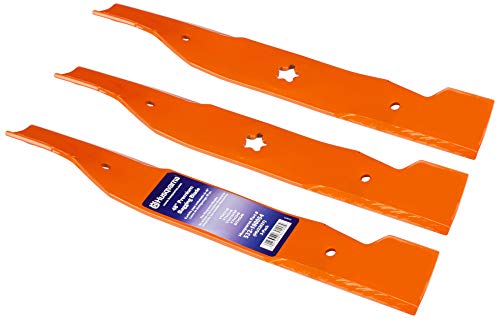
Husqvarna 48 in. High-Lift Bagging Blades (3 Pack)
$55.69High-lift OEM blades for Husqvarna 48-inch tractors that create stronger suction for bagging clippings and leaves.
Best for: Husqvarna 48-inch tractor owners who bag
Check price on Amazon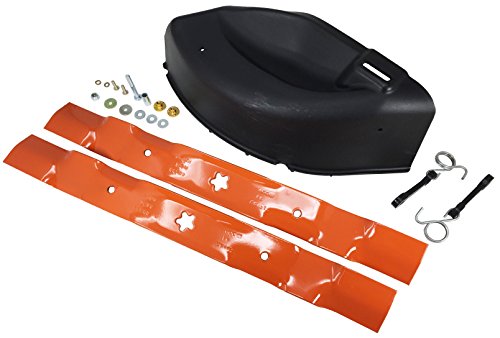
Husqvarna HU42 42 in. Mulch Kit with Blades
$44.95A mulch plate, mulching blades and hardware for Husqvarna 42-inch stamped decks on tractors and zero-turns; it does not fit FAB or ClearCut decks.
Best for: Husqvarna 42-inch stamped-deck owners
Check price on Amazon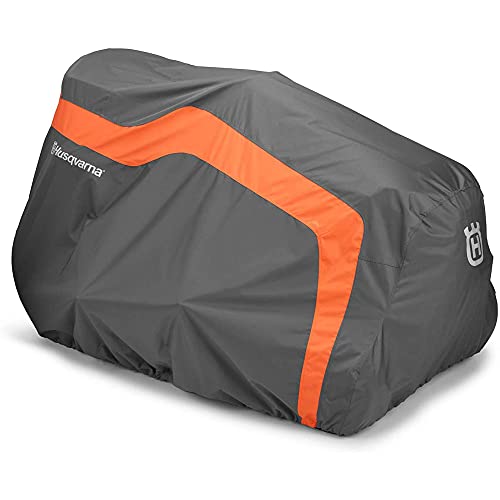
Husqvarna 54 in. Full-Size Lawn Tractor Cover
$109.00A water-resistant cover for Husqvarna tractors up to 54 inches with a vent that stops ballooning in wind and an elastic hem.
Best for: tractors stored outdoors or in an open shed
Check price on AmazonHow do I tune up a lawn mower step by step?
- Make it safe. Park on level ground, shut off the engine, remove the key, let it cool, and disconnect the spark plug wire or remove the battery and safety key.
- Change the oil. Drain the warm oil through the drain or fill tube, replace the oil filter on riders if due, and refill to the full mark.
- Service the air filter. Clean the foam pre-cleaner and replace a dirty paper cartridge with the correct part.
- Replace the spark plug. Install the plug listed in the manual, gapped to spec and threaded by hand before tightening.
- Sharpen and balance the blade. Remove the blade, sharpen along the original angle, balance it, and reinstall it the right side down at the specified torque.
- Clean the deck. Scrape caked grass from under the deck and clear the discharge chute.
- Check belts, tires and grease. Inspect belts, set tire pressure and grease the fittings the manual lists.
- Refuel and test. Add fresh stabilized E10 or lower fuel outdoors, reconnect the plug wire and test-run the mower.
How we chose
We did not test these products in person. Picks are researched from manufacturer specifications and owner manuals, engine and safety certifications where they apply, warranty terms, public recall records, and the recurring themes in verified owner reviews. We favor established brands with large review counts and parts support, match each pick to a real yard size or task, and place it in the tier where its price and capability actually belong.
Frequently asked questions
How often should I change the oil in my lawn mower?
For most gas walk-behind mowers, change the oil after the first 5 hours of break-in, then every 50 hours or once a season, whichever comes first. Riding mowers and zero-turns commonly run 50 to 100 hours between changes, often with an oil filter, depending on the engine manual. Check the oil level before every use, and change it more often in hot, dusty conditions.
How do I know if my mower blade is dull?
Look at the grass a day after mowing. Clean-cut tips mean the blade is fine; ragged, torn tips that turn brown or whitish mean it is dull. Other signs are uneven cutting, missed strips and a mower that bogs down in normal grass. As a rule of thumb, sharpen every 20 to 25 hours of mowing, or sooner if you hit sticks, rocks or sandy soil.
Which way should I tip my lawn mower to work on the blade?
Tip it the way your operator manual shows, which on most walk-behind mowers means keeping the air filter and carburetor side up. Tipping the wrong way lets oil run into the air filter and cylinder and fuel leak from the tank, causing hard starting and heavy smoke. Disconnect the spark plug wire first, and consider running the tank low before tipping.
Do I need to change the oil in a new lawn mower?
Yes, earlier than later. New engines shed tiny metal particles during break-in, so most manufacturers call for a first oil change after about 5 hours of use, and some rider engines after 5 to 8 hours. After that first change, switch to the regular interval in your manual, typically every 50 hours or once a season for walk-behind mowers.
What maintenance does an electric lawn mower need?
Battery and corded mowers need no oil, spark plugs, air filters or fuel. You still need to sharpen or replace the blade every 20 to 25 hours, clean grass from under the deck after each mow, check the wheels and height adjusters, and care for the battery by charging it indoors at room temperature and storing it out of heat and freezing. Never use a swollen or damaged battery.
Researched, not professional advice. This page is compiled from published specifications, manuals, labels and owner-review consensus, not hands-on testing. Follow the manufacturer's instructions and product label, and consult a qualified professional where safety, chemicals, fuel or structures are involved. As an Amazon Associate we earn from qualifying purchases.