Snow Removal
Best Battery Snow Blowers (2026): Runtime, Battery Size and Cars per Charge
Quick answer
The best battery snow blower is the EGO SNT2807, a 28-inch self-propelled two-stage that EGO rates at a 60-foot throw and a 32-car driveway of 8-inch snow on its two included 12.0Ah batteries. For two-car driveways, the 21-inch EGO SNT2122 kit clears 10 cars per charge.
Battery snow blowers stopped being sidewalk toys once EGO put two 56-volt batteries into a self-propelled two-stage housing. The best of them now match gas two-stage machines on intake height and throw for residential driveways, and they start instantly, run quietly and need no oil, spark plugs or fuel stabilizer.
Our top pick is the EGO Power+ SNT2807 28 in. Self-Propelled Two-Stage Snow Blower Kit at $2,308.28. The EGO SNT2405 kit ($1,649.00) is the sweet spot for most two and three-car driveways, and the EGO SNT2122 ($699.00) is the entry point. Compare fuel and battery costs in the gas vs battery cost calculator.
On this page
- What is the best battery snow blower?
- How many cars can a battery snow blower clear on one charge?
- What size battery do I need for an EGO snow blower?
- Battery snow blower vs gas: which should I buy?
- Beginner picks: cordless single-stage kits for paved driveways
- Intermediate picks: bigger batteries and self-propulsion
- Expert picks: battery two-stage machines that replace gas
- How do the best battery snow blowers compare on specs?
- How do I get the most runtime from a battery snow blower?
- Are battery snow blowers from RYOBI and Snow Joe worth buying?
What is the best battery snow blower?
For most buyers it is an EGO, because EGO makes every self-propelled two-stage battery machine in our verified Amazon catalog, and its 56V ARC Lithium batteries also run EGO mowers, blowers and trimmers. The right EGO depends on driveway size: the 21-inch single-stage models cover paved two-car driveways, the 24-inch two-stage models handle plow berms and gravel, and the 28-inch SNT2807 is for long driveways. Greenworks, RYOBI and Snow Joe make good single-stage machines for owners already on those battery platforms. Every EGO model is compared line by line on the best EGO snow blowers page.
How many cars can a battery snow blower clear on one charge?
EGO publishes a car-count rating for each machine: the number of parking spaces of 8-inch snow one charge should clear. Treat it as a best case measured in fresh, moderate snow. Heavy wet snow, a tall plow berm and batteries left in a freezing garage all reduce it. The useful comparison is cars per amp-hour of total battery, which shows how efficiently each machine uses its pack.
| Model | Type | Batteries | Total Ah | Rated clearing per charge | Cars per Ah |
|---|---|---|---|---|---|
| EGO SNT2807 | 28 in two-stage | 2 x 12.0Ah included | 24 | 32 cars, 8 in snow | 1.33 |
| EGO SNT2410 XP | 24 in two-stage | 2 x 10.0Ah recommended, sold separately | 20 | 24 cars, 8 in snow | 1.20 |
| EGO SNT2405 | 24 in two-stage | 2 x 7.5Ah included | 15 | 18 cars, 8 in snow | 1.20 |
| EGO SNT2420 | 24 in two-stage | 2 x 7.5Ah recommended, sold separately | 15 | 18 cars, 8 in snow | 1.20 |
| EGO SNT2125AP | 21 in auger-propelled | 2 x 7.5Ah included | 15 | 16 cars, 8 in snow | 1.07 |
| EGO SNT2122 | 21 in single-stage | 2 x 4.0Ah included | 8 | 10 cars, 8 in snow | 1.25 |
| Snow Joe 24V-X2-SB18 | 18 in single-stage | 2 x 4.0Ah (24V) included | 8 | Up to 14 tons of snow | Not comparable |
Ratings from EGO and Snow Joe listings. Cars per Ah is our division of the rated car count by total amp-hours. Greenworks and RYOBI do not publish a comparable per-charge figure for these models.
What size battery do I need for an EGO snow blower?
EGO's snow blowers use Peak Power, which draws on two 56V batteries at once, so plan on a matched pair. Match the pair to the machine and your driveway:
- SNT2122 (21-inch single-stage): ships with two 4.0Ah batteries, enough for 10 cars of 8-inch snow. A typical two-car driveway is well inside that.
- SNT2125AP and SNT2405: ship with two 7.5Ah batteries (EGO 7.5Ah batteries).
- SNT2420 (tool only): EGO recommends two 7.5Ah batteries for its 18-car rating.
- SNT2410 XP (tool only): EGO recommends two 10.0Ah batteries (EGO 10.0Ah batteries) for its 24-car rating.
- SNT2807: ships with two 12.0Ah batteries for 32 cars.
Smaller batteries still fit every model; they simply shorten runtime. If you already own two 5.0Ah EGO mower batteries, a tool-only machine plus those batteries is a reasonable start for a two-car driveway, and you can add larger packs later.
Battery snow blower vs gas: which should I buy?
Choose battery if your driveway fits comfortably inside one charge, you already own a compatible battery platform, or you hate engine maintenance and cold starts. Choose gas if the driveway is very long, you get multi-day storms that need repeated clearing before batteries can recharge, or you want the widest path for the least money. The deeper comparison is on battery vs gas snow blower.
| Factor | Battery two-stage | Gas two-stage |
|---|---|---|
| Example | EGO SNT2405 | PowerSmart 26 B&S |
| Starting | Push button, instant | Push-button electric start or recoil; check the manual for outlet requirements |
| Runtime | Limited by battery: 18 cars of 8 in snow rated | Refuel and keep going |
| Recharge time | Hours; spare batteries cost extra | Minutes to refuel |
| Maintenance | Keep batteries warm, clean and charged | Oil changes, spark plug, fuel stabilizer, carburetor care |
| Storage | Store batteries indoors; no stale fuel | Run dry or stabilize fuel for the off-season |
| Fumes and noise | None and low | Exhaust; never run in a closed garage |
| Cold weather | Capacity drops when batteries are cold | Cold starts are harder without electric start |
| Price at 24 in | About $1,200 to $1,650 | About $500 to $1,100 |
Beginner picks: cordless single-stage kits for paved driveways
For short to mid-length paved driveways, walks and patios where storms are usually under 8 inches. Both kits include batteries and a charger.

EGO Power+ SNT2122 21 in. Single-Stage Snow Blower Kit
$699.00A 6-inch steel auger, 21-inch path, 13-inch clearing height and 42-foot throw, with adjustable skid shoes, LED headlights, a quick-fold handle and IPX4 weather resistance. EGO covers the tool for 5 years and the batteries for 3.
Best for: two-car paved driveways and front walks
Check price on Amazon
Greenworks 80V 20 in. Brushless Snow Blower Kit
$529.99An 80V brushless motor clearing a 20-inch path in snow up to 10 inches deep with a 180-degree chute, sold with a 4Ah battery and fast charger. Greenworks advises warming a cold battery indoors for 10 minutes if the unit will not start.
Best for: households already on the Greenworks 80V platform
Check price on AmazonIntermediate picks: bigger batteries and self-propulsion
For two and three-car paved driveways that see heavier storms, and for owners who want the machine to pull itself forward.

EGO Power+ SNT2420 24 in. Two-Stage Snow Blower (Tool Only)
$1,199.00EGO's newest 24-inch two-stage adds 14-inch airless snow tread tires, a 200-degree joystick chute, IPX4 construction, LED headlights and a 5-year tool warranty. It is rated for 18 cars per charge with two 7.5Ah batteries, sold separately.
Best for: EGO owners who already have large 56V batteries
Check price on Amazon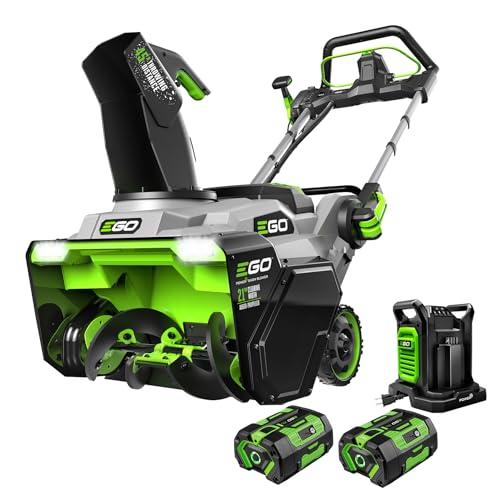
EGO Power+ SNT2125AP 21 in. Auger-Propelled Snow Blower Kit
$1,099.00The rubber auger pulls this 21-inch machine forward as it clears, and it adds heated grips and two LED headlights. EGO rates a 45-foot throw and 16 cars of 8-inch snow on the two included 7.5Ah batteries.
Best for: paved driveways for owners who find two-stage machines too heavy
Check price on Amazon
Greenworks Pro 60V 22 in. Brushless Single-Stage Snow Blower Kit
$699.99A 22-inch path with a 13-inch intake, a brushless motor, 30-foot discharge, a 180-degree chute with 45-degree deflector and dual battery ports with auto-switchover, sold with two 5.0Ah batteries and a dual-port charger.
Best for: Greenworks 60V households with paved driveways
Check price on AmazonExpert picks: battery two-stage machines that replace gas
For long or gravel driveways, plow berms and heavy, wet snow, from owners ready to retire a gas engine entirely.
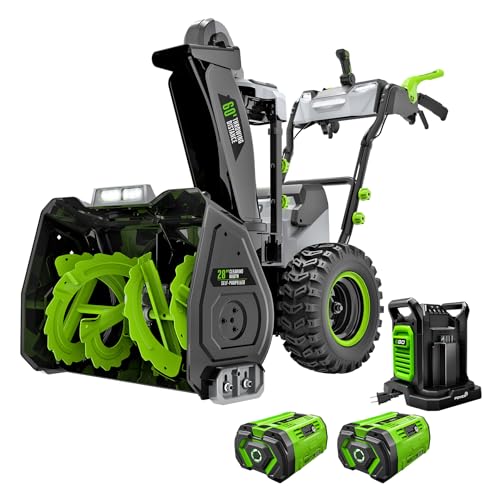
EGO Power+ SNT2807 28 in. Self-Propelled Two-Stage Snow Blower Kit
$2,308.28A 28-inch path, 21-inch intake, 60-foot throw, 16 by 5-inch snow tires, trigger-controlled steering, heated grips and a joystick chute, with two 12.0Ah batteries and a dual-port charger. Rated for a 32-car driveway of 8-inch snow per charge.
Best for: long driveways in heavy-snow regions
Check price on Amazon
EGO Power+ SNT2405 24 in. Self-Propelled Two-Stage Snow Blower Kit
$1,649.00Everything needed in one box: 24-inch path, 20-inch intake, 50-foot throw, variable-speed self-propel with reverse, four LEDs and two 7.5Ah batteries. Rated for 18 cars of 8-inch snow per charge.
Best for: two and three-car driveways with berms
Check price on AmazonWho should not buy this tier: Owners of a short paved driveway in a light-snow area, who will get the same result from the EGO SNT2122 for well under half the price. Also skip battery two-stage machines if you routinely clear several neighbors' driveways in one storm or face back-to-back storms without time to recharge; a gas two-stage refuels in minutes.
How do the best battery snow blowers compare on specs?
| Model | Price | Stages | Clearing width | Intake height | Throw distance | Voltage | Battery | Battery included |
|---|---|---|---|---|---|---|---|---|
| EGO Power+ SNT2807 28 in. Self-Propelled Two-Stage Snow Blower Kit | $2,308.28 | 2 | 28 in | 21 in | 60 ft | 56V | 12 Ah | Yes |
| EGO Power+ SNT2405 24 in. Self-Propelled Two-Stage Snow Blower Kit | $1,649.00 | 2 | 24 in | 20 in | 50 ft | 56V | 7.5 Ah | Yes |
| EGO Power+ SNT2420 24 in. Two-Stage Snow Blower (Tool Only) | $1,199.00 | 2 | 24 in | 20 in | 50 ft | 56V | - | No |
| EGO Power+ SNT2125AP 21 in. Auger-Propelled Snow Blower Kit | $1,099.00 | 1 | 21 in | - | 45 ft | 56V | 7.5 Ah | Yes |
| Greenworks Pro 60V 22 in. Brushless Single-Stage Snow Blower Kit | $699.99 | 1 | 22 in | 13 in | 30 ft | 60V | 5 Ah | Yes |
| EGO Power+ SNT2122 21 in. Single-Stage Snow Blower Kit | $699.00 | 1 | 21 in | 13 in | 42 ft | 56V | 4 Ah | Yes |
| Greenworks 80V 20 in. Brushless Snow Blower Kit | $529.99 | 1 | 20 in | - | - | 80V | 4 Ah | Yes |
How do I get the most runtime from a battery snow blower?
- Store and charge batteries indoors. Lithium batteries deliver less capacity when cold. Bring them in after each use and install them just before you start.
- Clear in stages during long storms. Two passes of 6 inches use less energy than one pass through 14 inches of settled, heavier snow.
- Lower auger speed when you do not need distance. EGO's variable auger speed control shortens throw and saves power on narrow paths.
- Handle the plow berm last. Dense berm snow drains a battery faster than anything else, so finish the driveway surface first.
- Keep a second pair for big storms if your driveway is near the rated limit. The battery platform also runs the rest of an intermediate battery yard setup.
EGO's full battery and charger advice is summarized in the battery snow blower buying guide.
Are battery snow blowers from RYOBI and Snow Joe worth buying?
They are worth it for owners already invested in those batteries and for smaller jobs. The RYOBI 40V HP 18-inch kit runs on the same 40V HP batteries as RYOBI's mowers and trimmers, and the Snow Joe 24V-X2-SB18 is an inexpensive way to clear walks and short driveways of light, fluffy snow, with a 10-inch depth and 20-foot throw. Neither is built for plow berms or 12-inch storms. If you are choosing a platform from scratch, compare EGO vs RYOBI and EGO vs Snow Joe first.
How we chose
We did not test these products in person. Picks are researched from manufacturer specifications and owner manuals, engine and safety certifications where they apply, warranty terms, public recall records, and the recurring themes in verified owner reviews. We favor established brands with large review counts and parts support, match each pick to a real yard size or task, and place it in the tier where its price and capability actually belong.
Frequently asked questions
What is the best battery snow blower for a large driveway?
The EGO SNT2807 is the best battery snow blower for a large driveway. It has a 28-inch clearing width, 21-inch intake and 60-foot throw, and EGO rates it at a 32-car driveway of 8-inch snow on the two included 12.0Ah batteries. For driveways around three cars, the 24-inch EGO SNT2405 kit, rated at 18 cars per charge, costs about $770 less.
What size battery for EGO snow blower do I need?
EGO snow blowers run on two 56V ARC Lithium batteries at once. The SNT2122 ships with two 4.0Ah packs for 10 cars of 8-inch snow, the SNT2405 and SNT2125AP ship with two 7.5Ah packs, the tool-only SNT2420 is rated with two 7.5Ah packs, the SNT2410 XP with two 10.0Ah packs, and the SNT2807 ships with two 12.0Ah packs for 32 cars.
Do battery snow blowers work in very cold weather?
Yes, but capacity drops when lithium batteries are cold, so runtime shrinks on subzero mornings. Store and charge batteries indoors and install them just before clearing. Greenworks tells owners of its 80V blower to warm a battery indoors for 10 minutes or more if the unit will not start. Gas engines have their own cold problem: hard pull-starts without electric start.
Can a battery snow blower handle heavy wet snow?
Two-stage battery models can. EGO says its Peak Power two-stage machines are designed for heavy, wet snow, with 20 to 21-inch intakes and 50 to 60-foot throws. Expect runtime well below the 8-inch fresh-snow rating when snow is wet. Single-stage battery models such as the Snow Joe 24V-X2-SB18 are best kept to light and moderate snow on paved surfaces.
How long does it take to charge an EGO snow blower battery?
Charge time depends on battery size and charger. Larger 7.5 to 12.0Ah batteries take noticeably longer than 4.0Ah packs, and a dual-port charger, included with the SNT2807, SNT2405, SNT2125AP and SNT2122 kits, charges two batteries in the same session. Check EGO's charger chart for exact times, and recharge right after each storm so batteries are ready for the next one.
Is a battery snow blower cheaper to own than gas?
Running costs are lower because there is no fuel, oil, spark plug or carburetor service, but purchase prices are higher and replacement batteries are expensive. A 24-inch battery two-stage costs about $1,200 to $1,650 against about $500 to $1,100 for gas. The gas vs battery cost calculator lets you compare your own fuel, maintenance and battery replacement numbers.
Researched, not professional advice. This page is compiled from published specifications, manuals, labels and owner-review consensus, not hands-on testing. Follow the manufacturer's instructions and product label, and consult a qualified professional where safety, chemicals, fuel or structures are involved. As an Amazon Associate we earn from qualifying purchases.