Lawn Care
Grass Seed Calculator: How Much Grass Seed Per Square Foot
Quick answer
For a new lawn, sow tall fescue at 6 to 8 pounds per 1,000 square feet, Kentucky bluegrass at 2 to 3, perennial ryegrass at 5 to 7 and hulled bermudagrass at 1 to 2. Overseeding takes about half. A 5,000 square foot tall fescue lawn needs about 35 pounds of seed from bare soil, or 17 to 20 pounds to overseed.
Seeding rate is the one number that decides whether a new lawn fills in or comes up thin and weedy, and it varies more than tenfold by grass type because seed size varies so much. Enter your lawn area, pick your grass and whether you are starting from bare soil or thickening an existing lawn, and the calculator returns pounds of seed, bags for common bag sizes and how many spreader passes it takes. Rates come from university extension guidance. Measure your area first with the lawn size calculator if you are unsure.
Grass seed calculator
Seed needed
Seed and spreaders for your lawn
Top matches update when you calculate.

Scotts Turf Builder Grass Seed Tall Fescue Mix, 16 lb
$58.00A 3-in-1 bag of tall fescue seed, fertilizer and soil improver rated for 1,330 sq ft of new lawn or 4,000 sq ft of overseeding, which keeps a cool-season reseed simple.
Best for: overseeding a cool-season lawn in spring or fall
Check price on Amazon
Pennington Kentucky 31 Tall Fescue Grass Seed, 40 lb
$67.00The classic economical K-31 tall fescue: a lighter green, drought-resistant turf for full sun to medium shade, with a 40 lb bag covering up to 8,000 sq ft.
Best for: large utility lawns on a budget
Check price on Amazon
Jonathan Green Black Beauty Tall Fescue Blend, 25 lb
$106.33A 100 percent turf-type tall fescue blend for sun and shade with a waxy leaf coating for heat tolerance, sized at 3,750 sq ft new or 7,500 sq ft overseeded.
Best for: a pure tall fescue lawn without bluegrass or rye
Check price on Amazon
Jonathan Green Black Beauty Ultra Grass Seed, 7 lb
$43.99A dark-green mix of tall fescue, Kentucky bluegrass and perennial ryegrass that Jonathan Green says roots up to 4 ft deep, rated for 1,400 sq ft new or 2,800 sq ft overseeded.
Best for: a darker, denser cool-season lawn
Check price on Amazon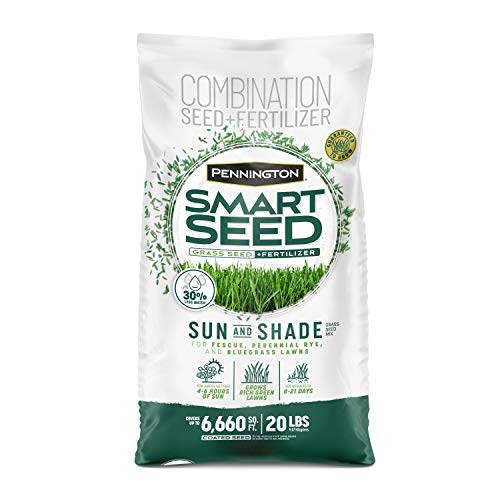
Pennington Smart Seed Sun and Shade Mix North, 20 lb
$57.21A seed-plus-fertilizer northern mix built for areas that get 4 to 6 hours of sun, with a 20 lb bag that Pennington rates for up to 6,660 sq ft.
Best for: partly shaded northern lawns
Check price on Amazon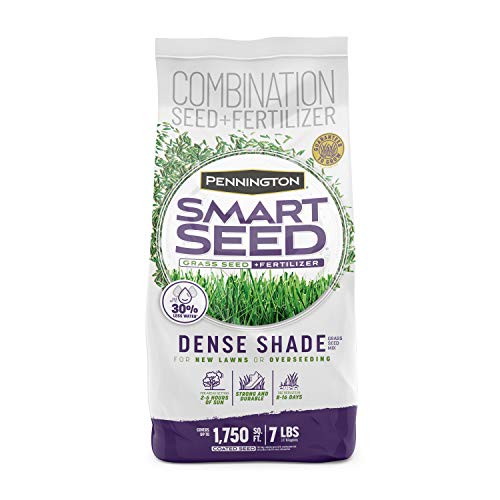
Pennington Smart Seed Dense Shade Mix, 7 lb
$28.47Perennial ryegrass, Kentucky bluegrass and tall fescue blended for spots that see only 2 to 6 hours of sun, with fertilizer included and 1,750 sq ft of coverage.
Best for: grass under trees and along north walls
Check price on Amazon
Jonathan Green Blue Panther Kentucky Bluegrass Seed, 25 lb
$167.24Pure Kentucky bluegrass for keeping or building a sod-quality KBG lawn; the 25 lb bag covers 20,000 sq ft new, but label germination is a slow 21 to 28 days.
Best for: full-sun northern lawns with patience for slow germination
Check price on Amazon
GreenView Pure Grass Seed Perennial Ryegrass Blend, 20 lb
$86.98A 99.9 percent weed-free perennial ryegrass blend that starts germinating in 7 to 12 days, covering 5,000 sq ft new or 10,000 sq ft overseeded.
Best for: fast fill-in and high-traffic overseeding
Check price on Amazon
Scotts Turf Builder Grass Seed Bermudagrass, 4 lb
$34.97Full-sun, high-drought-resistance bermudagrass seed with fertilizer and soil improver, meant for late spring or early summer seeding at 1,330 sq ft new.
Best for: sunny southern lawns
Check price on Amazon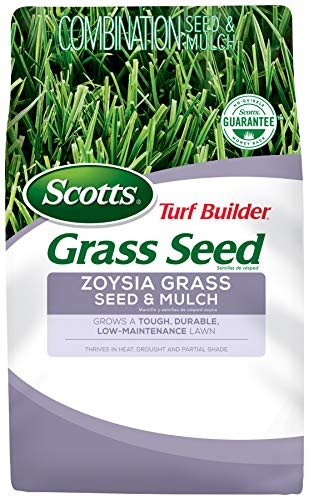
Scotts Turf Builder Zoysia Grass Seed and Mulch, 5 lb
$51.63Zoysia seed combined with mulch for full sun and light shade, rated to seed up to 2,000 sq ft as a low-maintenance, heat and drought tolerant lawn.
Best for: starting zoysia from seed instead of plugs
Check price on Amazon
Scotts Turf Builder Centipede Grass Seed and Mulch, 5 lb
$55.09Centipede seed with mulch for sandy, acidic, sunny sites, seeded in late spring or early summer at 665 sq ft new or 2,000 sq ft overseeded.
Best for: low-input lawns in the Southeast
Check price on Amazon
Scotts Turf Builder EdgeGuard DLX Broadcast Spreader
$94.97A pre-calibrated push broadcast spreader holding up to 15,000 sq ft of product, with an EdgeGuard shield that keeps granules off beds and driveways.
Best for: lawns up to about a third of an acre
Check price on Amazon
EarthWay 2150 Commercial 50 lb Broadcast Spreader
$279.99A commercial push spreader with 13 inch pneumatic tires, a slide-out grate, fully enclosed gearbox and a 3-hole drop with side-spread control for feathered edges.
Best for: rough or bumpy lawns
Check price on Amazon
Agri-Fab 130 lb Tow-Behind Broadcast Spreader
$249.99A universal-hitch tow spreader with a 10 to 12 ft spread width, enclosed gears and a hopper rated to cover up to half an acre per fill.
Best for: half-acre to acre lawns with a riding mower
Check price on Amazon
Brinly BS361BH-A Deluxe 175 lb Tow-Behind Broadcast Spreader
$439.00A 175 lb tow spreader with stainless hardware, enclosed nylon gearbox, directional spread pattern control, an extended reach handle and a weatherproof cover, sized for 1 acre plus.
Best for: acreage owners who want even edges
Check price on AmazonOn this page
How much grass seed do I need per 1,000 square feet?
| Grass | New lawn per 1,000 sq ft | Overseeding per 1,000 sq ft | New lawn, 5,000 sq ft | New lawn, 1 acre |
|---|---|---|---|---|
| Tall fescue | 6 to 8 lb | 3 to 4 lb | 35 lb | 305 lb |
| Kentucky bluegrass | 2 to 3 lb | 1 to 1.5 lb | 12.5 lb | 109 lb |
| Perennial ryegrass | 5 to 7 lb | 3 to 4 lb | 30 lb | 261 lb |
| Fine fescue | 4 to 5 lb | 2 to 2.5 lb | 22.5 lb | 196 lb |
| Sun and shade mix | 5 to 6 lb | 2.5 to 3 lb | 27.5 lb | 240 lb |
| Bermudagrass (hulled) | 1 to 2 lb | 0.5 to 1 lb | 7.5 lb | 65 lb |
| Zoysiagrass | 1 to 2 lb | 0.5 to 1 lb | 7.5 lb | 65 lb |
| Centipedegrass | 0.25 to 0.5 lb | 0.25 to 0.25 lb | 1.9 lb | 16 lb |
| Bahiagrass | 5 to 8 lb | 3 to 4 lb | 32.5 lb | 283 lb |
| Buffalograss (treated) | 2 to 3 lb | 1 to 1.5 lb | 12.5 lb | 109 lb |
When is the best time to plant grass seed?
| Grass | Type | Best window | Germination |
|---|---|---|---|
| Tall fescue, bluegrass, ryegrass, fine fescue | Cool-season | Late summer to early fall (soil 50 to 65 F); early spring is second best | 5 to 30 days (ryegrass fastest, bluegrass slowest) |
| Bermudagrass, zoysiagrass, centipede, bahia, buffalo | Warm-season | Late spring to early summer, once soil is above about 65 to 70 F | 7 to 21 days (zoysia and centipede slowest) |
| St. Augustinegrass | Warm-season | Grown from sod or plugs, not seed | Plugs spread over one to two seasons |
How is grass seed calculated?
The calculator uses pounds of seed = area in square feet / 1,000 x seeding rate, with the midpoint of the extension range for your grass type, or half of it for overseeding. Bags are rounded up. Coated seed products, such as bags with seed, fertilizer and a moisture coating, weigh more per square foot of coverage because much of the weight is coating, so for those products trust the coverage printed on the bag over a pounds-per-1,000 rate. The Scotts Turf Builder Grass Seed Tall Fescue Mix, 16 lb is labeled for 1,330 square feet new or 4,000 square feet overseeded, while the uncoated Pennington Kentucky 31 Tall Fescue Grass Seed, 40 lb covers up to 8,000 square feet.
More seed is not better. Sowing far above the recommended rate crowds seedlings, which then compete for water and light and become more prone to disease. Seed-to-soil contact matters more than the amount: rake it in lightly, roll it or tamp it, and keep the top half inch of soil consistently moist until the grass is mowed for the first time.
What is the difference between new lawn and overseeding rates?
A new lawn starts from bare, prepared soil, so every plant must come from seed and you sow the full rate. Overseeding adds seed into an existing lawn to thicken thin areas or introduce better varieties, so roughly half the rate is enough. Overseeding works best after core aeration or dethatching, which opens the soil surface: see dethatcher vs aerator and how to overseed a lawn. Do not apply most pre-emergent crabgrass preventers before seeding, since they also stop grass seed from germinating; the label will list the waiting period.
How do I spread grass seed evenly?
Use a spreader rather than hand-throwing. Split the seed in half and make two passes at right angles, which evens out the pattern and avoids stripes. A handheld broadcast unit like the Scotts Whirl Hand-Powered Spreader works for patches, a push broadcast spreader such as the Scotts Turf Builder EdgeGuard DLX Broadcast Spreader covers lawns up to about a third of an acre, and a pneumatic-tire model like the EarthWay 2150 Commercial 50 lb Broadcast Spreader handles bumpy ground. For acreage, a tow-behind unit such as the Agri-Fab 130 lb Tow-Behind Broadcast Spreader behind a lawn tractor seeds half an acre per fill. Start with the spreader setting on the seed bag, and close the hopper at the end of every pass. Compare types in drop vs broadcast spreaders.
Which grass seed should I buy?
Match the seed to your climate and sun. For cool-season lawns in full sun to partial shade, a tall fescue blend like the Jonathan Green Black Beauty Tall Fescue Blend, 25 lb is the drought-tolerant workhorse; for partly shaded northern lawns, a sun and shade mix like the Pennington Smart Seed Sun and Shade Mix North, 20 lb; for fast fill and high traffic, the GreenView Pure Grass Seed Perennial Ryegrass Blend, 20 lb; and for a sod-quality bluegrass lawn with patience for slow germination, the Jonathan Green Blue Panther Kentucky Bluegrass Seed, 25 lb. In the South, the Scotts Turf Builder Grass Seed Bermudagrass, 4 lb suits full sun, while St. Augustine only establishes from plugs such as the SodPods St. Augustine Seville Grass Plugs, 64 Count. Tiered picks are in the best grass seed, and grass-by-grass details are in grass types.
Frequently asked questions
How much grass seed do I need for 1,000 square feet?
For a new lawn, use about 7 pounds of tall fescue, 2.5 pounds of Kentucky bluegrass, 6 pounds of perennial ryegrass or 1.5 pounds of hulled bermudagrass per 1,000 square feet. For overseeding an existing lawn, use roughly half those amounts. Coated or seed-and-fertilizer products list their own coverage on the bag, and that label figure should take priority over these rates.
How much grass seed do I need for a half acre?
A half acre is 21,780 square feet. For a new tall fescue lawn at 7 pounds per 1,000 square feet, you need about 152 pounds of seed; for overseeding, about 76 pounds. For Kentucky bluegrass, you need about 54 pounds new or 27 to overseed. Buying seed in 25 to 50 pound bags and spreading with a tow-behind or push broadcast spreader keeps the job manageable.
Can you put down too much grass seed?
Yes. Sowing well above the recommended rate produces crowded seedlings that compete for water, light and nutrients, which leaves weak, thin grass that is more prone to disease. It also wastes money. Stay within the extension range for your grass type, spread in two perpendicular passes for even coverage, and focus instead on good seed-to-soil contact and consistent moisture.
Does grass seed grow if you just throw it on the ground?
Some will, but results are usually poor. Seed sitting on hard soil or thatch dries out, washes away or gets eaten by birds. For reliable germination, loosen the soil surface with a rake, core aerator or dethatcher, spread the seed, rake it lightly into the top quarter inch, and keep it moist. Coated seed and seed-with-mulch products tolerate less preparation but still need soil contact.
How long does grass seed take to grow?
Perennial ryegrass germinates in about 5 to 10 days, tall fescue in 7 to 14 days, and Kentucky bluegrass in 14 to 30 days in the right soil temperatures. Warm-season grasses need warm soil, with bermudagrass in about 7 to 14 days and zoysia and centipede taking 14 to 21 days or more. Plan on four to eight weeks before a new lawn is ready for regular use.
Researched, not professional advice. This page is compiled from published specifications, manuals, labels and owner-review consensus, not hands-on testing. Follow the manufacturer's instructions and product label, and consult a qualified professional where safety, chemicals, fuel or structures are involved. As an Amazon Associate we earn from qualifying purchases.