Lawn Care
Core Aerator vs Spike Aerator: Which Actually Works?
Quick answer
Choose a core aerator. It pulls 2 to 3 in plugs of soil out of the lawn, which is what relieves compaction, and university extension guidance consistently recommends it. A spike aerator only pokes holes, removes no soil and can press clay tighter around each hole. Spikes help only to open the surface before seeding a small patch.

Yard Butler ID-6C Manual Lawn Coring Aerator
$48.95A manual step aerator that pulls two soil cores per push.
Best for: spot-aerating small, compacted areas
Check price on Amazon
Yard Butler IM-7C Spike Grass Aerator
$48.95A manual step aerator with four 3 in solid spikes that remove no soil.
Best for: opening soil before watering in seed on a tiny lawn
Check price on AmazonCore aeration, also called plug aeration, uses hollow tines or open spoons to lift finger-sized cores of soil and drop them on the surface. The empty holes let air, water and roots move down, and the soil around them can expand. Spike aeration drives a solid tine into the ground and pulls it back out. Nothing is removed, so the soil is displaced sideways rather than loosened, and on heavy or wet clay the walls of each hole can end up denser than before.
The two Yard Butler tools make a fair comparison because they cost the same: the ID-6C core aerator ($48.95) and IM-7C spike aerator ($48.95). For a whole lawn with a riding mower, a tow-behind plug aerator such as the Brinly PA-42BH-A ($379.00) is the tool that pays off. The how to aerate a lawn guide covers technique.
On this page
How does a core aerator compare with a spike aerator?
| Factor | Core aerator | Spike aerator |
|---|---|---|
| What it does | Removes plugs of soil up to 3 in long | Pokes a hole; removes no soil |
| Relieves compaction | Yes, the method extension services recommend | Little |
| Effect on clay | Opens space for soil to loosen | Can press the soil around each hole tighter |
| Thatch | Cores mix soil into the thatch layer, helping it break down | Minimal effect |
| Seed-to-soil contact | Good; seed falls into open holes | Fair |
| Manual tool | Yard Butler ID-6C: two cores per push | Yard Butler IM-7C: four 3 in spikes |
| Tow-behind tool | Brinly PA-42BH-A (42 in) or Agri-Fab 48 in | Brinly 40 in combo: star tines to 2 in plus a spreader |
| What is left on the lawn | Soil cores that crumble back in after rain and mowing | Nothing visible |
| Best use | Compacted, clay or high-traffic lawns | Opening the surface before seeding a small area |
| Catalog price, tow models | $379.00 (Brinly) and $319.98 (Agri-Fab) | $384.00 (Brinly combo) |
Depths and features from Brinly, Agri-Fab and Yard Butler listings.
Which should you choose, core or spike?
Choose a core aerator if:
- Your lawn is compacted: water puddles or runs off, a screwdriver is hard to push in, or grass is thin along paths.
- You have clay soil, kids, dogs or regular foot traffic.
- You plan to overseed and want seed to land in open holes.
- Thatch is building up and you want it to break down.
A spike aerator is only reasonable if:
- You are seeding a small bare patch and want to rough up the surface.
- Your soil is sandy and not compacted, so there is little to relieve.
- You want to combine light perforation with seeding or liming in one pass, the job the Brinly combo is built for.
Spike aerator shoes and sandals fall into the same category: easy to sell, little measurable benefit.
Do spike aerators actually work?
Not for the problem most people buy them to fix. Compaction means soil particles are pressed together with too little pore space. Taking soil out is what creates room; pushing a spike in only moves the soil sideways. That is why turf researchers and extension services recommend core aeration and treat spiking as, at best, a light surface treatment.
Spiking is not harmful on sandy soil and can help water and seed get into a crusted surface. The Brinly combination aerator spreader makes sense for that use because it perforates and drops seed, fertilizer or lime in the same trip. It is a seeding tool, not a compaction fix.
Should you rent a core aerator or buy a tow-behind?
If you do not own a lawn tractor or zero-turn, rent a walk-behind core aerator once a year for the whole lawn and keep a manual coring tool for paths and dog runs. Walk-behind rental machines are heavy and pull hard, so bring a helper to load them.
If you own a rider and have half an acre or more, a tow-behind plug aerator costs about what a few years of rentals do and is ready when the soil is right. The Brinly PA-42BH-A uses heat-treated spoons in three independently rotating sections that limit turf tearing on turns, and the Agri-Fab 48 in uses 32 self-sharpening knives; both pull plugs up to 3 in and have trays for up to 175 lb of added weight. Tow aerators generally make fewer holes per pass than rental machines, so plan on two passes in different directions. A full kit is shown in the intermediate 1 acre lawn setup.
When should you core aerate?
When grass is growing strongly so it fills the holes. For cool-season grasses such as tall fescue and Kentucky bluegrass, that is late summer to early fall, which is also the best time to overseed. For warm-season grasses such as bermuda and zoysia, aerate from late spring to early summer after full green-up. Soil moisture matters more than the date: tines bounce off dry clay, so water about an inch a day or two before, or aerate after a soaking rain, and skip soggy soil. Aerate before applying pre-emergent herbicide, not after, because pulling cores through a treated surface can disrupt the barrier.
What do owners commonly report?
Tow-behind plug aerator owners commonly report that the tines barely penetrate dry, hard ground even with weight in the tray, and that watering first makes the difference. Manual core tool owners say they work but are tiring beyond small areas, and cores occasionally stick in the tubes. Spike tool owners generally find them easy to use and report little visible change in compacted lawns, which matches the research.
Core aerators worth owning
See the full best lawn aerators roundup.

Brinly PA-42BH-A 42 in Tow-Behind Plug Aerator
$379.00Heat-treated 16-gauge spoons pull plugs up to 3 in deep across three independently rotating sections, with a 175 lb weight tray and a folding tow bar.
Best for: riding-mower owners with uneven yards
Check price on Amazon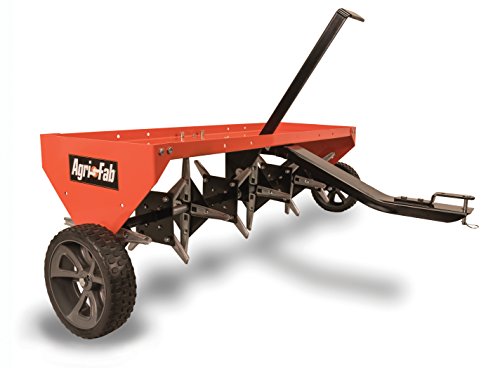
Agri-Fab 48 in Tow-Behind Plug Aerator
$319.98Thirty-two galvanized self-sharpening knives across 48 in, a 175 lb weight tray, flat-free tires and a transport handle reachable from the seat.
Best for: an acre with a lawn tractor
Check price on Amazon Yard Butler ID-6C Manual Lawn Coring Aerator
$48.95A long-handled steel step aerator that pulls two cores per push, right for worn paths and dog runs between annual aerations.
Best for: spot-aerating compacted patches
Check price on Amazon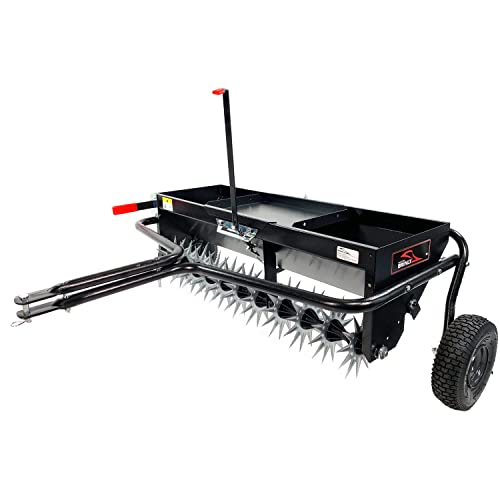
Brinly 40 in Tow-Behind Combination Aerator Spreader
$384.00Steel star tines perforate up to 2 in while a 100 lb hopper drops seed, fertilizer or lime; it spikes rather than pulling cores.
Best for: overseeding and liming, not compaction
Check price on AmazonHow we chose
We did not test these products in person. Picks are researched from manufacturer specifications and owner manuals, engine and safety certifications where they apply, warranty terms, public recall records, and the recurring themes in verified owner reviews. We favor established brands with large review counts and parts support, match each pick to a real yard size or task, and place it in the tier where its price and capability actually belong.
Frequently asked questions
Is core aeration better than spike aeration?
Yes. Core aeration removes plugs of soil, which is what relieves compaction and lets air, water and roots move down. Spike aeration only pushes holes into the ground and can compact the soil around them, especially in clay. Extension services recommend core aeration for compacted lawns. Spiking is a light surface treatment that helps mainly when seeding a small area.
Are spike aerator shoes worth it?
No, not for compaction. Spike shoes push short solid spikes into the surface with your body weight, which removes no soil and makes shallow holes with little lasting effect. They can slightly open a crusted surface before seeding. For a compacted lawn, rent a core aerator, use a tow-behind plug aerator, or use a manual coring tool like the Yard Butler ID-6C on small areas.
How deep should core aerator plugs be?
Aim for cores about 2 to 3 in long. Shallower cores do less for compaction. Catalog tow aerators such as the Brinly PA-42BH-A and Agri-Fab 48 in are rated to pull plugs up to 3 in. Depth depends heavily on moisture: water about an inch a day or two before so tines can penetrate, and add weight to the tray on firm soil.
Should I leave aeration plugs on the lawn?
Yes. Leave the cores where they fall. They dry and crumble back into the lawn after rain, irrigation and mowing, and the soil they return helps break down thatch. Raking them up removes that benefit and adds work. If they bother you, run the mower over them once they are dry, or drag a mat or the back of a rake across the lawn.
Can I overseed after spike aerating?
You can, and seed that falls into spike holes will have some soil contact, but core aeration gives a better seedbed because the holes are open and the cores crumble over the seed. For a small bare patch, loosening the soil with a rake and seeding into it is often as effective as spiking. Size seed with the grass seed calculator.
Researched, not professional advice. This page is compiled from published specifications, manuals, labels and owner-review consensus, not hands-on testing. Follow the manufacturer's instructions and product label, and consult a qualified professional where safety, chemicals, fuel or structures are involved. As an Amazon Associate we earn from qualifying purchases.