Lawn Care
Dethatcher vs Aerator: Which Does Your Lawn Need?
Quick answer
They fix different problems. A dethatcher, or power rake, pulls out the spongy layer of dead stems above the soil when it is thicker than about 1/2 in. A core aerator pulls soil plugs to relieve compaction. Most lawns need aeration more often than dethatching. If you do both, dethatch first, then aerate and overseed.

Greenworks 40V 15 in 2-in-1 Dethatcher and Scarifier Kit
$279.00A 15 in cordless 2-in-1 with swappable dethatching and scarifying reels.
Best for: thatch removal on small to mid lawns without a cord
Check price on Amazon
Brinly PA-42BH-A 42 in Tow-Behind Plug Aerator
$379.00A 42 in tow-behind plug aerator that pulls cores up to 3 in deep.
Best for: aerating uneven yards with a rider or ZTR
Check price on AmazonThatch is the layer of dead and living stems, roots and runners between the green grass blades and the soil. A thin layer is normal and even helpful; extension guidance generally treats more than about 1/2 in as a problem, because water and fertilizer sit in it instead of reaching the soil. A dethatcher removes that layer with spring tines or rotating blades. Compaction is a different problem: soil packed so tightly that roots, air and water cannot move. A core aerator fixes it by removing plugs of soil.
Diagnose before you buy. Cut a small wedge of turf about 3 in deep and measure the brown, spongy layer above the soil. If it is under 1/2 in, skip the dethatcher and aerate. If the soil is hard and water runs off, aerate regardless. The Greenworks 40V dethatcher ($279.00) and Brinly PA-42BH-A ($379.00) are typical of each tool.
On this page
How does a dethatcher compare with an aerator?
| Factor | Dethatcher (power rake) | Core aerator |
|---|---|---|
| Problem it fixes | Thatch thicker than about 1/2 in | Compacted soil |
| How it works | Spring tines or rotating tines and blades lift dead material | Hollow tines or spoons remove soil plugs |
| Working depth | Shallow; Greenworks lists settings from +1/4 in to about -15/32 in | Plugs up to 3 in deep |
| How to tell you need it | Spongy brown layer over 1/2 in in a cut wedge | Hard soil, puddling, runoff, thin grass on paths |
| How often | Only when thatch builds up | Yearly on clay or high traffic; less often on sand |
| Stress on the lawn | High; lawn looks ragged for a few weeks | Moderate |
| Cleanup | Piles of debris to rake or bag | Leave cores to crumble in |
| Walk-behind option | Sun Joe AJ805E corded or Greenworks 40V cordless | Rental machine or manual coring tool |
| Tow-behind option | Agri-Fab 48 in spring-tine dethatcher | Brinly PA-42BH-A or Agri-Fab 48 in |
| Catalog price | $111.04 to $279.00 | $48.95 to $379.00 |
Specs from Greenworks, Sun Joe, Agri-Fab, Brinly and Yard Butler listings. The 1/2 in threshold is general extension guidance.
Which should you choose, a dethatcher or an aerator?
Choose a dethatcher if:
- The wedge test shows more than about 1/2 in of spongy thatch.
- The lawn feels springy underfoot and water beads on the surface instead of soaking in.
- You are removing moss and dead matted grass before overseeding.
- You grow a spreading grass that builds thatch, such as Kentucky bluegrass, bermuda or zoysia.
Choose an aerator if:
- The soil is hard, clay-heavy or walked on constantly.
- Water puddles or runs off after irrigation.
- Thatch is under 1/2 in but the lawn still struggles.
- You overseed every year and want better seed-to-soil contact.
If you are not sure, aerate. Core aeration also helps thatch break down by mixing soil into it, while dethatching does nothing for compaction.
Dethatcher vs power rake vs scarifier: what is the difference?
The names overlap, so look at what touches the lawn. A spring-tine dethatcher drags flexible steel tines across the surface to comb out dead grass and debris; the Agri-Fab 48 in tow dethatcher uses 24 replaceable spring tines. A power rake is a motorized machine with rotating tines or flails that lift thatch more aggressively. A scarifier uses fixed blades that cut slits through the thatch into the soil surface, the most aggressive option and the one used to prepare for overseeding.
The Greenworks 40V and Sun Joe AJ805E are 2-in-1 machines that swap between a dethatching reel and a scarifying reel, with five depth settings. The honest note on spring-tine tow dethatchers: they are good at raking up matted dead grass and leaves, but they remove less true thatch than a powered machine. See the best dethatchers.
Should you dethatch or aerate first?
- Mow short. Mow a little lower than usual and bag the clippings so the machine reaches the thatch layer.
- Dethatch. Make a pass at a shallow setting, check the result, and lower the setting only if thatch remains. Rake or bag the debris.
- Water, then aerate. If the soil is dry, water about an inch a day or two ahead, then core aerate, ideally in two directions.
- Overseed. Spread seed at the overseeding rate on the bag while holes and scarified slits are open.
- Feed and water. Apply a starter fertilizer such as Scotts Turf Builder Starter at the label rate and keep the seedbed moist until germination.
When should you dethatch or aerate?
Both are stressful, so do them when grass is actively growing and can recover. For cool-season lawns that is late summer to early fall, the same window as overseeding, with early spring as a second choice. For warm-season lawns, late spring to early summer after full green-up. Avoid heat, drought and dormancy. Do not dethatch or aerate right after applying pre-emergent, which can disrupt the barrier, and remember most pre-emergents also stop new grass seed, so plan the overseed first. Details are in how to overseed a lawn and how to aerate a lawn.
What do owners commonly report?
Owners of electric and battery dethatchers are commonly surprised by how much material comes out, and many note the lawn looks rough for a few weeks before it thickens. Collection bags fill quickly, and several owners recommend skipping the bag and raking instead. Corded models draw complaints about managing the cord on large lawns. Tow plug aerator owners report that watering first is essential for depth. Spring-tine tow dethatcher owners like the price and speed but often say results are closer to heavy raking than true dethatching.
Dethatchers and aerators to compare
More in the best dethatchers and best lawn aerators roundups.
Greenworks 40V 15 in 2-in-1 Dethatcher and Scarifier Kit
$279.00A brushless 40V machine with swappable dethatching and scarifying reels, five depth settings, folding handles and a 5.0Ah battery and rapid charger included.
Best for: small to mid lawns without a cord
Check price on Amazon
Sun Joe AJ805E 15 in Electric Dethatcher and Scarifier
$169.99A 13 amp corded 2-in-1 with a scarifier reel, 5-position depth control and a removable collection bag.
Best for: yearly power raking near an outlet
Check price on Amazon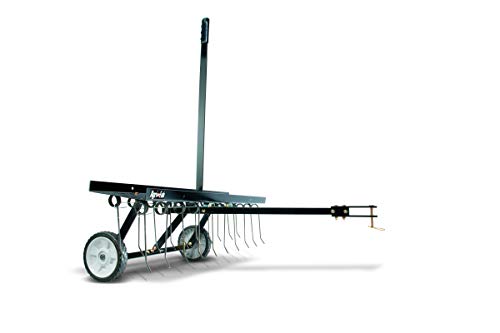
Agri-Fab 48 in Tow-Behind Lawn Dethatcher
$111.04Twenty-four replaceable spring-steel tines across 48 in with a 70 lb weight tray and a universal hitch, backed by a 3-year limited warranty.
Best for: raking dead grass on large lawns
Check price on Amazon Brinly PA-42BH-A 42 in Tow-Behind Plug Aerator
$379.00Heat-treated spoons pull plugs up to 3 in across three independently rotating sections with a 175 lb weight tray.
Best for: compacted lawns and overseeding
Check price on AmazonHow we chose
We did not test these products in person. Picks are researched from manufacturer specifications and owner manuals, engine and safety certifications where they apply, warranty terms, public recall records, and the recurring themes in verified owner reviews. We favor established brands with large review counts and parts support, match each pick to a real yard size or task, and place it in the tier where its price and capability actually belong.
Frequently asked questions
Should I dethatch or aerate first?
Dethatch first, then aerate. Removing thatch lets the aerator tines reach the soil and exposes the surface for seed. After both, overseed and apply starter fertilizer at the label rate. Do the whole sequence when grass is actively growing: late summer to early fall for cool-season lawns, late spring to early summer for warm-season lawns.
How often should you dethatch a lawn?
Only when thatch exceeds about 1/2 in, which for many lawns means every few years or not at all. Check by cutting a small wedge of turf and measuring the spongy brown layer above the soil. Core aerating every year on clay or high-traffic lawns helps keep thatch in check by mixing soil into it, reducing how often you need to dethatch.
Is a power rake the same as a dethatcher?
Close, but not always. Dethatcher often describes a spring-tine rake, powered or tow-behind, that combs out dead material. A power rake is a motorized machine with rotating tines or flails that removes thatch more aggressively. A scarifier cuts slits with fixed blades. Machines like the Greenworks 40V 2-in-1 include both a dethatching reel and a scarifying reel.
Can dethatching damage my lawn?
It can if done at the wrong time or too deep. Dethatching pulls up a lot of material and leaves the lawn ragged, so do it only when grass is actively growing, never in heat, drought or dormancy. Start at a shallow setting and lower it only if needed. Expect a rough few weeks, and overseed thin areas so the lawn fills back in.
Do tow-behind spring tine dethatchers work?
They work as heavy rakes. A tool like the Agri-Fab 48 in lifts matted dead grass, leaves and surface debris quickly across a large lawn, and adding weight to the tray helps. They remove less of the true thatch layer than a powered dethatcher or scarifier. For heavy thatch, rent or buy a power rake, and core aerate to help the rest break down.
Researched, not professional advice. This page is compiled from published specifications, manuals, labels and owner-review consensus, not hands-on testing. Follow the manufacturer's instructions and product label, and consult a qualified professional where safety, chemicals, fuel or structures are involved. As an Amazon Associate we earn from qualifying purchases.