Pressure Washing
Pressure Washer PSI vs GPM: Which Matters More?
Quick answer
GPM decides how fast you clean; PSI decides whether stuck grime breaks loose. Pressure loosens dirt and flow rinses it away. Multiply them for cleaning units: a 2,000 PSI, 1.2 GPM electric makes 2,400, while a 3,400 PSI, 2.5 GPM gas washer makes 8,500. Match PSI to the surface, then buy as much GPM as your budget allows.

Westinghouse ePX3500 Electric Pressure Washer
$169.002500 max PSI but a rated 2000 PSI at 1.2 GPM, typical of compact electrics.
Best for: compact storage and all-around home cleaning
Check price on Amazon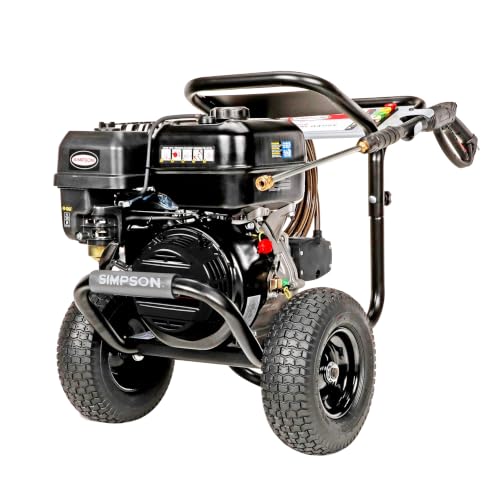
Simpson PowerShot 4400 PSI 4.0 GPM Gas Pressure Washer
$899.994400 PSI at 4.0 GPM, more than three times the flow of a compact electric.
Best for: large concrete areas and professional-level jobs
Check price on AmazonPSI (pounds per square inch) is the force of the water stream. GPM (gallons per minute) is how much water the pump moves. Most surfaces around a house need only moderate pressure, so once you have enough PSI for the job, more flow is what shortens it. That is why a 2.5 GPM gas washer clears a driveway in far less time than a 1.2 GPM electric even when the pressure numbers look similar.
Pressure is also where damage comes from. Too much PSI etches wood, strips paint, forces water behind siding and can cut skin. Extra GPM does not harm surfaces; it just uses more water and needs a spigot that can supply it. The Westinghouse ePX3500 ($169.00) and Simpson PowerShot 4400 ($899.99) sit at opposite ends. Start with the pressure washer PSI calculator for your surfaces.
On this page
- What is the difference between PSI and GPM on a pressure washer?
- Should you prioritize PSI or GPM?
- How do you calculate cleaning units, and how many do you need?
- Can your spigot supply enough GPM?
- Do nozzle tips change PSI and GPM?
- Is 4,000 PSI too much for a home pressure washer?
- Pressure washers across the PSI and GPM range
What is the difference between PSI and GPM on a pressure washer?
| Factor | PSI (pressure) | GPM (flow) |
|---|---|---|
| What it measures | Force of the water per square inch | Gallons of water the pump moves per minute |
| What it does | Breaks stuck dirt, stains and algae loose | Rinses loosened dirt away and covers area |
| Too much causes | Etched wood, stripped paint, water behind siding, injury | Higher water use; the spigot must keep up |
| How you reduce it | Wider nozzle tip or more distance | Fixed by the pump rating |
| Compact electrics | About 1,300 to 2,000 PSI working | About 1.2 to 1.4 GPM |
| Strong electrics | Up to 3,000 PSI | Up to 2.0 GPM |
| Gas washers in the catalog | 2,800 to 4,400 PSI | 2.1 to 4.0 GPM |
| Effect on cleaning time | Little once the surface is getting clean | Roughly proportional: more flow, faster |
| Matters most for | Oil, gum and stains on concrete | Big driveways, siding rinse, surface cleaners |
| Spec trap | "Max PSI" quoted instead of working PSI | "Max GPM" measured at lowest pressure |
Ranges drawn from catalog listings. Westinghouse, for example, lists 1.76 max GPM at lowest pressure and 1.2 GPM rated.
Should you prioritize PSI or GPM?
Prioritize PSI if:
- You mainly clean bare concrete with oil stains, rust or ground-in dirt.
- You remove chewing gum, tire marks or heavy algae from hard masonry.
- You already have decent flow and are stepping up for tough spots.
Prioritize GPM if:
- You clean large areas: long driveways, pool decks, big patios.
- You use or plan to buy a surface cleaner.
- You wash siding, fences and decks, where low pressure plus good rinse flow works best.
- Your time matters more than a lower purchase price.
For most homeowners the order is simple: pick a machine with enough working PSI for your hardest surface, then choose the highest GPM you can afford.
How do you calculate cleaning units, and how many do you need?
Cleaning units are PSI multiplied by GPM. A Sun Joe SPX3000 at 2,030 working PSI and 1.2 GPM makes about 2,436; a Westinghouse WPX3400 at 3,400 PSI and 2.6 GPM makes 8,840; the Simpson PowerShot 4400 makes 17,600. As a rough guide, under 3,000 cleaning units suits cars, furniture and light deck and siding work; 3,000 to 6,000 handles patios and moderate driveways; 7,000 and up is for large concrete and frequent heavy cleaning.
Use cleaning units to compare cleaning speed, but choose pressure by surface. The general ranges below are starting points; always begin with a wide tip and a test spot.
| Surface | Suggested PSI | Starting tip | Why |
|---|---|---|---|
| Cars | 1,200 to 1,900 | 40 degree or soap | Clear coat and trim damage easily |
| Vinyl siding | 1,300 to 1,600 | 25 or 40 degree | Water forced behind panels causes hidden damage |
| Soft wood decks (pine, cedar) | 500 to 800 | 40 degree | Higher pressure raises fuzz and gouges grain |
| Concrete driveway | 2,500 to 3,000 plus | 15 or 25 degree, or surface cleaner | Hard, porous, tolerates pressure |
| Composite decking | Check the decking maker's cleaning guide | Widest tip | Some makers limit or void warranties for pressure washing |
General guidance, not product instructions. Follow the surface manufacturer and your washer manual.
Can your spigot supply enough GPM?
A pressure washer cannot pump more water than your hose delivers, and running the pump short of water can damage it. Check before you buy a high-flow machine: time how long your outdoor faucet takes to fill a 5 gallon bucket with the hose you plan to use. Divide 300 by the seconds to get GPM. Filling in 60 seconds means 5 GPM, enough for the 4.0 GPM PowerShot 4400; filling in 150 seconds means 2 GPM, which would starve anything above that. Most household spigots handle 2.5 GPM washers comfortably, but long thin hoses and low well pressure reduce supply. The hose pressure loss calculator shows how hose length and diameter cut flow.
Do nozzle tips change PSI and GPM?
Tips change how concentrated the pressure is, not how much water the pump moves. By the common color code, red is 0 degrees, yellow 15, green 25, white 40 and black is the low-pressure soap tip. A narrower angle focuses the same flow on a smaller spot, so pressure at the surface rises sharply; stepping back also lowers it. That is why a 3,000 PSI washer can be safe on a deck with a 40 degree tip held well back, and why a 0 degree tip can damage almost anything. Cleaning concrete faster is a job for GPM and a surface cleaner such as the Westinghouse 15 in ($39.99), not a narrower tip.
Is 4,000 PSI too much for a home pressure washer?
For most homeowners, yes. Nothing on a typical house needs more than about 3,000 PSI, and very high pressure makes mistakes on wood, siding and cars more expensive. What a 4,000 PSI class machine really buys is its 4.0 GPM flow, which matters to contractors cleaning large concrete areas every week. If you want faster driveways without the risk and the price, a 3,300 to 3,400 PSI washer at 2.4 to 2.6 GPM, like the DEWALT DXPW3300-S or Simpson Clean Machine 3400, is the sensible ceiling. The electric vs gas pressure washer comparison covers the power source choice.
Pressure washers across the PSI and GPM range
From low-flow electric to high-flow gas. See the full best pressure washers roundup.

Greenworks 3000 PSI 2.0 GPM Brushless Electric Pressure Washer
$349.99Rated at 3000 PSI and 2.0 GPM with 3300 cleaning units, which Greenworks says an independent lab verified, plus 15, 25 and 40 degree tips.
Best for: homeowners who want electric convenience
Check price on Amazon
Westinghouse WPX3400 3400 PSI 2.6 GPM Gas Pressure Washer
$349.00A 212cc engine at 3400 PSI and 2.6 GPM with a half gallon soap tank and never-flat wheels.
Best for: driveways and siding on a budget
Check price on Amazon Simpson PowerShot 4400 PSI 4.0 GPM Gas Pressure Washer
$899.99A 420cc engine and AAA triplex pump at 4400 PSI and 4.0 GPM with a 50 ft 3/8 in hose, aimed at big concrete and restoration work.
Best for: large flat areas and side jobs
Check price on Amazon
Westinghouse 15 in. Pressure Washer Surface Cleaner
$39.99A 15 in surface cleaner rated up to 3400 PSI that spreads the stream evenly across flat concrete for fewer stripes.
Best for: driveways and patios
Check price on AmazonHow we chose
We did not test these products in person. Picks are researched from manufacturer specifications and owner manuals, engine and safety certifications where they apply, warranty terms, public recall records, and the recurring themes in verified owner reviews. We favor established brands with large review counts and parts support, match each pick to a real yard size or task, and place it in the tier where its price and capability actually belong.
Frequently asked questions
Is higher PSI or GPM better on a pressure washer?
For cleaning speed, higher GPM is better, because flow rinses away the dirt that pressure loosens. For breaking stubborn stains free, PSI matters, but most home surfaces need only 500 to 3,000 PSI. The best approach is to buy enough working PSI for your toughest surface, usually concrete, then choose the most GPM you can afford. Compare cleaning units, PSI times GPM, across models.
What is a good GPM for a pressure washer?
For light home use, 1.2 to 1.4 GPM electrics handle cars, furniture and small decks. A 2.0 GPM electric such as the Greenworks 3000 PSI is a strong all-round choice. For large driveways and frequent concrete cleaning, 2.4 to 2.6 GPM gas washers save a lot of time, and 4.0 GPM machines are for professional-scale work. Your spigot must supply more than the rated GPM.
How much PSI do I need to clean concrete?
About 2,500 to 3,000 PSI or more cleans bare concrete well, ideally with a surface cleaner and at least 2 GPM of flow. Lower pressure works on light dirt but slowly. Use a 15 or 25 degree tip for stains, keep the wand moving and avoid a 0 degree tip, which can etch and stripe the surface. See the concrete driveway PSI guide.
Does a surface cleaner need high GPM?
It works best with it. A surface cleaner spreads water across a spinning bar with small nozzles, so low flow means slow cleaning and visible swirl patterns. Owners commonly report good results at 2.5 GPM and frustration below about 1.5 GPM. The Westinghouse 15 in surface cleaner fits washers with a 1/4 in quick connect up to 3400 PSI; check its fitting and pressure limit against your machine.
Why do pressure washers list max PSI and rated PSI?
Max PSI is a peak figure, often measured with the trigger just engaged or at an unusual setting. Rated or working PSI is what the machine delivers during normal spraying. The Westinghouse ePX3500, for example, lists 2500 max PSI and 2000 rated PSI, and 1.76 max GPM at lowest pressure versus 1.2 rated GPM. Always compare rated numbers when you shop.
Researched, not professional advice. This page is compiled from published specifications, manuals, labels and owner-review consensus, not hands-on testing. Follow the manufacturer's instructions and product label, and consult a qualified professional where safety, chemicals, fuel or structures are involved. As an Amazon Associate we earn from qualifying purchases.