Landscaping
How to Mulch Landscape Beds: Depth, Materials, Edging and Bags
Quick answer
Mulch beds 2 to 3 inches deep with shredded hardwood, pine bark or pine straw after weeding and edging, keeping it 3 to 6 inches from trunks and off siding. One cubic yard covers 108 square feet at 3 inches, or 13.5 bags of 2 cubic feet, about three trips in a Gorilla 10 cu ft cart.
Mulch is a layer of material spread over the soil in planting beds to hold moisture, moderate soil temperature, suppress weeds and give beds a finished look. Organic mulches such as shredded hardwood, bark and pine straw also break down and feed the soil, which is why university extension services generally recommend them for planting beds over rubber or stone. The job is mostly about depth: too little does not stop weeds, and too much smothers roots and invites rot.
Measure beds first and run them through the mulch calculator to get cubic yards or bags. Moving mulch is the hard part, so a good cart pays off every season: the Gorilla Carts Poly Dump Cart, 1,500 lb, 10 cu ft ($389.99) holds 10 cubic feet, about five 2 cubic foot bags, per trip, and the best yard carts and wheelbarrows covers the options.
On this page
- How deep should mulch be?
- What is the best mulch for landscape beds?
- How much mulch do I need?
- Should I buy bulk mulch or bags?
- How do I prepare a bed before mulching?
- How do I edge a landscape bed for mulch?
- How far should mulch be kept from trees and the house?
- How do I move mulch without hurting my back?
- What tools make spreading mulch faster?
- When is the best time to mulch landscape beds?
- How do I mulch landscape beds step by step?
- What mulching tools should I buy?
How deep should mulch be?
| Situation | Depth | Why |
|---|---|---|
| Annual refresh over existing mulch | 1 in | Enough to restore color; deeper layers pile up year over year |
| Shredded hardwood or bark, new beds | 2 to 3 in | The standard range for weed suppression and moisture |
| Pine straw | 2 to 3 in settled (3 to 4 in fluffed) | Settles quickly; spread thicker at first |
| Wood chips or nuggets | 3 in | Larger pieces need a little more depth to block light |
| Around trees | 2 to 3 in, pulled back 3 to 6 in from the trunk | Never pile against the trunk (no mulch volcanoes) |
| Rubber mulch or play areas | Follow the product and safety surfacing guidance | Play surfaces need far more depth than beds |
Common extension guidance. Total mulch depth, including old layers, should stay around 3 in. in planting beds.
What is the best mulch for landscape beds?
| Material | Breaks down | Strengths | Drawbacks | Best for |
|---|---|---|---|---|
| Shredded hardwood | Moderately fast; top up yearly | Knits together on slopes, feeds soil, widely sold in bags and bulk | Fades to gray; fresh dyed versions vary in quality | Most shrub and perennial beds |
| Pine bark (nuggets or mini nuggets) | Slowly for larger nuggets | Long lasting, attractive color, light weight | Large nuggets float and wash away in heavy rain and on slopes | Flat beds and foundation plantings |
| Pine straw | Fairly fast | Light, easy to spread, stays put on slopes, lets water through | Needs yearly refreshing; very flammable near homes in dry areas | Slopes, acid-loving plants and wooded yards |
| Arborist wood chips | Moderately | Often free or low cost, excellent for tree rings and paths | Coarse, mixed look; may include leaves and green material | Tree rings, natural areas and paths |
| Rubber mulch | Does not break down | Long lasting, stays in place | Adds no organic matter, heats in sun, extension fire tests rank it among the more combustible mulches | Playground surfacing per safety guidance, not planting beds |
| Stone or river rock | Permanent | Does not float, blow away or burn; good near foundations in wildfire areas | Heats beds, heavy, weeds grow in trapped soil, very hard to remove later | Drainage areas, dry gardens and near foundations |
How much mulch do I need?
Multiply bed area in square feet by depth in inches and divide by 324 to get cubic yards. A 200 square foot bed at 3 inches needs about 1.85 cubic yards, or 25 bags of 2 cubic feet. Buy 5 to 10 percent extra for uneven beds and settling. For circles, area is 3.1416 times the radius squared, so a tree ring with a 3 foot radius is about 28 square feet.
| Unit | Bags per cubic yard | Covers at 2 in | Covers at 3 in | Covers at 4 in |
|---|---|---|---|---|
| 2 cu ft bag | 13.5 | 12 sq ft | 8 sq ft | 6 sq ft |
| 3 cu ft bag | 9 | 18 sq ft | 12 sq ft | 9 sq ft |
| 1.5 cu ft bag | 18 | 9 sq ft | 6 sq ft | 4.5 sq ft |
| 1 cubic yard (bulk) | 1 | 162 sq ft | 108 sq ft | 81 sq ft |
One cubic yard is 27 cubic feet. The coverage chart for larger areas is on the mulch coverage chart page.
Should I buy bulk mulch or bags?
Bags make sense for small jobs, touch-ups and yards with no place for a delivery pile: they are clean to haul, easy to count, store well and let you buy exactly what you need. Bulk mulch is usually cheaper per cubic yard once a job reaches a few yards, especially with local delivery, and it is the only practical way to cover large beds. Compare the delivered price per cubic yard against 13.5 bags of 2 cubic feet at your store's price.
- Bulk tips: have it dumped on a tarp on the driveway or lawn close to the beds, spread it within a few days, and ask the supplier what the material is made of. Quality and color vary by supplier.
- Weight: dry shredded wood mulch is commonly 400 to 800 pounds per cubic yard, and wet mulch weighs much more, which matters for cart capacity and your back.
- Bag tips: check that bags are not heavy and soggy or smelling sour, which can mean anaerobic material that can harm plants; air it out before spreading if so.
How do I prepare a bed before mulching?
Mulch prevents new weeds from sprouting by blocking light, but it does not kill established weeds, which grow right through. Before spreading:
- Pull or dig existing weeds with roots, especially perennials like bindweed and quackgrass. Spot treating weeds is covered in the weed killer safety guide; follow the label exactly and never spray near desirable plants on a windy day.
- Rake out excess old mulch if total depth would exceed about 3 inches, or fluff matted old mulch so water can penetrate.
- Cut or refresh the edge (next section) so mulch stays out of the lawn.
- Water the soil if it is dry, because mulch holds existing moisture in and a dry bed under fresh mulch can stay dry.
- Skip landscape fabric under organic mulch in planting beds. Extension services commonly note that as organic mulch breaks down on top of fabric, weeds root into it, and fabric blocks organic matter from reaching the soil. Woven fabric like the DeWitt Pro-5 Weed Barrier Fabric (6 x 250 ft.) is better suited under stone and gravel paths. A layer of plain cardboard or newspaper under organic mulch is a common alternative that smothers weeds and breaks down.
How do I edge a landscape bed for mulch?
A clean edge keeps mulch in the bed and grass out of it. Choose one method:
- Spade-cut edge: cut a V-shaped trench a few inches deep along the bed line, with the vertical side against the lawn, and throw the soil into the bed. A sharp spade like the Radius Garden Pro-Lite Carbon Steel Spade does it by hand; it needs recutting once or twice a season.
- Power edger: a battery edger such as the EGO Power+ ME0820 8 in. Edger with Multi-Head Power Head (tool only) or corded WORX WG896 12 Amp 7.5 in. Corded Electric Edger and Trencher recuts long edges in minutes. See the best lawn edgers.
- No-dig plastic edging: the EasyFlex Heavy Duty No-Dig Edging Kit (100 ft.) forms curves and tree rings with anchoring spikes and no trenching, for a budget physical barrier.
- Steel edging: hammer-in COR-TEN steel like the Edge Right Hammer-In COR-TEN Steel Edging (5 x 48 in.) reaches 6 inches deep, holds crisp lines and weathers to a rust patina that resists string trimmer hits.
Physical edging and trenched edges compare in the best landscape edging.
How far should mulch be kept from trees and the house?
Trees and shrubs: pull mulch back 3 to 6 inches from trunks and stems, and spread it 2 to 3 inches deep in a wide, flat ring, ideally out toward the drip line. Mulch piled against a trunk, often called a mulch volcano, holds moisture against the bark, which invites rot, disease, insects and rodents that chew bark, and can encourage roots to grow up into the mulch and circle the trunk. University extension arborists consistently warn against it.
Houses: keep mulch and soil well below wood siding and trim. Model residential building codes treat about 6 inches of clearance between the ground and untreated wood siding as the benchmark, and brick homes need weep holes left uncovered. Organic mulch against the foundation holds moisture where termites and carpenter ants find it, so many pest guides suggest a narrow mulch-free or stone strip right at the wall. In wildfire-prone areas, Firewise USA guidance is to keep the first 5 feet around the house free of combustible mulch.
Also keep mulch off the crowns of perennials and away from air conditioner condensers, dryer vents and utility boxes.
How do I move mulch without hurting my back?
Mulch is bulky and heavy when wet, and the fork and cart matter more than muscle. Trips per cubic yard assume the container is filled level; lighten loads of wet mulch to stay within the cart's weight rating.
| Carrier | Capacity | Level trips per cubic yard | Notes |
|---|---|---|---|
| True Temper 6 cu ft wheelbarrow | 6 cu ft | 4.5 | Single wheel steers through tight beds; balance takes effort |
| Gorilla Carts 6 cu ft dump cart | 6 cu ft, 1,200 lb | 4.5 | Pulls rather than balances; quick-release dump |
| Gorilla Carts 10 cu ft dump cart | 10 cu ft, 1,500 lb | 2.7 | Handle converts to a tractor or ATV hitch |
| Jackson MP1010 2-wheel | 10 cu ft | 2.7 | Two 16 in. wheels, stable with big loads |
| Agri-Fab 12 cu ft tow cart | 12 cu ft, 700 lb | 2.25 | Tow behind a lawn tractor; watch the weight limit with wet mulch |
| Ohio Steel 15 cu ft tow cart | 15 cu ft, 1,250 lb | 1.8 | Swivel dump for large properties |
One cubic yard is 27 cubic feet. Trips are rounded to the nearest quarter.
What tools make spreading mulch faster?
A multi-tine fork, not a shovel, is the right loading tool for loose mulch: the Truper TruTough 10-Tine Ensilage Fork has the tine spacing used for mulch, compost and bedding, and it slides into a pile far easier than a flat blade. Spread and level with a steel bow rake such as the Bully Tools 16 in. Bow Rake, flipping it tines-up to smooth the surface. For bagged mulch, lay bags out across the bed before opening them to spread evenly, slit them lengthwise and pull the bag out from under the pile.
Wear gloves, since bark and hardwood carry splinters, and a dust mask when spreading dry, dusty material. Lift bags with your legs and use the cart to carry them rather than walking them across the yard.
When is the best time to mulch landscape beds?
Mid to late spring, once the soil has warmed and after spring weeding, is the most common time, because mulch applied to cold, wet soil keeps it cold and slows early growth. A late summer or fall application helps insulate roots of new plantings through winter, and in cold climates a winter mulch goes on after the ground begins to freeze. Mulch new plantings right after planting in any season. Avoid spreading pre-emergent or fresh mulch right before heavy rain on slopes, when it can wash away.
How do I mulch landscape beds step by step?
- Measure and calculate. Measure each bed, multiply area by depth in inches and divide by 324 for cubic yards, or use the mulch calculator.
- Weed thoroughly. Pull or dig weeds with their roots. If you spot treat with an herbicide, follow the label and let it act before mulching.
- Remove or fluff old mulch. Rake out old mulch that would push total depth past about 3 inches, and break up matted layers.
- Cut the edge. Recut a trench edge with a spade or edger, or install no-dig or steel edging.
- Water the bed. Water dry soil before mulching so moisture is locked in.
- Haul in loads. Fork mulch into a cart such as the Gorilla Carts Poly Dump Cart, 1,500 lb, 10 cu ft and dump small piles along the bed.
- Spread to depth. Rake it 2 to 3 inches deep, checking with a ruler or finger, and blend it into existing mulch.
- Pull it back from trunks and siding. Leave 3 to 6 inches clear around trunks and stems and keep mulch well below siding and weep holes.
- Water lightly and clean up. Water to settle the mulch and sweep paths and driveways so it does not wash into storm drains.
What mulching tools should I buy?
A cart, a fork and a rake cover almost every mulching job. Add edging if your beds lose their shape every season.
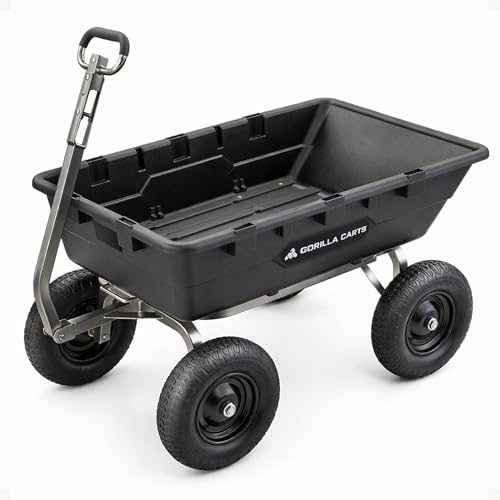
Gorilla Carts Poly Dump Cart, 1,500 lb, 10 cu ft
$389.99A 10 cu ft, 1,500 lb poly cart whose handle converts to a hitch for a lawn tractor or ATV, with 16 in. pneumatic tires and a quick-release dump.
Best for: yards spreading several yards a year
Check price on Amazon
Jackson MP1010 10 cu ft Poly 2-Wheel Wheelbarrow
$689.94A 10 cu ft poly tray on an all-steel undercarriage with two 16 in. pneumatic wheels, stable enough for big loads of mulch or leaves.
Best for: heavy loads without a tractor
Check price on Amazon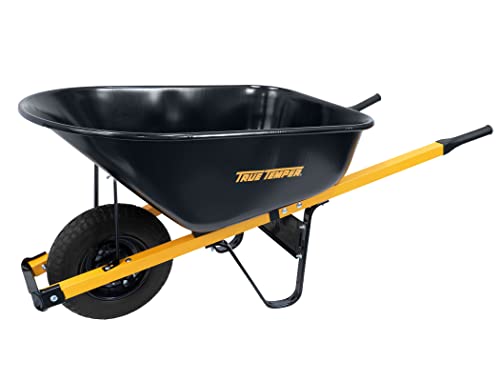
True Temper 6 cu ft Steel Wheelbarrow with Never Flat Tire
$229.00A seamless steel tray with a sloped front for dumping, steel handles and a flat-free tire for mulch, soil and stone.
Best for: tight beds and small yards
Check price on Amazon
Truper TruTough 10-Tine Ensilage Fork
$51.97A 10-tine fork head on a 30 in. wood handle with poly D-grip, the tine spacing used for moving loose mulch, compost and bedding.
Best for: loading bulk mulch
Check price on Amazon
Bully Tools 16 in. Bow Rake
$37.99A 16 in. head of 10-gauge USA steel with overwelded tines on a fiberglass handle for breaking up soil and spreading mulch.
Best for: spreading and leveling
Check price on Amazon
Edge Right Hammer-In COR-TEN Steel Edging (5 x 48 in.)
$130.00Five 48 in. strips of 16-gauge COR-TEN steel with a rounded top and 6 in. depth that weathers to a rust patina and resists string trimmers.
Best for: crisp bed lines that last
Check price on AmazonHow we chose
We did not test these products in person. Picks are researched from manufacturer specifications and owner manuals, engine and safety certifications where they apply, warranty terms, public recall records, and the recurring themes in verified owner reviews. We favor established brands with large review counts and parts support, match each pick to a real yard size or task, and place it in the tier where its price and capability actually belong.
Frequently asked questions
How much area does a bag of mulch cover?
A 2 cubic foot bag covers 12 square feet at 2 inches deep or 8 square feet at 3 inches. A 3 cubic foot bag covers 18 square feet at 2 inches or 12 square feet at 3 inches. It takes 13.5 bags of 2 cubic feet to equal one cubic yard, which covers 108 square feet at 3 inches. Buy 5 to 10 percent extra for uneven beds.
Should I remove old mulch before adding new mulch?
Usually not. If the old layer has thinned to an inch or two, rake it to break up matting and add about an inch of fresh mulch for color. Remove some old mulch only when total depth would climb past about 3 inches, when it is packed and shedding water, or when it has become moldy or full of weed seed. Keep the combined layer pulled back from trunks.
Is it OK to put landscape fabric under mulch?
Under stone and gravel, woven fabric such as the DeWitt Pro-5 Weed Barrier Fabric (6 x 250 ft.) helps keep rock from sinking into soil. Under organic mulch in planting beds, extension services commonly advise against it, because the mulch breaks down into a soil layer on top where weeds root, and fabric keeps organic matter from reaching the soil. Cardboard or newspaper under wood mulch is a common alternative.
Does mulch attract termites?
Mulch does not attract termites from far away, but moist organic mulch against a foundation gives termites and carpenter ants cover and moisture close to wood. Keep mulch well below siding and trim, leave weep holes clear, keep total depth to about 3 inches, and consider a narrow mulch-free or stone strip right against the house in termite-prone areas. Fix gutters and downspouts that soak foundation beds.
What is the cheapest way to mulch a large area?
Bulk mulch delivered by the cubic yard is usually cheaper than bags once a job reaches a few yards, and arborist wood chips are often free or low cost from tree services. Moving it efficiently matters as much as buying it: a 10 cubic foot cart such as the Gorilla Carts Poly Dump Cart, 1,500 lb, 10 cu ft carries a cubic yard in about three trips instead of five with a small wheelbarrow.
Is rubber mulch good for flower beds?
Rubber mulch is not a good fit for planting beds. It lasts for years and stays put, but it adds no organic matter to the soil, heats up in sun, is hard to remove later, and some extension fire tests have ranked it among the more combustible landscape mulches. It is mainly used as playground surfacing following safety depth guidance. Shredded hardwood, bark or pine straw serve beds better.
Researched, not professional advice. This page is compiled from published specifications, manuals, labels and owner-review consensus, not hands-on testing. Follow the manufacturer's instructions and product label, and consult a qualified professional where safety, chemicals, fuel or structures are involved. As an Amazon Associate we earn from qualifying purchases.