Snow Removal
Snow Blower Size Chart: Width by Driveway and Snowfall
Quick answer
A paved two-car driveway in moderate snow needs a 24 to 26 inch two-stage machine, which clears a 24 by 24 foot drive in 15 passes and about 8 minutes. Light-snow regions can use a 21 to 22 inch single-stage. Gravel always needs a two-stage.
Two numbers size a snow blower: clearing width, which sets how long the job takes, and intake height, which sets how deep a storm and how big a plow berm it can swallow. The tables below come from the same sizing and timing math as the snow blower size calculator, so your driveway gets one consistent answer.
Our top pick for long, sloped or gravel driveways is the Honda HSS928AATD at $3,599.00. For a typical two-car driveway the 24 inch EGO SNT2405 covers it.
On this page
What size snow blower do I need for my driveway?
Paved surfaces. Light snow means storms under about 8 inches, heavy means regular storms above about 12 inches or wet coastal snow.
| Driveway | Area (sq ft) | Light snow | Moderate snow | Heavy snow |
|---|---|---|---|---|
| 1-car, 10 x 20 ft | 200 | Single-stage, 18 to 21 in | Single-stage, 21 to 22 in | Two-stage, 24 to 28 in |
| 2-car, 20 x 20 ft | 400 | Single-stage, 18 to 21 in | Single-stage, 21 to 22 in | Two-stage, 24 to 28 in |
| 2-car, 24 x 24 ft | 576 | Single-stage, 18 to 21 in | Two-stage, 24 to 26 in | Two-stage, 24 to 28 in |
| 3-car, 30 x 24 ft | 720 | Single-stage, 21 to 22 in | Two-stage, 24 to 26 in | Two-stage, 24 to 28 in |
| Lane, 12 x 100 ft | 1,200 | Single-stage, 21 to 22 in | Two-stage, 24 to 26 in | Two-stage, 28 to 30 in |
| Long drive, 20 x 100 ft | 2,000 | Two-stage, 24 to 26 in | Two-stage, 26 to 30 in | Two-stage, 28 to 30 in |
| Lane, 12 x 250 ft | 3,000 | Two-stage, 24 to 26 in | Two-stage, 26 to 30 in | Two-stage, 28 to 30 in |
| Very large, 5,000 sq ft | 5,000 | Two-stage, 24 to 26 in | Two-stage, 26 to 30 in | Two-stage with tracks, 30 to 34 in |
| Gravel, any size | Any | Two-stage, 24 to 28 in | Two-stage, 24 to 28 in | Two-stage, 24 to 28 in |
Gravel needs a two-stage at any size, with the skid shoes lowered so the housing rides above the surface. A single-stage auger touches the ground and throws stones.
How long does it take to clear a driveway?
| Driveway | 18 in | 21 in | 24 in | 26 in | 28 in | 32 in |
|---|---|---|---|---|---|---|
| 1-car, 10 x 20 ft | 8 passes, 4 min | 7 passes, 4 min | 6 passes, 3 min | 6 passes, 3 min | 6 passes, 3 min | 5 passes, 3 min |
| 2-car, 20 x 20 ft | 16 passes, 8 min | 14 passes, 7 min | 12 passes, 6 min | 11 passes, 6 min | 11 passes, 6 min | 9 passes, 5 min |
| 2-car, 24 x 24 ft | 19 passes, 10 min | 17 passes, 9 min | 15 passes, 8 min | 14 passes, 7 min | 13 passes, 7 min | 11 passes, 6 min |
| 3-car, 30 x 24 ft | 24 passes, 13 min | 21 passes, 11 min | 18 passes, 10 min | 17 passes, 9 min | 16 passes, 9 min | 14 passes, 7 min |
| Lane, 12 x 100 ft | 10 passes, 12 min | 9 passes, 11 min | 8 passes, 9 min | 7 passes, 8 min | 7 passes, 8 min | 6 passes, 7 min |
| Lane, 12 x 250 ft | 10 passes, 24 min | 9 passes, 22 min | 8 passes, 19 min | 7 passes, 17 min | 7 passes, 17 min | 6 passes, 15 min |
Assumes 15 percent overlap, a walking speed of 120 ft per minute in moderate snow and 20 seconds per turnaround. Light snow is 150 ft per minute, heavy snow 85.
How much does snow depth change clearing time?
| Driveway | Light (150 ft/min) | Moderate (120 ft/min) | Heavy (85 ft/min) |
|---|---|---|---|
| 2-car, 24 x 24 ft | 7 min | 8 min | 9 min |
| 3-car, 30 x 24 ft | 9 min | 10 min | 11 min |
| Lane, 12 x 100 ft | 8 min | 9 min | 12 min |
| Lane, 12 x 250 ft | 16 min | 19 min | 26 min |
Heavy or wet snow also forces a slower ground speed on the machine itself, so treat these as the optimistic end.
What is the difference between a single-stage and a two-stage snow blower?
A single-stage snow blower uses one fast-spinning auger that scoops the snow and throws it out of the chute in the same motion, and its rubber-edged auger touches the pavement, which helps pull the machine forward. A two-stage snow blower uses a slower steel auger to feed an impeller, a separate fan that throws the snow, while the housing rides above the surface on adjustable skid shoes.
That design difference is the whole answer to gravel, depth and berms. Single-stage machines here have intake heights of 10 to 13 inches; two-stage machines run 20 to 21.7 inches. The full breakdown is in single-stage vs two-stage snow blower.
Does clearing width or intake height matter more?
Width decides time, intake height decides whether the machine can do the job at all. Going from 21 to 28 inches on a 24 by 24 foot two-car driveway saves only about 2 minutes, because you are already down to 13 passes. Going from a 13 inch intake to a 21 inch intake is the difference between climbing over the plow berm at the curb and pushing straight through it.
So in a light-snow region, buy width for comfort and stop. In a heavy-snow region, buy intake height first: a 24 inch two-stage with a 20 inch intake such as the WEN SB209E at $493.77 beats a wider single-stage every time. Driveway-specific sizing is on 2 car driveway in heavy snow and the end-of-driveway plow pile.
Which snow blowers match each width?
Catalog machines at the common clearing widths. Tiered picks are in the best snow blowers.

EGO Power+ SNT2122 21 in. Single-Stage Snow Blower Kit
$699.00A 21 inch path with a 13 inch intake and a 42 foot throw, on two batteries, which suits a paved two-car driveway in moderate snow.
Best for: paved drives with storms under about 8 inches
Check price on Amazon
WEN SB209E 24 in. Two-Stage Gas Snow Blower
$493.77A 209cc engine, a 24 by 20 inch opening and electric start make this the cheapest two-stage that can handle gravel and a plow berm.
Best for: two-car driveways on a tight budget
Check price on Amazon
EGO Power+ SNT2405 24 in. Self-Propelled Two-Stage Snow Blower Kit
$1,649.00A 24 inch path, 20 inch intake and 50 foot throw with variable-speed self-propel and reverse, rated by EGO for an 18 car driveway of 8 inch snow per charge.
Best for: two and three-car driveways without gas
Check price on Amazon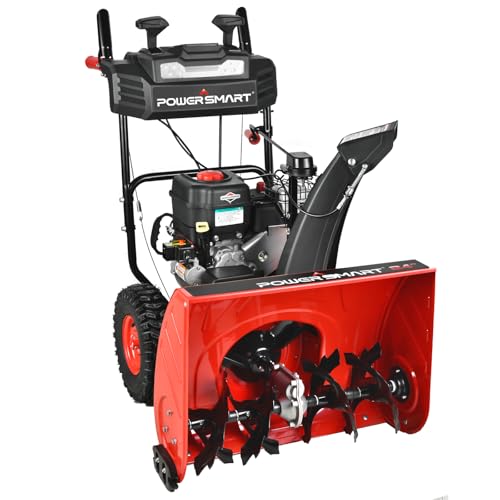
PowerSmart 26 in. Two-Stage Gas Snow Blower with Briggs & Stratton 208cc
$999.00A Briggs and Stratton 208cc engine with a 26 inch path, 20 inch intake, 45 foot throw and heated grips, rated for 1 to 12 inches of snow.
Best for: wider drives including gravel
Check price on Amazon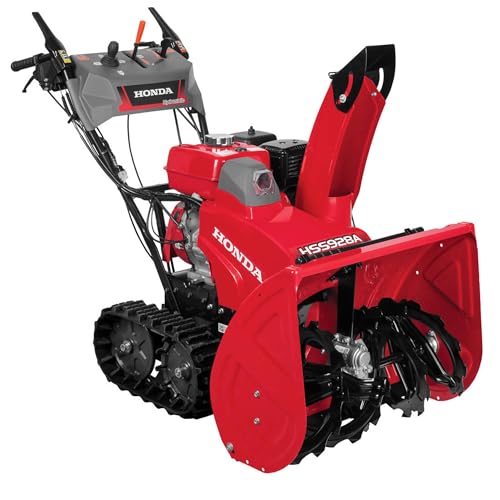
Honda HSS928AATD 28 in. Two-Stage Track Snow Blower
$3,599.00A 21.7 inch intake, 52 foot throw, hydrostatic drive and rubber tracks for slopes, ice and long drives, with a 3 year residential warranty.
Best for: steep, icy, gravel or very long driveways
Check price on Amazon
Honda HSS1332AATD 32 in. Two-Stage Track Snow Blower
$4,099.00A 31.9 inch clearing width and 21.7 inch intake cut passes on very large properties, at the price and weight of a small tractor.
Best for: properties over about 5,000 square feet of clearing
Check price on AmazonHow we chose
We did not test these products in person. Picks are researched from manufacturer specifications and owner manuals, engine and safety certifications where they apply, warranty terms, public recall records, and the recurring themes in verified owner reviews. We favor established brands with large review counts and parts support, match each pick to a real yard size or task, and place it in the tier where its price and capability actually belong.
Frequently asked questions
What size snow blower do I need for a 2 car driveway?
A 24 inch two-stage covers a 24 by 24 foot two-car driveway in moderate snow, taking about 15 passes and 8 minutes. In a region where storms stay under about 8 inches, a 21 to 22 inch single-stage is honestly enough and costs far less. If your town plows a berm across the apron, buy the two-stage for its 20 inch intake height.
Is a 28 inch snow blower worth it over a 24?
On a two-car driveway, no: 28 inches saves about 2 minutes a storm over 24. It pays off on drives longer than about 100 feet, on very wide aprons, and in heavy or wet snow, where the bigger housing, engine and 21.7 inch intake keep the machine from bogging down. It is also heavier to store and turn.
Can I use a single-stage snow blower on gravel?
No. A single-stage auger contacts the ground to help pull the machine forward, so on gravel it picks up stones and throws them out of the chute, which is dangerous and damages the machine. Gravel needs a two-stage with its skid shoes adjusted so the housing rides above the surface, and it is easier once the gravel has frozen in place.
How long does it take to clear a 250 foot driveway?
A single 12 foot lane 250 feet long takes about 19 minutes with a 24 inch machine in moderate snow, 17 minutes with a 28 inch and about 26 minutes with a 24 inch in heavy snow. That is 8 passes at 24 inches. On a drive that long, self-propelled drive and a large fuel tank or a second battery matter more than clearing width.
What intake height do I need for deep snow?
For storms above about 8 inches and for the packed ridge a plow leaves at the curb, look for an intake height of 20 inches or more, which is standard on two-stage machines. Single-stage models here range from 10 to 13 inches, so deep snow has to be taken in shallow bites. Intake height matters more than the extra couple of inches of width.
Researched, not professional advice. This page is compiled from published specifications, manuals, labels and owner-review consensus, not hands-on testing. Follow the manufacturer's instructions and product label, and consult a qualified professional where safety, chemicals, fuel or structures are involved. As an Amazon Associate we earn from qualifying purchases.