Snow Removal
Best Snow Blower for the End of the Driveway Plow Pile
Quick answer
The plow pile at the end of a driveway, about 12 by 15 feet of dense, packed snow, needs a 24 to 28-inch two-stage snow blower. A 24-inch machine takes 8 passes and about 4 minutes; a single-stage is the wrong tool. Wait for the plow's last pass, then take the berm apart in partial-width bites at full throttle.
The ridge the street plow leaves across the end of your driveway is the hardest snow on the property. It is packed, often knee-high or taller, full of ice chunks, road grit and slush, and it arrives after you have already cleared. This is the snow that decides whether you need a two-stage machine, even on a short driveway.
Our top pick is the EGO Power+ SNT2405 24 in. Self-Propelled Two-Stage Snow Blower Kit at $1,649.00: a 20-inch intake, 50-foot throw and self-propel with reverse. On gas, the Ariens Deluxe 28 SHO ($1,999.00) is built for wide driveways with heavy berms. Size the rest of the driveway in the snow blower size calculator.
On this page
- How long does the plow pile take to clear?
- What is the best snow blower for the end of the driveway?
- Why is the plow pile harder than the rest of the driveway?
- When should I clear the end of my driveway?
- How do I snow blow a plow berm?
- Can a battery snow blower handle a plow berm?
- Which snow blowers handle the end of driveway plow pile?
How long does the plow pile take to clear?
| Clearing width | Passes | Time | Fit |
|---|---|---|---|
| 12 in | 15 | 8 min | Slow or underpowered |
| 18 in | 10 | 5 min | Slow or underpowered |
| 21 in | 9 | 5 min | Slow or underpowered |
| 24 in | 8 | 4 min | Recommended |
| 28 in | 7 | 4 min | Recommended |
| 32 in | 6 | 3 min | More than needed |
About 180 square feet. Recommended: 24 to 28 inch two-stage. Times assume a 15 percent overlap, walking speeds of 150, 120 and 85 feet per minute in light, moderate and heavy snow, and 20 seconds per turn.
What is the best snow blower for the end of the driveway?
A 24 to 28-inch two-stage. Across a 12 by 15-foot strip of plow snow a 24-inch machine makes 8 passes and a 28-inch makes 7, both in about 4 minutes of machine time, though stopping to break chunks usually adds more. What matters is the intake: a 20 to 21.7-inch two-stage housing can take a knee-high berm in bites, while a 10.5 to 13-inch single-stage opening cannot. Two-stage machines also throw the heavy snow far enough to clear the curb banks.
Why is the plow pile harder than the rest of the driveway?
Plow snow has been pushed, compacted and mixed with whatever was on the road. The table compares it with the fresh snow on the driveway.
| Property | Fresh driveway snow | Plow berm |
|---|---|---|
| Depth | The storm total | Often knee-high to 2 or 3 ft at the curb |
| Density | About 5 to 20 lb per cu ft, depending on moisture | Compacted, at the heavy end of that range or beyond |
| Contents | Snow | Ice chunks, slush, road sand and salt, sometimes gravel |
| Weight on 12 x 15 ft | 12 in: 900 to 3,600 lb | 2 ft at 20 lb per cu ft: about 7,200 lb |
| Machine needed | Single-stage in light snow | Two-stage with a 20 in or taller intake |
| Pass style | Full width | Bites a third to half the housing width |
| Shear bolt risk | Low | High: ice chunks can snap auger shear bolts |
| When to clear | During or after the storm | After the plow's final pass |
Berm weight is an example at 20 lb per cubic foot; packed plow snow varies widely.
When should I clear the end of my driveway?
After the plow's last pass, not before. Clearing the apron while the storm is still being plowed means doing it twice. Two habits help. First, where traffic drives on the right, clear an extra pocket of pavement on the side the plow comes from, just before your driveway; the plow drops much of its load there instead of across your apron. Second, throw the berm snow to the downstream side, the direction the plow is traveling, so the next pass does not push it straight back. Never throw it into the street.
How do I snow blow a plow berm?
- Look before you start. Walk the berm and pull out ice slabs, newspaper bags and road debris the auger could jam on or throw.
- Full throttle, slow ground speed. Run the engine or motor at full power and walk slowly so the impeller keeps up with the auger.
- Take bites, not passes. Attack the berm a third to half of the housing width at a time, working in from the driveway side toward the street.
- Cut down tall walls. If the berm is taller than the intake, knock the top down first with a steel snow pusher, or fit drift cutters such as the EGO ADC2400 on compatible EGO models.
- Carry spare shear bolts. Shear bolts are designed to snap when the auger hits ice, protecting the gearbox. Keep spares, such as the Husqvarna shear bolt kit for Husqvarna machines, and replace them only with the engine off.
- Finish by hand where needed. Scrape the last packed layer with a pusher, pushing rather than lifting, and treat it with ice melt.
Can a battery snow blower handle a plow berm?
A battery two-stage can. The EGO SNT2405 and SNT2807 have 20 and 21-inch intakes and self-propelled drive, and EGO markets them for plow piles. Berms draw far more power than fresh snow, so expect a heavy berm to use a disproportionate share of a charge. Battery single-stage machines are the wrong tool: their 13-inch intakes ride up over dense snow. For the full comparison see single-stage vs two-stage snow blower, and for the machines themselves see best two-stage snow blowers.
Which snow blowers handle the end of driveway plow pile?
Two-stage machines with 20 to 21.7-inch intakes, the minimum for a packed plow berm. Pair one with a steel pusher for the iciest chunks.

EGO Power+ SNT2405 24 in. Self-Propelled Two-Stage Snow Blower Kit
$1,649.00A complete 24-inch two-stage kit with two 7.5Ah batteries: 20-inch intake, 50-foot throw, variable-speed self-propel with reverse, and a maker-rated 18-car driveway per charge.
Best for: mid-sized driveways that get deep, wet snow and end-of-driveway plow piles
Check price on Amazon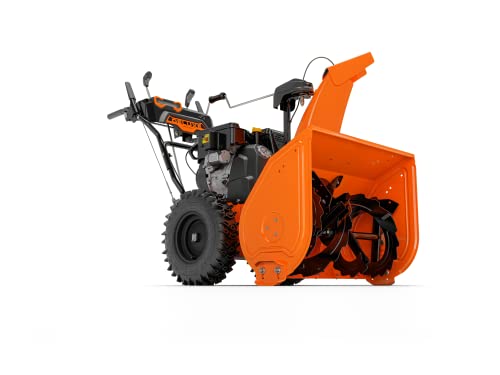
Ariens Deluxe 28 SHO Two-Stage Snow Blower (ST28DLE)
$1,999.00The Deluxe SHO (Super High Output) is the performance variant of Ariens' core two-stage line, with a 28-inch path and electric start, sold and shipped by Amazon.
Best for: wide suburban driveways that collect heavy, wet snow and plow berms
Check price on Amazon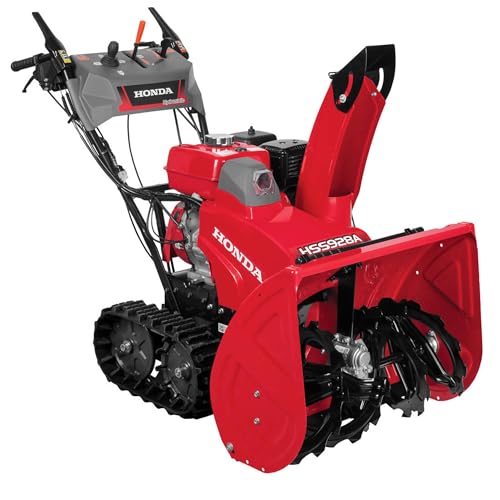
Honda HSS928AATD 28 in. Two-Stage Track Snow Blower
$3,599.00Honda GX270 power, cleated low-temperature rubber tracks, hydrostatic drive and auger height control, rated at 1,900 pounds per minute and a 52-foot throw with no assembly required.
Best for: steep or icy driveways where wheels lose traction
Check price on Amazon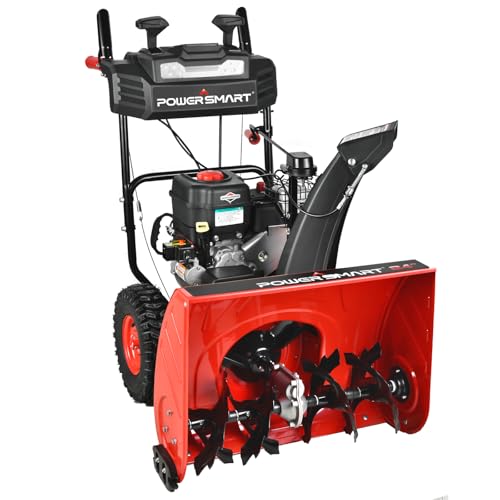
PowerSmart 26 in. Two-Stage Gas Snow Blower with Briggs & Stratton 208cc
$999.00A Briggs & Stratton 950 Snow Series 208cc rated at 2,700 pounds per minute, with steel housing, frame and chute, a 26-inch path, handle warmers and adjustable steel skid shoes.
Best for: wider driveways on a mid-range budget, including gravel
Check price on Amazon
Husqvarna ST124 24 in. Two-Stage Gas Snow Blower
$999.00A 212cc ribbon-auger two-stage with a 21-inch intake, all-steel chute and 13-inch snow tires, covered by a 3-year bumper-to-bumper and 5-year engine warranty.
Best for: two-car driveways where warranty coverage matters as much as power
Check price on Amazon
WEN SB209E 24 in. Two-Stage Gas Snow Blower
$493.77The budget two-stage: a 209cc engine moving over 2,000 pounds per minute through a 24 by 20-inch opening, with push-button start, 6 forward and 2 reverse speeds and a 2-year warranty.
Best for: tight budgets with a gravel or paved driveway that outgrew single-stage
Check price on AmazonHow we chose
We did not test these products in person. Picks are researched from manufacturer specifications and owner manuals, engine and safety certifications where they apply, warranty terms, public recall records, and the recurring themes in verified owner reviews. We favor established brands with large review counts and parts support, match each pick to a real yard size or task, and place it in the tier where its price and capability actually belong.
Frequently asked questions
What is the best snow blower for the end of the driveway?
A 24 to 28-inch two-stage snow blower with a 20-inch or taller intake. The plow berm is packed, icy snow that single-stage machines cannot swallow. A 24-inch machine such as the EGO SNT2405 takes a 12 by 15-foot berm apart in about 8 bites and 4 minutes of machine time, plus stops for chunks. Wider 28-inch machines like the Ariens Deluxe 28 SHO suit wide aprons.
How do I stop the plow from filling my driveway?
You cannot stop it, but you can reduce it. Where traffic drives on the right, clear a pocket of pavement along the curb on the side the plow approaches from, just before your driveway, so the plow drops much of its load there. Throw your own snow to the downstream side, never into the street, and wait for the final plow pass before clearing the apron.
Why does my snow blower break shear bolts on the plow pile?
Shear bolts are designed to snap when the auger hits something solid, so the gearbox is protected. Plow berms contain ice chunks and frozen slush that do exactly that. Take smaller bites, break large chunks with a steel pusher first, and keep spare OEM shear bolts. Replace them only with the engine off and the key removed, and never substitute ordinary hardware bolts.
Can a single-stage snow blower clear a plow berm?
Only a small, soft one. Single-stage machines have 10 to 13-inch intakes and throw with the same auger that gathers the snow, so dense berm snow stalls them, jams the chute or rides over the housing. Owners commonly report having to shovel the berm by hand, which is exactly the heavy, cold-weather exertion to avoid. A two-stage machine is the right tool.
Researched, not professional advice. This page is compiled from published specifications, manuals, labels and owner-review consensus, not hands-on testing. Follow the manufacturer's instructions and product label, and consult a qualified professional where safety, chemicals, fuel or structures are involved. As an Amazon Associate we earn from qualifying purchases.