Sheds and Storage
What Size Shed for a Snow Blower and Mower? 7x7 to 8x10
Quick answer
A two-stage snow blower and a push mower with a cart and wall tools come to about 26 square feet of equipment, or 35 square feet of floor with a walkway. A 7 by 7 foot shed is the minimum, 8 by 8 is comfortable, and the door needs about 38 inches of clear opening.
Two machines in one shed is a seasonal problem more than a space problem. Each machine is in the way for half the year, so the layout that works is the one where either can come out without moving the other. A two-stage snow blower is 9 square feet and 32 inches wide; a 21 inch mower is 6 square feet and 24 inches wide.
Check the totals in the shed size calculator, and if the snow blower is not bought yet, size it first in what size snow blower for a 2 car driveway, because clearing width sets the door.
On this page
How much space do a snow blower and a mower need?
| Item | Floor space | Widest point | Season in use | Door |
|---|---|---|---|---|
| Two-stage snow blower | 9 sq ft | 32 in | Winter | 38 in opening |
| 21 in push or self-propelled mower | 6 sq ft | 24 in | Growing season | 30 in opening |
| Wheelbarrow or yard cart | 7 sq ft | 28 in | All year | 34 in opening |
| Trimmer, blower, shovels and rakes on the wall | 4 sq ft | Hung on hooks | All year | Not applicable |
| Total | 26 sq ft | 32 in | Both machines stored inside | 38 in |
Footprints match the shed size calculator. Floor area = the sum of each item's footprint x 1.35, which leaves about a third of the floor as walkway. Door opening = the widest machine plus at least 6 inches. A two-stage blower with drift cutters fitted is wider than the clearing width on the badge, so measure yours.
What size shed do I need for a snow blower and a mower?
| Level | Shed size | Floor area | Usable after the walkway | What it holds |
|---|---|---|---|---|
| Minimum | 7 x 7 ft | 49 sq ft | 36 sq ft | Both machines and wall tools, with one in front of the other |
| Comfortable | 8 x 8 ft | 64 sq ft | 47 sq ft | Both machines side by side, a cart and shelving |
| Room to grow | 8 x 10 ft | 80 sq ft | 59 sq ft | Adds bikes, a spreader and the grill over winter |
Two machines plus a cart and wall tools work out at about 35 square feet of floor, which a 7 by 7 shed covers on paper. The reason to go to 8 by 8 is access: at 49 square feet one machine ends up parked behind the other.
How do I store two machines so both can get out?
- Park them side by side, not in line. A 32 inch blower and a 24 inch mower total 56 inches of width, which fits across an 8 foot wall with room for an aisle. In a 7 foot shed one has to go behind the other.
- Swap the front machine by season. If the shed is only deep enough for one in front, move the snow blower to the door in late fall and the mower back in front in spring. It takes ten minutes twice a year.
- Hang the seasonal hand tools. Shovels, the roof rake and the ice-melt spreader in winter, the trimmer and rakes in summer. Four square feet of wall storage is what keeps the aisle clear.
- Store fuel for both machines correctly. Approved containers away from ignition sources, and label which can holds mixed fuel. Stabilise fuel for whichever machine is about to sit for months.
- Let machines cool and dry. A blower that comes in wet with snow leaves water on the floor all night. Let both cool and shake off snow outside before the doors close.
- Cover what sits idle. A cover keeps dust and condensation off the machine that is out of season, particularly in a steel shed where condensation drips.
Which sheds fit a snow blower and a mower?
Seven by seven is the honest minimum, but 8 by 8 or 8 by 10 is the size most two-machine households end up wanting. See the best storage sheds.

Keter Factor 8 x 8 ft. Resin Storage Shed
$1,198.4964 square feet in a square footprint with 8 feet of height, so both machines sit against the back wall and the shovels and rakes go overhead on hooks.
Best for: a snow blower and mower that both get used weekly in season
Check price on Amazon
Lifetime 7 x 7 ft. Outdoor Storage Shed
$1,177.8549 square feet with a floor included and steel-reinforced HDPE panels. It holds both machines if you are willing to park one in front of the other and swap them by season.
Best for: small yards and short driveways
Check price on Amazon
Lifetime 8 x 10 ft. Outdoor Storage Shed
$1,478.8580 square feet with a slip-resistant floor and a roof skylight, which leaves space for a cart, a spreader and the grill over winter alongside both machines.
Best for: households that keep adding equipment
Check price on Amazon
Suncast Tremont 8 x 10 ft. Resin Storage Shed
$1,599.0080 square feet of steel-reinforced resin with a floor, listed by Suncast for bikes, a mower and patio furniture over winter, which is the same seasonal juggling this page is about.
Best for: yards that store summer and winter gear together
Check price on Amazon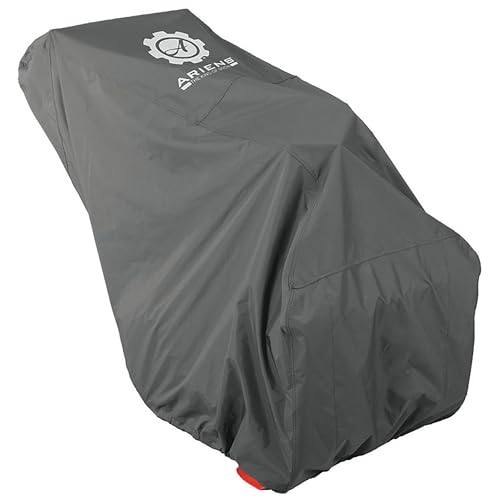
Ariens Heavy Duty Snow Blower Cover (24 to 36 in.)
$49.98A heavy duty cover sized for 24 to 36 inch machines, which keeps dust and shed condensation off the blower through the eight months it is not being used.
Best for: two-stage blowers stored in resin or steel sheds
Check price on AmazonCan a snow blower be stored in an unheated shed?
Yes, and unheated is normal. A snow blower is built to run at freezing temperatures, so cold storage does not hurt it. Two things do: moisture and stale fuel. Bring the machine in wet after every storm and the shed floor stays damp, which rusts the auger housing and the skid shoes from below. Leave untreated gas in the tank through summer and you get varnish in the carburettor and a machine that will not start the first time you need it.
The fixes are simple. Knock the snow off outside, let the machine drain and cool, and cover it once it is dry. At the end of the season either run the tank down or add stabiliser as the manual specifies, and store fuel in approved containers away from ignition sources. Maintenance details are in snow blower maintenance and the end-of-season routine is in how to store a snow blower.
If the blower itself is still on the shopping list, the best two-stage snow blowers lists widths, which is what sets your door opening.
How we chose
We did not test these products in person. Picks are researched from manufacturer specifications and owner manuals, engine and safety certifications where they apply, warranty terms, public recall records, and the recurring themes in verified owner reviews. We favor established brands with large review counts and parts support, match each pick to a real yard size or task, and place it in the tier where its price and capability actually belong.
Frequently asked questions
Will a snow blower and mower fit in a 7x7 shed?
Yes, on paper. The two machines plus a cart and wall tools work out at about 26 square feet of equipment and 35 square feet of floor with a walkway, against 49 square feet in a 7 by 7 shed. The practical catch is access: one machine ends up parked behind the other, so plan to swap them twice a year or step up to 8 by 8.
How wide does a shed door need to be for a snow blower?
About 38 inches for a typical two-stage machine, which measures around 32 inches at its widest point, following the rule of the widest point plus at least 6 inches. Measure with drift cutters or a cab fitted if you run them, since those add width beyond the clearing width printed on the machine.
Does a snow blower need a ramp into a shed?
A ramp helps and is worth having. Two-stage machines are heavy, and the auger and skid shoes do not like being dragged over a raised sill. A ramp wide enough for the wheel track and rated for the machine weight makes it a one-person job. Self-propelled models climb a gentle ramp under their own power at the lowest speed setting.
Should I store the mower and blower in the same shed?
It is the usual arrangement and it works, since the two are in use in opposite seasons. Give each one a wall, hang the seasonal hand tools rather than leaning them against machines, and keep fuel in approved containers away from ignition sources. The main cost of sharing is that the shed needs to be one size bigger than either machine alone would need.
Researched, not professional advice. This page is compiled from published specifications, manuals, labels and owner-review consensus, not hands-on testing. Follow the manufacturer's instructions and product label, and consult a qualified professional where safety, chemicals, fuel or structures are involved. As an Amazon Associate we earn from qualifying purchases.