Weed Control
Quackgrass: How to Identify and Control It in a Lawn
Quick answer
Quackgrass is a perennial grass that spreads by sharp white rhizomes, and no selective herbicide controls it in a home lawn. The honest options are spot treatment with a non-selective product followed by reseeding, or living with it. Never till, because chopped rhizomes multiply the plant.
Quackgrass is the weed where honest advice costs a sale. It is a perennial grass, so grassy weed killers aimed at annuals do not touch it, and it is a grass, so broadleaf products are irrelevant. There is no product on a home-center shelf that removes quackgrass from a lawn while leaving the lawn.
What makes it formidable is the rhizome system: sharp-tipped white underground stems that push through roots and soil and resprout from every fragment. That is also why tilling is the worst thing you can do. If you decide on renovation, plan the reseeding with the grass seed calculator, follow the method in how to overseed a lawn, and pick a blend from the best grass seed, such as a tall fescue if you want a coarse-textured lawn that hides the difference.
On this page
How do I identify quackgrass?
| Trait | Quackgrass |
|---|---|
| Weed type | Grassy weed |
| Life cycle | Perennial; rhizomes survive winter and expand every year |
| Season | Cool season; grows hardest in spring and fall |
| How it spreads | Aggressive white rhizomes with sharp pointed tips, plus seed |
| Auricles | Thin claw-like projections that clasp around the stem at the leaf collar. This is the definitive check |
| Leaf | Coarse, flat, dull blue-green blades, rough to the touch when drawn toward the base |
| Seedhead | Narrow upright spike resembling wheat, with spikelets set flat against the stem |
| Roots | Extensive shallow rhizome network, often the bulk of the plant, resprouting from any fragment |
| What it says about the lawn | Disturbed soil, imported topsoil, new construction, or a neglected boundary |
The clasping auricles are the reliable identifier. Tall fescue is coarse too but lacks quackgrass rhizomes, and annual grassy weeds like crabgrass have no rhizomes at all.
Why is quackgrass so hard to get rid of?
Because you are fighting an underground network, not individual plants. A patch is usually one connected organism linked by rhizomes running through the top several inches of soil, with enough stored energy to push new shoots after the visible growth is removed. Pull a clump and you snap the rhizome, leaving the rest intact and stimulated.
Tilling is the classic mistake. Chopping rhizomes into pieces is propagation, not control, and a single tilled patch routinely becomes a much larger one the following season. The same applies to aggressive raking or digging that leaves fragments. Slow, repeated removal of every piece can work on a tiny patch, but it demands more persistence than most people have.
Thick turf and higher mowing will not eliminate quackgrass, but they slow its spread into the rest of the lawn. Check the target height for your grass in the mowing height chart.
How do I get rid of quackgrass in a lawn?
Decide first whether you are removing it or containing it. Both are legitimate, but the half-measures in between waste money.
| Method | When | What it involves |
|---|---|---|
| Accept and contain | Ongoing | Mow high, feed the lawn and keep turf dense. Quackgrass stays, but it spreads more slowly and looks less obvious. |
| Non-selective spot treatment | Late summer to early fall, on actively growing plants | Glyphosate moves into the rhizomes. It kills the lawn grass it touches, so treated areas become bare spots. |
| Repeat the spot treatment | After regrowth appears, per label | Surviving rhizome sections push new shoots. A second application on regrowth is usually required. |
| Reseed treated areas | After the label replanting interval | Bare ground refills with whatever arrives first, so seed it deliberately. |
| Full renovation | Late summer to early fall | For lawns that are more quackgrass than turf: kill everything, wait out the label interval, then seed the whole area. |
| Persistent digging | Tiny isolated patches, moist soil | Remove every rhizome fragment and keep returning as pieces resprout. Slow but chemical-free. |
| Tilling | Never | Cutting rhizomes into pieces multiplies the plant. This is the single most common way people make quackgrass worse. |
There is no selective herbicide that removes quackgrass from a home lawn without damaging desirable grass. Any product promising otherwise deserves a careful look at its label.
What products actually apply here?
Roundup Weed and Grass Killer4 Concentrate, 1 gal is the non-selective concentrate for spot treatment and renovation, rainproof in about 30 minutes with replanting 1 to 30 days later per the label. Treat in late summer to early fall when the plant is moving resources into its rhizomes, and expect a second pass on regrowth.
RM43 Glyphosate Plus Weed Preventer Total Vegetation Control, 2.5 gal is a bare-ground product that prevents vegetation for up to a year across 43,243 sq ft. It belongs on gravel drives and fence lines only, never in a lawn or a bed you intend to replant. For reseeding after treatment, Jonathan Green Black Beauty Tall Fescue Blend, 25 lb covers 3,750 sq ft new, and Scotts EZ Seed Patch and Repair Sun and Shade, 10 lb handles smaller repairs at 225 sq ft per bag. Selective products such as BASF Drive XLR8 Crabgrass Killer Concentrate, 64 oz are aimed at annual grasses and will not remove quackgrass.
What gear helps with quackgrass?
A sprayer that lets you treat precisely without drift onto good turf, and seed for the holes you create. Shielded spraying matters more here than volume.

Chapin 16200 2-Gallon Pump Sprayer
$26.44A 2 gallon pump sprayer with an adjustable cone nozzle, which can be dialed to a tight pattern for treating patches without hitting surrounding grass.
Best for: spot-treating patches
Check price on Amazon
Jonathan Green Black Beauty Tall Fescue Blend, 25 lb
$106.33A 100 percent turf-type tall fescue blend covering 3,750 sq ft new or 7,500 sq ft overseeded, for refilling treated ground.
Best for: renovating a treated lawn
Check price on Amazon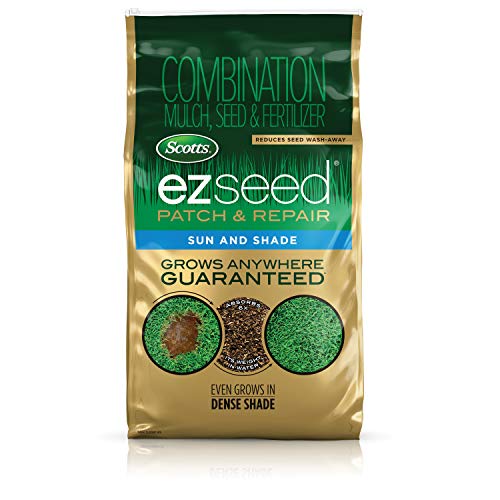
Scotts EZ Seed Patch and Repair Sun and Shade, 10 lb
$33.99Seed, expanding mulch, fertilizer and tackifier in one bag covering 225 sq ft, which suits the scattered bare spots spot treatment leaves.
Best for: patching individual dead spots
Check price on AmazonHow we chose
We did not test these products in person. Picks are researched from manufacturer specifications and owner manuals, engine and safety certifications where they apply, warranty terms, public recall records, and the recurring themes in verified owner reviews. We favor established brands with large review counts and parts support, match each pick to a real yard size or task, and place it in the tier where its price and capability actually belong.
Frequently asked questions
Is there a selective herbicide for quackgrass in lawns?
Not for home lawns. Quackgrass is a perennial grass closely related to desirable turf grasses, so products that kill it also damage the lawn. Grassy weed killers such as quinclorac target annuals like crabgrass and foxtail and will not remove it. The practical choices are containment through dense turf and higher mowing, or non-selective spot treatment followed by reseeding.
Can I dig quackgrass out?
Only on a small patch, and only with persistence. The plant spreads by rhizomes that resprout from every fragment, so partial digging multiplies crowns rather than removing them. If you try it, dig well beyond the visible patch, sift out every piece of white rhizome, and return every few weeks to remove regrowth. Never till, which chops rhizomes into hundreds of new plants.
How do I tell quackgrass from tall fescue?
Check the collar where the blade meets the sheath. Quackgrass has thin claw-like auricles that wrap around the stem, and it sends out white sharp-tipped rhizomes underground. Tall fescue is also coarse and dull green but has no auricles of that kind and grows in bunches without rhizomes. Digging up a plant settles it: rhizomes running sideways mean quackgrass.
Researched, not professional advice. This page is compiled from published specifications, manuals, labels and owner-review consensus, not hands-on testing. Follow the manufacturer's instructions and product label, and consult a qualified professional where safety, chemicals, fuel or structures are involved. As an Amazon Associate we earn from qualifying purchases.