Lawn Care
Best Dethatchers and Power Rakes for Lawns (2026)
Quick answer
The best dethatcher for most lawns is the Greenworks 40V 2-in-1 dethatcher and scarifier, a cordless 15 inch machine with five depth settings. Dethatch only when thatch is thicker than 0.5 inch. On a budget, the corded Sun Joe AJ805E does the job; tow the Agri-Fab 48 in on acreage.
Thatch is the tight layer of dead and living stems, runners and roots that builds up between the green grass blades and the soil. A thin layer, under about half an inch, cushions the lawn and is healthy. Once it passes half an inch, it sheds water, holds disease, and lets roots grow in the thatch instead of the soil. A dethatcher, also called a power rake, uses spinning tines or blades to tear that layer loose so you can rake or sweep it away.
Our top pick is the Greenworks 40V 15 in dethatcher and scarifier kit ($279.00), which swaps between a dethatching reel and a scarifying reel and includes a 5.0Ah battery. Before buying any dethatcher, measure your thatch: many lawns, especially tall fescue and perennial ryegrass, rarely need it, and core aeration is the gentler fix for moderate buildup. See dethatcher vs aerator and the best lawn aerators before you decide.
On this page
- How do I know if my lawn needs dethatching?
- Beginner pick: a corded 2-in-1 power rake for yearly cleanup
- Intermediate picks: cordless power rake or a tow-behind tine rake
- Expert picks: core aeration and tow sweeping for a thatch program on acreage
- How do the dethatcher picks compare on specs?
- Dethatcher vs aerator: which does my lawn need?
- What is the best time of year to dethatch?
- How do I dethatch a lawn step by step?
- What should I buy to finish the job after dethatching?
How do I know if my lawn needs dethatching?
Measure it. Cut a wedge of turf about 3 inches deep with a knife or spade and look at the side: the thatch is the spongy brown layer between the green leaves and the soil. Press it flat with your finger and measure. Under 0.5 inch, leave it alone. Over 0.5 inch, dethatch or core aerate. Signs that point to heavy thatch include a lawn that feels springy underfoot, water that runs off instead of soaking in, and a mower that scalps easily because the crowns sit up on the thatch.
Grass clippings do not cause thatch; they break down quickly. Thatch comes from grasses that spread by runners, heavy nitrogen feeding, overwatering and compacted, low-oxygen soil where decomposition slows.
| Grass | Growth habit | Thatch tendency | Usual fix |
|---|---|---|---|
| Kentucky bluegrass | Rhizomes | Moderate to high | Core aerate yearly; dethatch over 0.5 in |
| Tall fescue | Bunch type | Low | Rarely needs dethatching |
| Perennial ryegrass | Bunch type | Low | Rarely needs dethatching |
| Fine fescue | Mostly bunch type, some creeping | Moderate | Light dethatch in fall if needed |
| Bermudagrass | Stolons and rhizomes | High | Dethatch or verticut after green-up |
| Zoysiagrass | Stolons and rhizomes | High | Dethatch after green-up |
| St. Augustinegrass | Stolons | High | Light dethatch; avoid deep blades |
| Centipedegrass | Stolons | Moderate | Usually caused by overfeeding |
Beginner pick: a corded 2-in-1 power rake for yearly cleanup
For lawns under about 5,000 sq ft near an outlet, a corded machine is the cheapest way to power-rake before overseeding.

Sun Joe AJ805E 15 in Electric Dethatcher and Scarifier
$169.99A 13 amp corded dethatcher with a scarifier reel, 5-position depth control, four wheels and a removable collection bag that catches much of the debris. Owners commonly say the bag fills fast on thick thatch, so plan to empty it often.
Best for: yearly power raking on a budget
Check price on AmazonIntermediate picks: cordless power rake or a tow-behind tine rake
Two different answers for two different yards: a cordless machine for small to mid lawns with obstacles, and a tow rake for open acreage.

Greenworks 40V 15 in 2-in-1 Dethatcher and Scarifier Kit
$279.00Swap between dethatching and scarifying reels, choose from five depth settings, and fold the handles for storage. The brushless motor and included 5.0Ah battery work with over 75 Greenworks 40V tools, and there is no cord to drag around trees and beds.
Best for: small to mid lawns without an outlet nearby
Check price on Amazon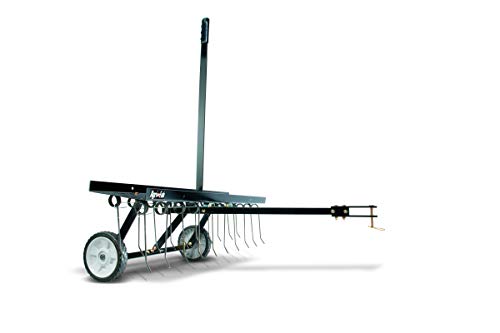
Agri-Fab 48 in Tow-Behind Lawn Dethatcher
$111.04Twenty-four replaceable heat-treated spring steel tines lift dead, matted grass across a 48 inch path, with a 70 lb weight tray, flat-free wheels, a universal hitch and a 3-year limited warranty. Spring tines rake the surface; they do not cut deep like a blade power rake.
Best for: raking thatch and debris on large lawns
Check price on AmazonExpert picks: core aeration and tow sweeping for a thatch program on acreage
On large bluegrass or bermuda lawns, the most effective long-term thatch control is yearly core aeration plus collecting what the tines lift.

Brinly PA-42BH-A 42 in Tow-Behind Plug Aerator
$379.00Soil cores pulled up to 3 inches deep and left on the surface mix soil microbes into the thatch layer, which speeds decomposition without tearing the turf the way deep power raking can. Three rotating sections handle uneven ground.
Best for: ongoing thatch control on big lawns
Check price on Amazon
Agri-Fab 44 in Tow-Behind Lawn Sweeper, 28 cu ft
$429.99A 28 cu ft flow-through hopper with a 5.6 to 1 brush-to-wheel ratio that picks up thatch, clippings and leaves behind a tow dethatcher, and dumps from the tractor seat. It saves hours of raking after dethatching an acre.
Best for: clearing thatch after a tow dethatcher
Check price on AmazonWho should not buy this tier: Skip this tier if your lawn is under half an acre or you do not own a lawn tractor or zero-turn with a hitch. Skip it too if your thatch measures under 0.5 inch: neither coring nor sweeping is needed on a healthy lawn, and aggressive dethatching of thin thatch just damages crowns and invites weeds. Tall fescue and perennial ryegrass lawns rarely justify this spend.
How do the dethatcher picks compare on specs?
| Model | Price | Type | Width | Tow-behind | Capacity |
|---|---|---|---|---|---|
| Greenworks 40V 15 in 2-in-1 Dethatcher and Scarifier Kit | $279.00 | cordless dethatcher and scarifier | 15 in | No | - |
| Sun Joe AJ805E 15 in Electric Dethatcher and Scarifier | $169.99 | corded dethatcher and scarifier | 15 in | No | - |
| Agri-Fab 48 in Tow-Behind Lawn Dethatcher | $111.04 | tow behind spring tine | 48 in | Yes | - |
| Brinly PA-42BH-A 42 in Tow-Behind Plug Aerator | $379.00 | tow behind plug | 42 in | Yes | - |
| Agri-Fab 44 in Tow-Behind Lawn Sweeper, 28 cu ft | $429.99 | tow behind sweeper | - | - | 28 cu ft |
Dethatcher vs aerator: which does my lawn need?
They solve different problems. A dethatcher removes the organic layer on top of the soil; a core aerator relieves compacted soil underneath and, as a side effect, slowly reduces thatch. If thatch measures over about 0.5 inch, dethatch. If the soil is hard, water puddles, and a screwdriver will not push in easily, core aerate. Many lawns with heavy thatch also have compaction, and the order extension guides suggest is dethatch first, then aerate, then overseed and feed. The full comparison is on dethatcher vs aerator.
| Question | Dethatcher (power rake) | Core aerator |
|---|---|---|
| Main problem solved | Thatch over 0.5 in | Compacted soil |
| How it works | Tines or blades pull up dead material | Hollow tines or spoons remove soil plugs |
| Stress on the lawn | High, looks rough for weeks | Moderate, recovers fast |
| Debris | Piles of thatch to rake or sweep | Soil cores left to break down |
| Helps overseeding | Yes, exposes soil | Yes, seed falls into holes |
| How often | Only when thatch is over 0.5 in | Yearly on clay and high-traffic lawns |
| Catalog examples | Greenworks 40V, Sun Joe AJ805E, Agri-Fab 48 in | Brinly PA-42BH-A, Agri-Fab 48 in plug |
What is the best time of year to dethatch?
Dethatch when the grass is growing vigorously and has at least four weeks of good growing weather ahead to recover. For cool-season lawns that means late summer to early fall, the same window as overseeding. Early spring is second best but invites crabgrass into the openings, and it conflicts with pre-emergent herbicide. For warm-season lawns, dethatch in late spring to early summer, after the lawn has fully greened up and been mowed a couple of times. Never dethatch a dormant, drought-stressed or heat-stressed lawn.
How do I dethatch a lawn step by step?
- Measure the thatch. Confirm the layer is over 0.5 inch in several spots before you start.
- Mow short and mark obstacles. Mow a notch lower than usual, flag sprinkler heads and shallow lines, and pick up sticks and stones.
- Water a day or two before. Slightly moist soil lets tines work; soggy soil tears, and bone-dry turf breaks.
- Start shallow. Begin at the shallowest setting and lower one step at a time until the machine lifts thatch without ripping out live grass.
- Make one or two passes. Run parallel passes, then a second pass at an angle only if thatch is heavy.
- Collect the debris. Rake, bag or sweep up the loosened thatch; a tow sweeper makes quick work of big areas.
- Overseed, feed and water. Overseed thin areas, apply starter fertilizer at the label rate, and keep the seedbed moist.
What should I buy to finish the job after dethatching?
Dethatching leaves thin spots, and thin spots are an invitation for weeds. Overseed right away: tall fescue and bluegrass options are in the best grass seed roundup, and the how to overseed a lawn guide covers rates. A calibrated spreader puts seed and starter fertilizer down evenly; on half an acre or more, a tow-behind from the best lawn spreaders page saves an afternoon. If you are raking up piles of thatch from an acre lot, the best lawn sweepers page explains how a tow sweeper collects it from the tractor seat.
How we chose
We did not test these products in person. Picks are researched from manufacturer specifications and owner manuals, engine and safety certifications where they apply, warranty terms, public recall records, and the recurring themes in verified owner reviews. We favor established brands with large review counts and parts support, match each pick to a real yard size or task, and place it in the tier where its price and capability actually belong.
Frequently asked questions
What is the best dethatcher?
For most home lawns, the Greenworks 40V 15 inch 2-in-1 dethatcher and scarifier is the best balance: cordless, brushless, with swappable reels and five depth settings. The corded Sun Joe AJ805E is the budget choice for small lawns near an outlet. On an acre or more, a tow-behind spring tine rake like the Agri-Fab 48 inch, paired with a lawn sweeper, covers ground far faster.
How thick does thatch have to be before I dethatch?
Dethatch when the layer is thicker than about 0.5 inch. Cut a small wedge of turf about 3 inches deep, find the spongy brown layer between green blades and soil, and measure it compressed. Under half an inch is normal and even beneficial, because it cushions the lawn and conserves moisture. Removing thin thatch mostly damages grass crowns.
Should I dethatch or aerate first?
If you plan to do both, dethatch first, collect the debris, then core aerate, then overseed and feed. Dethatching clears the surface so aerator tines reach soil, and coring afterward relieves compaction and adds soil to any remaining thatch. If thatch is under half an inch and the soil is compacted, skip dethatching and simply core aerate.
Is a dethatcher the same as a lawn sweeper?
No. A dethatcher uses tines or blades to pull the thatch layer up out of the turf, while a lawn sweeper uses spinning brushes to collect loose debris that is already on the surface, such as leaves, clippings and the thatch a dethatcher has lifted. On large lawns they work as a team: dethatch first, then tow a sweeper to pick up the piles.
Can dethatching kill my lawn?
It can badly damage it if done at the wrong time or depth. Dethatching dormant, drought-stressed or heat-stressed grass, or setting the blades so deep that they rip out living crowns, can leave bare soil that weeds take over. Start at the shallowest setting, work only when grass is actively growing with several weeks of good weather ahead, and overseed thin areas right away.
Do tow-behind dethatchers work?
Tow-behind spring tine dethatchers work well for lifting dead, matted grass, light thatch and debris over large areas, and adding weight to the tray improves their bite. They rake the surface rather than cutting into it, so heavy thatch over about an inch responds better to a blade power rake or to yearly core aeration. Pair them with a lawn sweeper to collect what they lift.
Researched, not professional advice. This page is compiled from published specifications, manuals, labels and owner-review consensus, not hands-on testing. Follow the manufacturer's instructions and product label, and consult a qualified professional where safety, chemicals, fuel or structures are involved. As an Amazon Associate we earn from qualifying purchases.