Lawn Care
Kentucky Bluegrass: Mowing Height, Seed Rate and Lawn Care
Quick answer
Kentucky bluegrass is a cool-season, sod-forming grass for zones 3 to 6 that spreads by rhizomes. Mow it at 2.5 to 3.5 inches, seed 2 to 3 pounds per 1,000 square feet (1 to 1.5 to overseed) in 50 to 65 F soil, expect 14 to 30 days to germinate, and feed 3 to 4 pounds of nitrogen a year.
Kentucky bluegrass is a medium-textured cool-season grass with boat-shaped leaf tips that spreads by underground stems called rhizomes, which is why it forms dense sod and repairs its own worn spots. It is the classic lawn of the northern states, from New England and the Great Lakes across the northern Plains to irrigated lawns in the intermountain West. It has two weaknesses: it thins in shade, and it goes brown and dormant within a few dry summer weeks unless it is watered.
Bluegrass seed is tiny, so the rate per 1,000 square feet is low and easy to overdo. Check pounds with the grass seed calculator, set feedings with the fertilizer calculator, and use the lime calculator only if a soil test comes back below pH 6.0.
On this page
- What are the key numbers for Kentucky bluegrass?
- How does Kentucky bluegrass compare with tall fescue and perennial ryegrass?
- How tall should Kentucky bluegrass be mowed?
- How much Kentucky bluegrass seed do I need?
- How often should you water Kentucky bluegrass?
- Does Kentucky bluegrass need dethatching?
- How much fertilizer does Kentucky bluegrass need?
- What gear keeps a bluegrass lawn thick?
What are the key numbers for Kentucky bluegrass?
| Trait | Kentucky bluegrass |
|---|---|
| Season type | Cool-season; peak growth in spring and fall |
| USDA zones and region | Zones 3 to 6; Northeast, Great Lakes, northern Plains, irrigated intermountain West |
| Mowing height | 2.5 to 3.5 in; the top of the range in summer |
| Seeding rate | 2 to 3 lb per 1,000 sq ft new; 1 to 1.5 lb overseeding |
| Germination | 14 to 30 days, the slowest of the cool-season grasses |
| Shade tolerance | Poor; thins under trees, where fine fescue does better |
| Drought tolerance | Goes dormant and brown in drought; crowns and rhizomes usually recover when water returns |
| Wear and traffic | Good; rhizomes fill damaged spots on their own |
| Nitrogen per year | 3 to 4 lb N per 1,000 sq ft, mostly late summer through fall |
| Soil pH | 6.0 to 7.0 |
| Spreading habit | Rhizomes; forms tight sod |
| Thatch | Moderate to heavy producer; dethatch when thatch passes about half an inch |
Ranges follow common university extension guidance. Newer elite cultivars can differ, so check the seed tag.
How does Kentucky bluegrass compare with tall fescue and perennial ryegrass?
| Trait | Kentucky bluegrass | Tall fescue | Perennial ryegrass |
|---|---|---|---|
| New-lawn seed rate per 1,000 sq ft | 2 to 3 lb | 6 to 8 lb | 5 to 7 lb |
| Germination | 14 to 30 days | 7 to 14 days | 5 to 10 days |
| Mowing height | 2.5 to 3.5 in | 3 to 4 in | 2 to 3 in |
| Spreads into bare spots | Yes, by rhizomes | Barely | No |
| Cold hardiness | Excellent | Good | Fair; winter injury in harsh open winters |
| Summer heat and drought | Dormant without water | Best of the three | Weakest of the three |
| Shade | Poor | Moderate | Poor to moderate |
| Nitrogen per year | 3 to 4 lb | 2 to 4 lb | 2 to 4 lb |
Many northern seed mixes combine all three to balance speed, sod strength and heat tolerance.
How tall should Kentucky bluegrass be mowed?
Mow Kentucky bluegrass at 2.5 to 3.5 inches, dropping toward 2.5 inches in cool spring weather and raising it to 3.5 inches once summer heat arrives. Taller grass has deeper roots and shades out crabgrass seedlings. Never remove more than a third of the blade in one cut, which means mowing before a 3 inch lawn reaches 4.5 inches. In the spring flush that can mean every four or five days.
A mower with a mulching deck returns clippings, which supply part of bluegrass's high nitrogen demand. The EGO POWER+ LM2135SP 21 in. Select Cut Self-Propelled Mower Kit ranges from 1 to 4 inches and the Honda HRX-BE 21 in. Battery Self-Propelled Mower from 0.75 to 4 inches, so both cover the full bluegrass range. See the mowing height chart for mixed lawns.
How much Kentucky bluegrass seed do I need?
At 2 to 3 pounds per 1,000 square feet, a 5,000 square foot lawn from bare soil takes 10 to 15 pounds of seed, and overseeding takes 5 to 7.5 pounds. A full acre at the 2.5 pound midpoint needs about 109 pounds. Seeding heavier does not speed things up; crowded bluegrass seedlings compete and thin out.
Labels can be lighter than extension rates. The Jonathan Green Blue Panther Kentucky Bluegrass Seed, 25 lb is labeled for 20,000 square feet new from a 25 pound bag, about 1.25 pounds per 1,000 square feet, and its label germination is 21 to 28 days. For a lawn with partial shade, a blend such as the Pennington Smart Seed Sun and Shade Mix North, 20 lb mixes bluegrass with grasses that tolerate 4 to 6 hours of sun. Because bluegrass is slow, seed only in late summer to early fall; spring seedlings rarely mature before summer heat.
How often should you water Kentucky bluegrass?
To keep bluegrass green through summer, plan on about 1 to 1.5 inches of water a week from rain and irrigation combined, delivered in one or two deep early-morning waterings instead of a daily sprinkle. Shallow daily watering grows shallow roots and invites disease. If you prefer not to water, let the lawn go dormant and stay dormant; extension services warn that repeated greening and browning drains the plant more than steady dormancy. A light watering every few weeks during a long drought helps crowns survive.
A smart controller like the Rachio 3 Smart Sprinkler Controller, 8 Zone or the Orbit B-hyve Smart Indoor/Outdoor Sprinkler Controller, 12 Zone adjusts run times to weather. Compare them in Rachio vs Orbit B-hyve, or see the best smart sprinkler controllers.
Does Kentucky bluegrass need dethatching?
Often, yes. Bluegrass rhizomes and stems build thatch, the spongy layer of undecomposed stems and roots between the soil and the green blades. Up to about half an inch is harmless; beyond that, water and fertilizer sit in the thatch instead of reaching roots. Push a finger or a trowel into the turf to measure. Dethatch when the grass is actively growing, in late summer to early fall or mid spring, never in summer heat.
A power rake such as the Greenworks 40V 15 in 2-in-1 Dethatcher and Scarifier Kit or the corded Sun Joe AJ805E 15 in Electric Dethatcher and Scarifier lifts thatch across a 15 inch path. Core aeration also breaks down thatch more gradually. The trade-offs are in dethatcher vs aerator.
How much fertilizer does Kentucky bluegrass need?
Bluegrass is the hungriest cool-season grass at 3 to 4 pounds of nitrogen per 1,000 square feet per year. Split it into three or four feedings of up to 1 pound each: late summer, early fall and late fall, plus a light late-spring feeding. With a 29-0-3 product like the Jonathan Green Green-Up Lawn Food 29-0-3, 15,000 sq ft, 1 pound of nitrogen takes about 3.4 pounds of product per 1,000 square feet. Spread in two perpendicular passes with a broadcast spreader such as the Scotts Turf Builder EdgeGuard DLX Broadcast Spreader, whose edge shield keeps granules out of beds and off pavement.
What gear keeps a bluegrass lawn thick?
Water control, a dethatcher, a reliable spreader and pure seed for fall repairs. Broader roundups: dethatchers and lawn spreaders.

Jonathan Green Blue Panther Kentucky Bluegrass Seed, 25 lb
$167.24Pure Kentucky bluegrass for building or thickening a sod-quality lawn, labeled for 20,000 sq ft new, with slow 21 to 28 day germination.
Best for: full-sun northern lawns seeded in early fall
Check price on Amazon
Greenworks 40V 15 in 2-in-1 Dethatcher and Scarifier Kit
$279.00A cordless 15 inch machine with swappable dethatching and scarifying reels and five depth settings, battery and charger included.
Best for: bluegrass thatch over half an inch
Check price on Amazon
Scotts Turf Builder EdgeGuard DLX Broadcast Spreader
$94.97A push broadcast spreader holding up to 15,000 sq ft of product, with an edge guard for clean borders along beds and drives.
Best for: three or four feedings a year
Check price on Amazon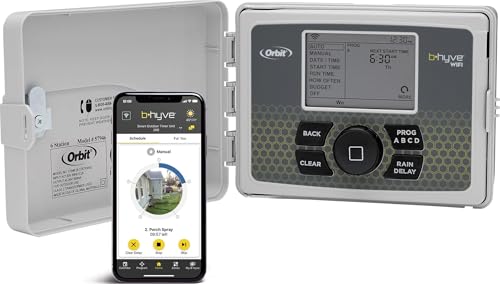
Orbit B-hyve Smart Indoor/Outdoor Sprinkler Controller, 12 Zone
$138.00A 12 zone app-controlled sprinkler controller in a weatherproof case that mounts in a garage or on an outside wall.
Best for: keeping bluegrass green through summer
Check price on AmazonHow we chose
We did not test these products in person. Picks are researched from manufacturer specifications and owner manuals, engine and safety certifications where they apply, warranty terms, public recall records, and the recurring themes in verified owner reviews. We favor established brands with large review counts and parts support, match each pick to a real yard size or task, and place it in the tier where its price and capability actually belong.
Frequently asked questions
How long does Kentucky bluegrass take to fill in bare spots?
Bluegrass rhizomes creep into small bare spots over one or two growing seasons, faster when the lawn is fed and watered in fall. A patch a few inches wide can close in a season, while a bare area the size of a doormat is better reseeded at 2 to 3 pounds per 1,000 square feet. Seed germinates in 14 to 30 days, so start in late summer to early fall.
Can Kentucky bluegrass grow in the South?
Only in cooler pockets. Bluegrass struggles with long, humid summers, so it is rarely the right choice below the transition zone except at higher elevations. In zone 7 it is usually blended into tall fescue as a minor share. Farther south, warm-season grasses such as bermudagrass, zoysiagrass or St. Augustinegrass hold up far better through summer heat.
Is Kentucky bluegrass better than tall fescue?
Neither is better everywhere. Bluegrass makes denser, softer sod and repairs itself, but it needs more water, more nitrogen and full sun. Tall fescue tolerates heat, drought and moderate shade better, but it does not spread, so it needs fall overseeding. North of the transition zone bluegrass usually wins; in the transition zone tall fescue is usually the safer lawn.
Why does my bluegrass lawn go brown every summer?
Kentucky bluegrass goes dormant to survive heat and drought, and it can turn tan within a few weeks without about an inch of weekly water. Dormant bluegrass usually greens up when rain and cooler temperatures return. Patchy rings or spots that do not recover can signal disease, grubs or thatch over half an inch, so pull back the turf and look before reseeding.
Researched, not professional advice. This page is compiled from published specifications, manuals, labels and owner-review consensus, not hands-on testing. Follow the manufacturer's instructions and product label, and consult a qualified professional where safety, chemicals, fuel or structures are involved. As an Amazon Associate we earn from qualifying purchases.