Outdoor Power Tools
Best String Trimmers (2026): What Size and Line Do You Need?
Quick answer
Most homeowners need a 15 to 16 inch string trimmer running .080 or .095 inch line. The EGO ST1623T (16 in swath, auto-feeding head, up to 60 minutes on its 4.0Ah battery) is the top pick. Small lots are fine at 13 to 15 inches, while acreage and heavy weeds call for a 17 to 18 inch straight-shaft gas trimmer.
String trimmer size means cutting swath, the diameter of the circle the line cuts, plus the line diameter the head is built for. A wider swath covers more ground per pass, and thicker line cuts tougher weeds, but both draw more power and battery. For a typical quarter to half-acre lot, a 15 to 16 inch trimmer on .080 to .095 inch line is the right size.
Our top pick is the EGO ST1623T at $299.00. Its LINE IQ head feeds line automatically, which removes the most common trimmer frustration. If you already own EGO batteries, the bare EGO ST1500SF costs far less. Before choosing gas, run your numbers through the gas vs battery cost calculator.
On this page
- What size string trimmer do I need?
- What string trimmer line size should I use?
- Beginner picks: easy trimmers for average lawns
- Intermediate picks: 16 to 18 inch trimmers for bigger lots
- Expert picks: high-torque gas and pro battery trimmers
- How do the picks compare on specs?
- Battery vs gas string trimmer: which is better?
- Straight vs curved shaft string trimmer: which should I choose?
- What should I check before buying a string trimmer?
What size string trimmer do I need?
Match swath and line to the property and the toughest growth you cut. These are general guidelines; always use the line size your trimmer head specifies.
| Property and growth | Cutting swath | Line diameter | Power | Example |
|---|---|---|---|---|
| Townhome or small lot, grass edges only | 13 to 15 in | .065 to .080 in | Corded or 20V to 40V battery | RYOBI 40V attachment trimmer |
| Quarter to half acre, grass and light weeds | 15 to 16 in | .080 to .095 in | 40V to 56V battery | EGO ST1500SF |
| Half to 1 acre, fence lines and thicker weeds | 16 to 17 in | .095 in | 56V to 80V battery or 25 to 28cc gas | EGO ST1623T |
| Acreage, ditches, tall weeds | 17 to 18 in | .095 to .105 in | 25 to 28cc gas, straight shaft | Husqvarna 130L |
| Brushy growth, daily professional use | Per head | .095 in and up | Commercial high-torque gas | Echo SRM-2620T |
A wider swath on a battery trimmer shortens runtime. Several models, including the RYOBI 40V and DEWALT DCST972X1, let you set a narrower swath to stretch the battery.
What string trimmer line size should I use?
Use the diameter printed on the head or in the manual. Thicker line lasts longer and cuts heavier weeds, but line that is too thick for the head strains the motor, shortens runtime and can overheat small engines. Full specs are on the string trimmer line size chart.
| Line diameter | Best for | Typical trimmers | Example line |
|---|---|---|---|
| .065 in | Light grass around beds and walks | Small corded and 18V to 20V trimmers | Check your head |
| .080 in | Grass and light weeds | Many 40V to 60V battery trimmers | Oregon Gatorline .080 in. |
| .095 in | Thick grass, weeds, fence lines | High-voltage battery and most homeowner gas trimmers | MaxPower .095 in. twisted |
| .105 in | Heavy weeds, ditches | Larger gas and commercial trimmers | Check your head |
| .130 in and up | Brush and dense weeds | Brush cutters with rated heads | Check your head |
Twisted and multi-sided line cuts more aggressively and quieter than round line of the same diameter. Never substitute wire or metal cable for trimmer line.
Beginner picks: easy trimmers for average lawns
For owners of typical suburban lots who trim once a week. Light weight and simple reloading matter more than maximum swath.
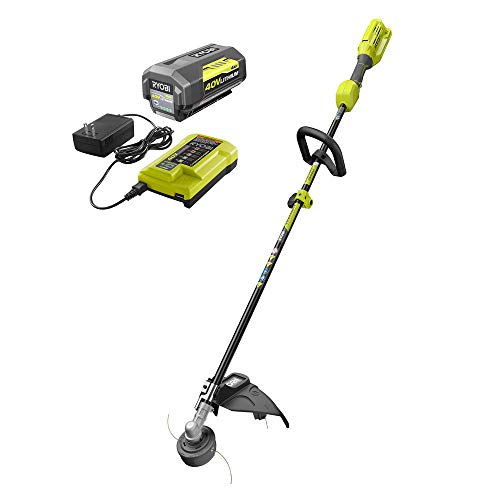
RYOBI 40V Attachment Capable String Trimmer Kit with 4.0Ah Battery
$239.00A 40V trimmer with a 13 to 15 in. adjustable swath, a bump-feed Reel-Easy head and a variable speed trigger, sold with a 4.0Ah battery and 90-minute charger. It accepts RYOBI Expand-It and universal attachments.
Best for: homeowners who want one power head plus add-on tools
Check price on Amazon
Husqvarna 128C 28cc Curved Shaft Gas String Trimmer
$199.99A 28cc 2-cycle engine with a 17 in. cutting path, Smart Start that Husqvarna says cuts pulling effort by 40 percent, Air Purge and a T25 Tap n Go head, at about 11 lbs on a curved shaft.
Best for: first gas trimmer for an average lawn
Check price on AmazonIntermediate picks: 16 to 18 inch trimmers for bigger lots
For half-acre to one-acre properties with fence lines, beds and heavier weeds. These trimmers run longer between reloads and reach farther under shrubs.

EGO Power+ ST1623T 16 in. String Trimmer Kit with 4.0Ah Battery
$299.00LINE IQ senses line length and feeds it continuously for a steady 16 in. swath, and POWERLOAD winds new line at the push of a button. EGO rates up to 60 minutes on the included 4.0Ah pack, which charges in 55 minutes.
Best for: large suburban lots with no bump-feeding
Check price on Amazon
Greenworks 80V 16 in. Brushless String Trimmer Gen 2 (tool only)
$224.99Greenworks quotes up to 60 minutes of runtime on a 2Ah 80V battery, with push-button start, an adjustable auxiliary handle and a 4-year tool warranty. Sold as a bare tool.
Best for: Greenworks 80V owners replacing gas
Check price on Amazon
Husqvarna 130L 28cc Straight Shaft Gas String Trimmer
$279.00A 28cc engine with an 18 in. cutting width, 8,000 RPM maximum speed, a Rapid Replace head, Smart Start, Air Purge and LowVib dampening. The straight shaft reaches under shrubs and along fences.
Best for: rural lots and fence lines beyond battery range
Check price on AmazonExpert picks: high-torque gas and pro battery trimmers
For acreage, dense weeds, ditches and owners who trim for hours at a time or already run pro battery platforms.
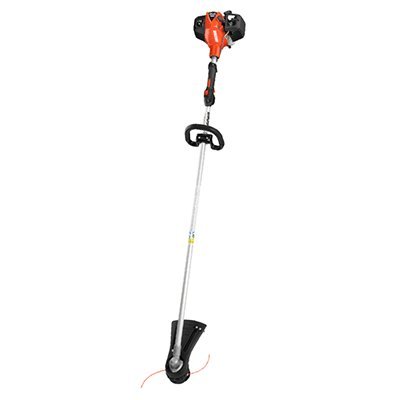
ECHO SRM-2620T 25.4cc High Torque Gas String Trimmer
$479.99A commercial high torque trimmer that pairs a 25.4cc engine with the Speed-Feed head, built for dense weeds and daily professional use. It favors torque over speed, which keeps line cutting in heavy growth.
Best for: acreage, heavy brush and crews
Check price on Amazon
DEWALT 60V MAX DCST972X1 17 in. String Trimmer Kit
$341.13A brushless 60V trimmer with hi and lo speed control and a 15 to 17 in. adjustable swath on .080 in. dual line that also takes .095 in. line. It accepts DEWALT universal attachments.
Best for: DEWALT FLEXVOLT users with thick weeds
Check price on Amazon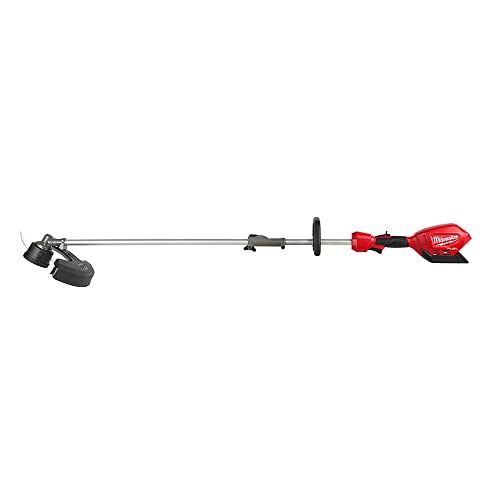
Milwaukee M18 FUEL 2825-20ST QUIK-LOK String Trimmer (tool only)
$289.00A brushless 18V power head that runs 0 to 4,900 or 0 to 6,201 RPM with a 14 to 16 in. swath on .080 or .095 in. line, plus QUIK-LOK attachment capability. Sold bare.
Best for: contractors already invested in M18 batteries
Check price on AmazonWho should not buy this tier: Skip this tier if you trim a quarter-acre lot once a week. A commercial gas trimmer adds 2-cycle fuel mixing, noise and maintenance that a small lot does not need, and pro battery kits cost more than homeowner kits for the same trimming. A 15 to 16 inch battery trimmer is quieter, lighter and finishes a small yard well within one charge.
How do the picks compare on specs?
| Model | Price | Cutting swath | Line size | Shaft | Voltage | Engine |
|---|---|---|---|---|---|---|
| RYOBI 40V Attachment Capable String Trimmer Kit with 4.0Ah Battery | $239.00 | 15 in | - | - | 40V | - |
| Husqvarna 128C 28cc Curved Shaft Gas String Trimmer | $199.99 | 17 in | - | curved | - | 28 cc |
| EGO Power+ ST1623T 16 in. String Trimmer Kit with 4.0Ah Battery | $299.00 | 16 in | - | straight | 56V | - |
| Greenworks 80V 16 in. Brushless String Trimmer Gen 2 (tool only) | $224.99 | 16 in | - | - | 80V | - |
| Husqvarna 130L 28cc Straight Shaft Gas String Trimmer | $279.00 | 18 in | - | straight | - | 28 cc |
| ECHO SRM-2620T 25.4cc High Torque Gas String Trimmer | $479.99 | - | - | straight | - | 25.4 cc |
| DEWALT 60V MAX DCST972X1 17 in. String Trimmer Kit | $341.13 | 17 in | 0.08 in | - | 60V | - |
| Milwaukee M18 FUEL 2825-20ST QUIK-LOK String Trimmer (tool only) | $289.00 | 16 in | 0.095 in | - | 18V | - |
Battery vs gas string trimmer: which is better?
A battery string trimmer is better for most suburban homeowners: it starts instantly, is quieter, needs no fuel and now cuts a 15 to 17 inch swath with .080 to .095 inch line. A gas string trimmer is better for acreage, ditches, dense weeds and long sessions away from a charger, and for owners who want an 18 inch swath at a lower price.
- Runtime: 30 to 60 minutes is typical per battery charge; EGO rates the ST1500SF at about 30 minutes on a 2.5Ah pack and the ST1623T at up to 60 minutes on 4.0Ah.
- Fuel: 2-cycle gas trimmers need oil mixed into the gas; use the two-cycle mix ratio calculator or premix.
- Platform: if you own a battery blower or mower, buy the bare trimmer on the same platform. See cordless outdoor tool systems.
- Attachments: RYOBI, DEWALT, Milwaukee and EGO Multi-Head systems accept edger, hedge and pole saw heads.
Straight vs curved shaft string trimmer: which should I choose?
Choose a straight shaft if you are tall, trim under shrubs, decks and fences, or want to add attachments. Choose a curved shaft if you are shorter, trim mostly open lawn edges and want a lighter, more compact tool. Curved shafts put the head closer to you, which feels balanced but reaches less; straight shafts reach farther and usually carry the more durable drive. The detail is on straight vs curved shaft string trimmer.
Every battery pick here uses a straight shaft; the Husqvarna 128C is the curved gas option and the Husqvarna 130L is its straight-shaft sibling. If you mostly want crisp edges along concrete, a dedicated edger does it better than a trimmer turned on its side; compare on string trimmer vs edger and see best lawn edgers.
What should I check before buying a string trimmer?
- Head type. Bump feed is common, auto-feed heads such as LINE IQ remove tapping, and fixed or rapid-reload heads trade speed for simplicity.
- Line size the head accepts. A head that takes .095 in. line gives you a heavier option for weeds.
- Weight and balance. Adjustable auxiliary handles and telescoping shafts, as on the EGO ST1623T, fit different heights.
- Warranty. EGO lists 5 years on the tool and 3 on the battery; Greenworks lists 4 years on its 80V trimmer.
- Spare line. Buy a spool at the same time, such as Oregon Gatorline .080 or MaxPower .095.
- Eye and ear gear. Keep NoCry safety glasses with the trimmer.
How we chose
We did not test these products in person. Picks are researched from manufacturer specifications and owner manuals, engine and safety certifications where they apply, warranty terms, public recall records, and the recurring themes in verified owner reviews. We favor established brands with large review counts and parts support, match each pick to a real yard size or task, and place it in the tier where its price and capability actually belong.
Frequently asked questions
What size string trimmer do I need for a half acre?
For a half acre, a 15 to 16 inch string trimmer running .080 or .095 inch line is the right size. A 40V to 56V battery trimmer such as the EGO ST1623T finishes edges, beds and fence lines on one charge for most lots. Choose a 17 to 18 inch gas trimmer only if the property has ditches, tall weeds or long fence runs.
Is .080 or .095 trimmer line better?
.095 inch line is better for thick grass, weeds and fence lines because it lasts longer and cuts tougher growth. .080 inch line is better for regular grass trimming with lighter battery trimmers, because it spins faster, draws less power and extends runtime. Use the size your trimmer head specifies; many heads accept both, such as the DEWALT DCST972X1, which ships with .080 and takes .095.
Are battery string trimmers as good as gas?
For most suburban lots, yes. High-voltage battery trimmers cut 15 to 17 inch swaths with .080 to .095 inch line and run 30 to 60 minutes per charge, which covers weekly trimming. Gas trimmers still win on acreage, dense weeds, ditches and long sessions, and the widest homeowner gas models such as the Husqvarna 130L cut 18 inches.
Is a curved or straight shaft trimmer better?
A straight shaft trimmer is better for reaching under shrubs, decks and fences, for taller users and for attachments. A curved shaft trimmer is better for shorter users and open lawn edging, because it is lighter and more compact. Most battery trimmers and professional gas trimmers use straight shafts; curved shafts mostly appear on entry-level gas models.
How long does a battery string trimmer run?
A battery string trimmer typically runs 30 to 60 minutes per charge. EGO rates its ST1500SF at about 30 minutes on a 2.5Ah battery and the ST1623T at up to 60 minutes on a 4.0Ah battery, while Greenworks quotes up to 60 minutes on a 2Ah 80V pack. Heavy weeds, thicker line and wider swath settings shorten runtime.
Can I use a string trimmer as an edger?
Yes, you can turn a string trimmer vertically to edge along driveways and walks, and it works for occasional touch-ups. The line wears quickly against concrete and the edge is less crisp than a steel-blade edger. If you want sharp, deep edges every week, an attachment-capable trimmer with an edger head or a dedicated edger is the better choice.
Researched, not professional advice. This page is compiled from published specifications, manuals, labels and owner-review consensus, not hands-on testing. Follow the manufacturer's instructions and product label, and consult a qualified professional where safety, chemicals, fuel or structures are involved. As an Amazon Associate we earn from qualifying purchases.