Outdoor Power Tools
Edger vs String Trimmer: Do You Need Both?
Quick answer
A string trimmer cuts grass and weeds where a mower cannot reach; an edger cuts a clean vertical line into the soil along concrete. If you buy one tool, buy the trimmer, like the EGO ST1623T, and turn it sideways for occasional edging. Add a steel-blade edger such as the Greenworks 40V 8 in when sharp sidewalk lines matter.

EGO Power+ ST1623T 16 in. String Trimmer Kit with 4.0Ah Battery
$299.00A 16 in auto-feed trimmer with a telescopic shaft and a 4.0Ah battery.
Best for: large suburban lots where you never want to bump-feed line
Check price on Amazon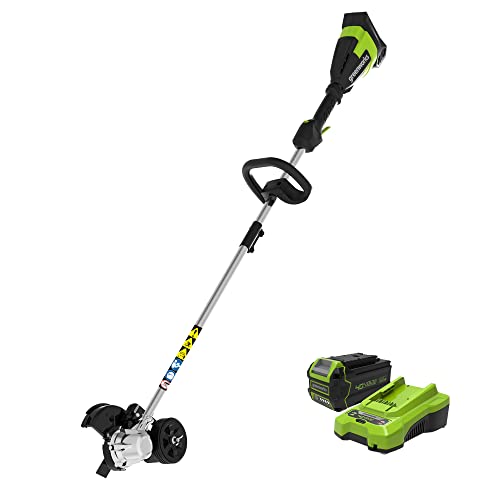
Greenworks 40V 8 in. Brushless Edger Kit with 4.0Ah Battery
$189.98An 8 in steel blade with tool-less depth adjustment and a 4.0Ah battery.
Best for: crisp driveway and sidewalk edges on a typical suburban lot
Check price on AmazonA string trimmer spins nylon line to cut grass horizontally around trees, fences, beds and mailboxes. An edger spins a steel blade vertically, riding a guide wheel along the driveway or sidewalk and slicing into the soil to stop grass creeping over pavement. They overlap in one job, edging, and there the edger does it faster, straighter and without chewing through line.
Most homeowners should own a trimmer first; nearly every lawn needs one. Whether you also need an edger depends on how much hard edge you have and how crisp you want it. A corner lot with long sidewalks justifies one; a lot with a short driveway usually does not. Attachment systems split the difference: the EGO ME0820 ($219.00) is an edger on a power head that also runs a trimmer and other heads.
On this page
- How do a string trimmer and an edger compare?
- Which should you choose, a string trimmer or an edger?
- Can you use a string trimmer as an edger?
- String trimmer vs weed wacker vs brush cutter: what is the difference?
- Walk-behind vs stick edger: which is better?
- What does each tool cost to run over 5 years?
- Trimmers and edgers worth considering
How do a string trimmer and an edger compare?
| Factor | String trimmer | Lawn edger |
|---|---|---|
| Cutting element | Nylon line, commonly .080 or .095 in | Steel blade, 7.5 to 8 in on catalog models |
| Cut direction | Horizontal; head can be turned vertical | Vertical |
| Cuts into soil | No, surface only | Yes: up to 1.5 in (WORX WG896), 2.5 in (Earthquake 41273), 3 in (EGO ME0820) |
| Along concrete | Line wears fast, edge tends to wander | Guide wheel rides the pavement for a straight line |
| Around trees, fences and beds | Yes, its main job | No |
| Tall weeds and overgrowth | Yes | No |
| Consumables | Trimmer line | Occasional blade replacement |
| Debris thrown | Grass clippings, small stones | Soil, grit and stones, often toward the street |
| Catalog example | EGO ST1623T at $299.00 | Greenworks 40V 8 in at $189.98 |
| Budget example | Husqvarna 128C gas at $199.99 | WORX WG896 corded at $125.89 |
Depths and prices from manufacturer and catalog listings.
Which should you choose, a string trimmer or an edger?
Choose a string trimmer if:
- You own only one handheld lawn tool; every lawn needs trimming around obstacles.
- Your lawn meets beds, fences, trees and walls more than pavement.
- You deal with weeds along ditches, fence rows or rough ground.
- An edge that is neat but not razor sharp is fine for you.
Add an edger if:
- You have long sidewalks, curbs or a corner lot.
- Warm-season grasses like bermuda or St. Augustine creep over pavement between mowings.
- You want a crisp, deep line that lasts weeks instead of days.
- You are tired of burning through trimmer line on concrete.
Can you use a string trimmer as an edger?
Yes, and plenty of homeowners never own anything else. Rotate the trimmer so the head spins vertically, keep the line just off the pavement and walk slowly. The drawbacks are real: the line wears quickly against concrete, the edge is harder to keep straight, the trimmer throws grit and it only trims grass rather than cutting a channel into soil, so creeping grass returns sooner.
If you edge every week or two, a dedicated edger saves line and time. A wheeled edger like the CRAFTSMAN V20 7.5 in, which CRAFTSMAN rates at 1,000 ft of edging per charge, is light and inexpensive. Line math for trimmers is on the string trimmer line size chart.
String trimmer vs weed wacker vs brush cutter: what is the difference?
A string trimmer and a weed wacker are the same tool. "Weed eater" and "weed whacker" are common nicknames, and Weed Eater is also a brand name that became generic. Line trimmer, strimmer and whipper snipper all mean the same thing too.
A brush cutter is different. It uses a metal blade instead of line, a straight shaft, a handlebar and usually a harness, and it is built for brambles, thick woody weeds and small saplings that shred nylon line. Some straight-shaft trimmers accept a blade kit, but only with the guard and handle the manufacturer approves; never put a blade on a trimmer whose manual does not allow it. If your problem is heavy brush, compare dedicated brush cutters or a commercial trimmer like the ECHO SRM-2620T, and read straight vs curved shaft trimmers.
Walk-behind vs stick edger: which is better?
A stick edger looks like a trimmer with a blade at the end; you carry it and steer by eye. The Husqvarna 525ECS is a professional stick edger that crews use weekly. It is fast once you have the knack, but uneven lines are common for occasional users. A walk-behind edger rolls on wheels, which makes straight lines easier and allows deeper cuts. The Earthquake 41273 ($465.99) has a 79cc four-cycle engine, 10 depth settings to 2.5 in and a blade that pivots for beveled bed edges, and it can cut shallow trenches. Battery wheeled edgers like the Greenworks 40V sit in between and suit most suburban lots.
What does each tool cost to run over 5 years?
A trimmer's running cost is line: a 414 ft spool of Oregon Gatorline .080 lists at $22.99, and a 200 ft spool of MaxPower .095 at $12.10, which MaxPower says is about 10 refills. Edging with a trimmer on concrete multiplies line use. An edger needs an occasional replacement blade and, for gas models, oil and fuel. Battery tools add the eventual cost of a replacement pack, which is the argument for putting both on one platform, such as the EGO Multi-Head kit.
Trimmers and edgers worth considering
Full lineups in the best string trimmers and best lawn edgers roundups.
EGO Power+ ST1623T 16 in. String Trimmer Kit with 4.0Ah Battery
$299.00Auto-feeding LINE IQ head, push-button POWERLOAD winding, a telescopic carbon fiber shaft and up to 60 minutes on the included 4.0Ah battery.
Best for: the one tool every lawn needs
Check price on Amazon Greenworks 40V 8 in. Brushless Edger Kit with 4.0Ah Battery
$189.98A brushless motor spinning an 8 in steel blade with tool-less depth adjustment, sold with a 4.0Ah battery and charger.
Best for: crisp sidewalk and driveway lines
Check price on Amazon
EGO Power+ ME0820 8 in. Edger with Multi-Head Power Head (tool only)
$219.00An 8 in edger that cuts up to 3 in deep on EGO's PH1420 power head, which also runs trimmer, hedge and pole saw attachments.
Best for: EGO owners who want several tools on one motor
Check price on Amazon
Earthquake 41273 79cc Walk-Behind Edger
$465.99A 79cc four-cycle engine with 10 depth settings to 2.5 in, a pivoting tri-tip blade for bevels and 4-wheel stability.
Best for: long curbs and overgrown edges
Check price on AmazonHow we chose
We did not test these products in person. Picks are researched from manufacturer specifications and owner manuals, engine and safety certifications where they apply, warranty terms, public recall records, and the recurring themes in verified owner reviews. We favor established brands with large review counts and parts support, match each pick to a real yard size or task, and place it in the tier where its price and capability actually belong.
Frequently asked questions
Do I need an edger if I have a string trimmer?
Not always. A trimmer turned on its side edges a driveway and sidewalk well enough for most lawns. An edger is worth adding if you have long runs of pavement, a corner lot or creeping warm-season grass, because its steel blade cuts a deeper, straighter line that lasts longer and it does not wear through line. The Greenworks 40V edger is an affordable add-on.
Is a string trimmer the same as a weed wacker?
Yes. String trimmer, weed wacker, weed whacker, weed eater and line trimmer all describe the same tool: a motor spinning nylon line to cut grass and weeds. Weed Eater is also a specific brand. A brush cutter is the one different tool in this family, because it uses a metal blade for thick brush and saplings rather than line.
Brush cutter vs string trimmer: which do I need?
Use a string trimmer for grass and ordinary weeds around a lawn. Use a brush cutter for brambles, woody weeds, tall thick growth and small saplings, where nylon line breaks constantly. Brush cutters have straight shafts, blades, handlebars and harnesses. Some straight-shaft trimmers accept blade kits only when the manual allows it. A commercial trimmer like the ECHO SRM-2620T handles dense weeds with line.
How deep should a lawn edger cut?
For routine maintenance of an established edge, a shallow cut around 1 in is enough. For a first cut or overgrown edge, go deeper, often 2 in or more, to sever roots and runners. Catalog edgers reach 1.5 in on the WORX WG896, 2.5 in on the Earthquake 41273 and 3 in on the EGO ME0820. Call 811 before cutting new deep edges.
How often should you edge your lawn?
Many homeowners edge every second or third mowing in the growing season, and trim around obstacles every mowing. Fast-spreading warm-season grasses such as bermuda and St. Augustine need more frequent edging than cool-season lawns. A deeper cut with a steel-blade edger lasts longer between passes than edging with a string trimmer, which only trims the blades rather than cutting a channel.
Researched, not professional advice. This page is compiled from published specifications, manuals, labels and owner-review consensus, not hands-on testing. Follow the manufacturer's instructions and product label, and consult a qualified professional where safety, chemicals, fuel or structures are involved. As an Amazon Associate we earn from qualifying purchases.