Chainsaws and Wood
Log Splitter Tonnage Calculator: How Many Tons Do You Need
Quick answer
Seasoned softwood up to about 10 inches splits with 4 to 5 tons, so a 5 to 7 ton electric splitter covers most small rounds. Seasoned oak or maple at 16 inches needs about 14 tons and at 20 inches about 20 tons. Green, knotty or stringy wood such as elm needs 25 to 50 percent more, which is where 25 to 30 ton gas splitters earn their price.
Log splitters are rated by the force the hydraulic ram pushes with, in tons, and the force a log needs depends on its diameter, species and how dry it is. Enter the biggest rounds you typically split, the wood type and whether it is green or seasoned, and the calculator estimates the tonnage you need, suggests a splitter class and filters splitters rated for it. Cutting the rounds first? Size the saw with the chainsaw bar length calculator.
Log splitter tonnage calculator
Recommended splitter
Log splitters rated for your wood
Top matches update when you calculate.
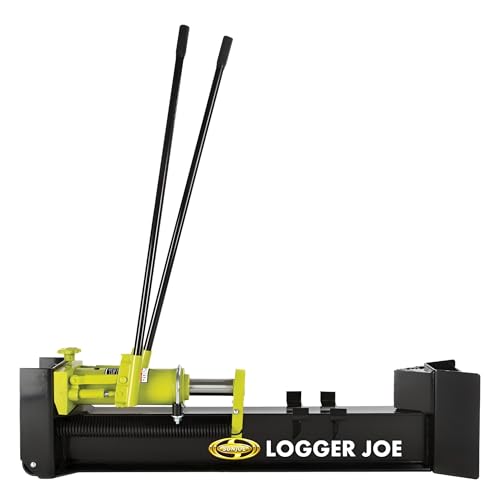
Sun Joe LJ10M 10-Ton Manual Hydraulic Log Splitter
$249.99Two-speed hand-pumped hydraulic splitter with 10 tons of force and no fuel or cord, for 18 in. by 8 in. rounds.
Best for: cabins, camps and spots without power
Check price on Amazon
Sun Joe LJ602E 5-Ton Electric Log Splitter
$399.9915 amp electric splitter with 5 tons of force for logs up to 20.5 in. long and 10 in. wide, with a two-handed safety switch.
Best for: splitting seasoned softwood for a fireplace
Check price on Amazon
BILT HARD 6.5-Ton Electric Log Splitter
$319.9915 amp motor with 6.5 tons of force, an 18 second cycle and capacity for 20.5 in. by 9.8 in. logs, fume-free for garage or patio use.
Best for: fire pit and wood stove wood in small batches
Check price on Amazon
PowerSmart 7-Ton Electric Log Splitter
$379.9915 amp induction motor with 7 tons of force and a 20 second cycle for logs up to 20 in. long and 10 in. across, with a 2-year warranty.
Best for: light-duty home firewood splitting
Check price on Amazon
Champion 8-Ton Compact Horizontal Gas Log Splitter
$789.0079cc engine with a 20 second auto-return cycle (about 180 cycles per hour) and a low-profile beam that makes heavy logs easier to load.
Best for: splitting away from an outlet without a towable machine
Check price on Amazon
SuperHandy 20-Ton Gas Log Splitter
$869.007 HP engine and a 2-stage Bucher gear pump with rapid auto return and a 7.5 second cycle for logs up to 20 in. long and 16 in. across.
Best for: several cords a season of mixed hardwood
Check price on Amazon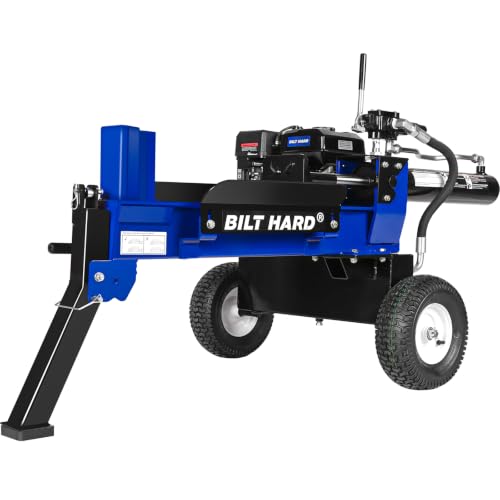
BILT HARD 22-Ton Gas Log Splitter
$1,099.99209cc engine with a 14 GPM 2-stage pump, 7 second cycle and 21 in. log capacity, towable at up to 25 MPH.
Best for: farm and acreage owners heating with wood
Check price on Amazon
Full Boar 28-Ton Gas Log Splitter
$1,399.00212cc OHV engine producing 28 tons with a 10.9 second cycle, an adjustable auto-return valve and a heavy-duty H beam.
Best for: knotty hardwood and big-volume firewood processing
Check price on Amazon
Husqvarna 450 Rancher 20 in. Gas Chainsaw
$354.9950.2cc, 3.2 HP X-Torq engine with Smart Start, Air Injection filtration and LowVib, rated for 13 to 20 in. bars.
Best for: firewood cutting and storm cleanup on rural property
Check price on Amazon
ECHO CS-590 Timber Wolf 59.8cc 20 in. Gas Chainsaw
$478.9959.8cc engine on a 20 in. bar, the largest displacement saw in this lineup for felling and bucking big hardwood.
Best for: woodlot owners felling and bucking large trees
Check price on AmazonOn this page
How many tons of splitting force do I need?
| Log diameter | Seasoned softwood | Seasoned hardwood | Tough or stringy wood | Green hardwood |
|---|---|---|---|---|
| 6 in | 3 tons | 4 tons | 5 tons | 5 tons |
| 8 in | 4 tons | 5 tons | 7 tons | 6 tons |
| 10 in | 4 tons | 6 tons | 8 tons | 8 tons |
| 12 in | 5 tons | 8 tons | 11 tons | 10 tons |
| 16 in | 10 tons | 14 tons | 19 tons | 18 tons |
| 20 in | 14 tons | 20 tons | 27 tons | 25 tons |
| 24 in | 18 tons | 27 tons | 36 tons | 34 tons |
Which woods are hardest to split?
| Group | Examples | Splitting | Use |
|---|---|---|---|
| Softwoods | Pine, spruce, fir, cedar, poplar, aspen, basswood | Easy | Softwood column |
| Common hardwoods | Oak, ash, maple, cherry, birch, walnut | Moderate | Hardwood column |
| Tough or stringy | Elm, sweetgum, hickory, black gum, sycamore, crotches and knots | Hard | Hardwood x 1.35 |
Is an electric or gas log splitter better?
Electric splitters, such as the PowerSmart 7-Ton Electric Log Splitter and the Sun Joe LJ602E 5-Ton Electric Log Splitter, are quiet, need no fuel or engine maintenance and can run in a covered area near an outlet, which suits a few cords of seasoned softwood or small hardwood rounds a year. Their 4 to 7 tons and 20 inch log length limit them. Gas splitters deliver 20 tons and up with faster cycle times, which matters when you split several cords of hardwood: the SuperHandy 20-Ton Gas Log Splitter cycles in about 7.5 seconds, while the Full Boar 28-Ton Gas Log Splitter handles green and knotty wood. See electric vs gas log splitters and the best log splitters.
| Type | Force | Cycle time | Best for |
|---|---|---|---|
| Manual hydraulic | 10 to 12 tons | Slow, strokes by hand | Small seasoned rounds, occasional use |
| Electric | 4 to 7 tons | 15 to 20 sec | Seasoned softwood and small hardwood rounds up to about 10 in |
| Compact gas | 8 to 12 tons | 15 to 20 sec | Mixed seasoned wood up to about 12 in |
| Full-size gas | 20 to 22 tons | 7 to 12 sec | Seasoned hardwood up to about 20 in |
| Large gas | 25 to 30+ tons | 10 to 15 sec | Green, knotty or large-diameter hardwood |
How does the tonnage calculator work?
The calculator interpolates between published guidance points for seasoned softwood and seasoned hardwood at 6, 8, 10, 12, 16, 20 and 24 inches. It multiplies by 1.35 for tough, stringy species such as elm and sweetgum, and by 1.25 for green wood, which is tougher and wetter than seasoned wood. It then adds 20 percent margin for knots and odd rounds and rounds up to a common splitter size. Cycle time matters as much as force for big jobs: a 7 second cycle splits roughly twice as many rounds per hour as a 15 to 20 second cycle. Splitting wood while green is often easier for some species and harder for others, so treat the moisture factor as a planning estimate.
Does log length matter for a log splitter?
Yes. Every splitter lists a maximum log length, often 18 to 21 inches for electric models and 20 to 25 inches for gas models, and rounds longer than the beam simply will not fit. Longer logs also take more force because more wood fiber must separate at once. Most wood stoves take 16 to 18 inch splits, so cutting rounds to your stove's firebox length before splitting saves both tonnage and time. A 20 inch bar saw such as the Husqvarna 450 Rancher 20 in. Gas Chainsaw handles most firewood bucking.
Frequently asked questions
Is a 10 ton log splitter enough?
A 10 ton splitter handles seasoned softwood up to about 14 to 16 inches and seasoned hardwood up to about 12 inches. It will struggle with larger oak, knotty rounds and stringy species like elm. For occasional splitting of seasoned wood for a fireplace, 10 tons is often enough; for regular hardwood splitting or green wood, a 20 to 25 ton gas splitter is the more reliable choice.
How many tons do I need to split oak?
Seasoned oak needs about 8 tons at 12 inches, 14 tons at 16 inches and 20 tons at 20 inches in diameter. Green oak takes roughly 25 percent more, and knotty or crotch pieces more again. For a typical mix of 12 to 20 inch oak rounds, a 20 to 22 ton gas splitter works well, while 25 tons or more gives margin for large or green wood.
Are electric log splitters worth it?
Yes, for the right wood. Electric splitters in the 5 to 7 ton range are quiet, low maintenance and easy to store, and they split seasoned softwood and small hardwood rounds up to about 10 inches well. They are not a good fit for large hardwood rounds, green wood or several cords a year, where their force and 15 to 20 second cycle times become limiting.
What is a good cycle time for a log splitter?
Cycle time is how long the ram takes to extend and retract. Full-size gas splitters commonly cycle in about 7 to 12 seconds, while electric splitters take around 15 to 20 seconds. For a cord or two a year it hardly matters, but for several cords a faster cycle can roughly double how many rounds you split per hour and noticeably shorten the job.
Can a log splitter split wood that has knots?
Yes, but knots and crotches take far more force than clear, straight-grained wood, often 25 to 50 percent more. Position the wedge to split through or alongside the knot rather than across it, and split large knotty rounds from the edges inward. If a round stalls the ram, stop and reposition it rather than forcing the splitter, and never try to free a stuck piece by hand while the ram is under pressure.
Researched, not professional advice. This page is compiled from published specifications, manuals, labels and owner-review consensus, not hands-on testing. Follow the manufacturer's instructions and product label, and consult a qualified professional where safety, chemicals, fuel or structures are involved. As an Amazon Associate we earn from qualifying purchases.