Weed Control
Goosegrass: How to Identify and Kill It in a Lawn
Quick answer
Goosegrass is a summer annual grass of compacted, low-mowed turf. It germinates later than crabgrass, nearer 60 to 65 F soil, so pre-emergent timing has to be split or delayed. Core aeration and higher mowing matter more here, since quinclorac is weak on goosegrass.
Goosegrass gets called silver crabgrass, and the nickname is useful: look for the silvery-white flattened center where the stems radiate out. It is tougher and wirier than crabgrass, hard to pull by hand, and it specializes in exactly the places turf struggles most, which are compacted paths, worn areas and scalped ground.
Two facts change the plan compared with crabgrass. It germinates later, when soil is nearer 60 to 65 F, so an early pre-emergent may be fading by the time goosegrass starts. And post-emergent options are weaker, since quinclorac is not strong on it. That puts unusual weight on aeration. Check your area with the lawn size calculator.
On this page
How do I identify goosegrass?
| Trait | Goosegrass |
|---|---|
| Weed type | Grassy weed |
| Life cycle | Summer annual; dies at frost and returns from seed |
| Season | Warm season; germinates after crabgrass and peaks in midsummer |
| How it spreads | Seed only |
| Center | Silvery-white flattened center where stems radiate out. This is the definitive check |
| Stem | Flattened and folded rather than round, tough and wiry, resisting hand pulling |
| Seedhead | Two to seven finger-like spikes with seeds arranged in a distinct zipper pattern |
| Growth habit | Low flattened rosette pressed into the turf, tolerating very low mowing |
| What it says about the lawn | Compaction, heavy foot traffic, low mowing, thin worn turf and sometimes wet areas |
Crabgrass is lighter green with a rounded stem base and no silver center, and it pulls out far more easily. Goosegrass fights back when you pull it.
Why do I have goosegrass in my lawn?
Compaction, nearly every time. Goosegrass tolerates dense, oxygen-poor soil that turf roots cannot exploit, which is why it lines up along walking routes, gate areas, parking strips, dog paths and the turns at the end of mowing passes. Where you see goosegrass, a soil probe usually meets resistance.
Low mowing is the other half. The plant holds a flattened rosette below blade height and keeps growing, so scalping removes its competition without touching it. Raising the cut to the top of the range for your grass and core aerating the worn strips changes both conditions at once. See core vs spike aerators and how to aerate a lawn, since spikes compress soil sideways and do far less for compaction than pulling plugs. Target heights by grass are in the mowing height chart.
What kills goosegrass?
Goosegrass is harder to control chemically than crabgrass, which is worth knowing before you buy. Cultural fixes carry more of the load here than on any other annual grassy weed.
| Method | When | What it involves |
|---|---|---|
| Core aerate | Spring or early fall, moist soil | The most useful single action. Relieves the compaction goosegrass depends on and helps turf compete. |
| Raise mowing height | Every mowing | Low mowing favors goosegrass strongly. Move to the top of the range for your grass. |
| Pre-emergent, delayed or split | Later than the crabgrass window, as soil approaches 60 to 65 F | Goosegrass germinates after crabgrass, so a single early application can weaken before it starts. |
| Overseed worn strips | Late summer to early fall | Turf density on paths and gate areas is what stops goosegrass returning each summer. |
| Post-emergent expectations | On young plants only | Quinclorac is weak on goosegrass compared with crabgrass. Young plants respond best, mature ones often survive. |
| Professional chemistry | Not typically available | Products used on golf turf for goosegrass are generally outside home-lawn labels. Check any label before assuming it applies. |
| Hand removal | Small numbers, moist soil | Tough and wiry, so use a knife or trowel rather than pulling. Remove before seedheads mature. |
If you treat only one thing on this page as the priority, make it aeration plus mowing height. Goosegrass control through chemistry alone is unreliable.
Which products help with goosegrass?
For prevention, Quali-Pro Prodiamine 65 WDG Pre-Emergent Herbicide, 5 lb lets you time an application to goosegrass germination rather than the earlier crabgrass window, and it supports the split application this weed usually needs. Scotts Halts Crabgrass and Grassy Weed Preventer, 20.12 lb and Lesco 0-0-7 with 0.43% Stonewall Pre-Emergent, 50 lb are the granular options at 10,000 and 12,500 sq ft.
Be realistic about post-emergents. BASF Drive XLR8 Crabgrass Killer Concentrate, 64 oz is excellent on crabgrass and foxtail, but goosegrass is the weed quinclorac handles least well, so expect partial results on mature plants. Syngenta Tenacity Turf Herbicide, 8 oz is a cool-season option worth checking on the label. For the aeration side, Yard Butler ID-6C Manual Lawn Coring Aerator handles small compacted patches and Agri-Fab 48 in Tow-Behind Plug Aerator covers an acre behind a tractor.
What gear helps with goosegrass?
An aerator first, a mower that holds a taller cut second, a sprayer third. That ranking is deliberate. More options are in the best lawn aerators.

Yard Butler ID-6C Manual Lawn Coring Aerator
$48.95A step-on coring tool pulling two plugs per push, ideal for the compacted walking routes where goosegrass concentrates.
Best for: spot-aerating worn strips
Check price on Amazon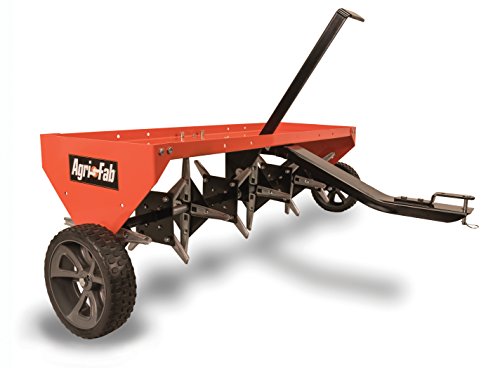
Agri-Fab 48 in Tow-Behind Plug Aerator
$319.98Thirty-two galvanized self-sharpening knives pulling plugs up to 3 inches deep, with a 175 lb weight tray and flat-free tires.
Best for: core-aerating an acre with a lawn tractor
Check price on Amazon
EGO POWER+ LM2135SP 21 in. Select Cut Self-Propelled Mower Kit
$749.00A battery self-propelled mower with a 1 to 4 inch cutting height range, so the lawn can be held at the top notch through summer.
Best for: lawns up to about half an acre
Check price on AmazonHow we chose
We did not test these products in person. Picks are researched from manufacturer specifications and owner manuals, engine and safety certifications where they apply, warranty terms, public recall records, and the recurring themes in verified owner reviews. We favor established brands with large review counts and parts support, match each pick to a real yard size or task, and place it in the tier where its price and capability actually belong.
Frequently asked questions
How do I tell goosegrass from crabgrass?
Look at the center of the plant. Goosegrass has a distinctly silvery-white flattened center where the stems radiate out, with tough wiry flattened stems that resist pulling. Crabgrass is lighter green throughout, with rounder stems and a looser sprawl, and it pulls up easily. The seedheads differ too: goosegrass seeds sit in a zipper pattern, crabgrass spikes spread like fingers.
Why did my crabgrass preventer not stop goosegrass?
Goosegrass germinates later than crabgrass, when soil is nearer 60 to 65 F, so a barrier applied at the early crabgrass window may be breaking down before goosegrass starts. Use a product that lists goosegrass, consider a delayed or split application timed to the later window, and accept that aeration and mowing height do more for this weed than any single application.
Does goosegrass mean my soil is compacted?
Almost always. Goosegrass tolerates dense, oxygen-poor soil far better than turf does, so it maps out walking routes, gate areas, parking strips and worn paths with real accuracy. Core aeration is the direct fix, ideally paired with overseeding so turf fills the opened ground. Without that, chemical control has to be repeated every year against the same conditions.
Researched, not professional advice. This page is compiled from published specifications, manuals, labels and owner-review consensus, not hands-on testing. Follow the manufacturer's instructions and product label, and consult a qualified professional where safety, chemicals, fuel or structures are involved. As an Amazon Associate we earn from qualifying purchases.