Outdoor Entertainment
Outdoor TV vs Projector: Which Works in Your Backyard?
Quick answer
Buy an outdoor TV if you watch before dark: a 1,000-nit screen works at 6pm and a projector does not. Buy a projector if you want a 120 in. image after sunset for a few hundred dollars, where the HAPPRUN 3,000 ANSI starts at dusk.
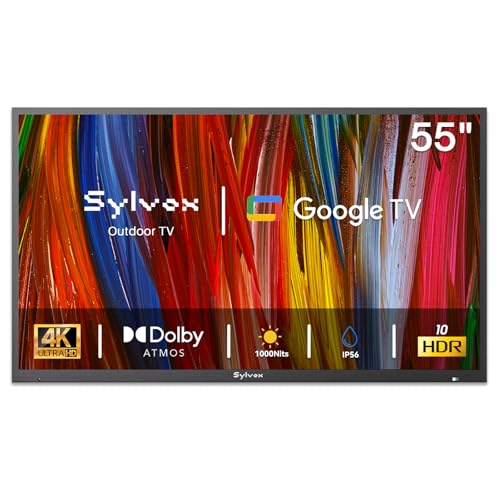
SYLVOX 55 in. Deck Pro 3.0 Outdoor TV (1,000 nits)
Under $2,500Works at 6pm, permanently installed, weatherproof.
Best for: an exposed deck that needs a published IP rating as well as brightness
Check price on Amazon
HAPPRUN Outdoor Projector, 3,000 ANSI Lumens
Under $500A far bigger image for a fraction of the price, once it is dark.
Best for: starting a film at dusk instead of waiting for full dark
Check price on AmazonThese two products look like competitors and are not really. They fail at opposite ends of the day, and that single fact should decide the purchase before price, image size or picture quality enters the conversation.
A projector throws a fixed amount of light at a surface. Daylight adds far more. No consumer projector wins that fight, which is why a projector in an open yard at 4pm shows you a faint grey rectangle. An outdoor TV generates its own light behind the image, so a 1,000-nit panel is perfectly watchable in the afternoon.
Run it the other way, though, and the projector wins easily. After dark, a few hundred dollars buys a 120 in. image. Getting to 120 in. with a television is not possible at any price in this catalog, and the largest screen here, the 65 in. SunBrite Solis, costs over $2,500.
So the question is not which is better. It is: when do you actually sit outside and watch things? For the optics and image-quality side of projection, TheaterCalc covers it in depth at their outdoor projector guide; this page stays on the backyard question of light, weather and installation.
Outdoor TV vs projector: the honest comparison
Comparing a mid-range example of each: a 1,000-nit 55 in. outdoor TV against a 3,000 ANSI lumen projector with a screen.
| Outdoor TV | Projector | |
|---|---|---|
| Example | SYLVOX Deck Pro 55 | HAPPRUN 3,000 ANSI |
| Budget | Under $2,500 | Under $500 |
| Image size | 55 in. fixed | Roughly 100 to 150 in. |
| Works in daylight | Yes, at 1,000 nits | No |
| Works at dusk | Yes | Marginally, improves as it darkens |
| Works after dark | Yes | Yes, this is its element |
| Permanently installed | Yes, weatherproof | No, comes out and goes back in |
| Weather rating | IP56 | None, not weatherproof |
| Setup time per use | None, press the remote | Roughly 5 to 15 minutes |
| Also needs | Weatherproof mount, ideally a soundbar | A screen, sound, and somewhere dry to store it |
| Sound | Built in, usually thin outdoors | Built in, usually thinner |
| Best for | Daytime sport, everyday evening use | Occasional film nights, big gatherings |
When does a projector stop working?
Earlier than most people expect. Brightness buys tolerance for ambient light, and the useful thresholds are roughly these, on about a 100 in. image with a real screen rather than a wall.
- Full dark: 500 to 1,000 ANSI lumens is plenty. The WiMiUS P62 Pro at a published 600 ANSI is genuinely fine here.
- After dark with porch and string lights on: 1,000 to 2,000. The HAPPRUN J7 at 1,500 ANSI.
- Dusk, about half an hour after sunset: 2,000 to 3,000. This is where the 3,000 ANSI HAPPRUN earns its money.
- Daylight under a covered patio: 3,000 to 5,000, and still marginal with a small image only.
- Open yard in daylight: not achievable. Buy a TV.
Image size matters as much as the lumens figure. The same projector spread from 100 in. to 150 in. loses well over half its apparent brightness, because the light covers more than twice the area. Going bigger and going brighter pull against each other.
Be careful with the numbers on listings, too. ANSI and ISO lumens are measured standards; the larger figures some listings quote are not. TOPTRO publishes 920 ISO lumens and openly says rivals inflate theirs, while the AuKing listing says 5000ANSI in its title and 4,800 ANSI in its detail. Compare only ANSI or ISO figures. Full picks are in best outdoor projectors for daylight.
Which should you buy?
Decide on when you watch, then pick from the right category. These two are the sensible starting points in each.
SYLVOX 55 in. Deck Pro 3.0 Outdoor TV (1,000 nits)
Under $2,500A 1,000-nit 55 in. screen with a published IP56 rating that stays mounted year round and works at any hour. If daytime sport is the reason you want outdoor entertainment, this is the only category that delivers it.
Best for: daytime viewing and everyday evening use
Check price on Amazon HAPPRUN Outdoor Projector, 3,000 ANSI Lumens
Under $500A published 3,000 ANSI lumens with HDR10, bright enough to start at dusk rather than waiting for full dark, and it produces an image two to three times the size of any TV here for a fraction of the price.
Best for: occasional film nights and gatherings after sunset
Check price on Amazon
SYLVOX 65 in. Outdoor TV, 1,000 Nits Ultra Bright
Under $2,500Before defaulting to a projector for the image size, consider that a 65 in. outdoor TV solves most of the size complaint while keeping daytime usability and permanent installation.
Best for: deep patios where a 55 in. screen looks small
Check price on AmazonCan you have both?
Plenty of people do, and it is less extravagant than it sounds. A modest outdoor TV handles everyday use, daytime sport and background viewing, while a projector comes out a few times a season for films and parties. The SYLVOX 43 in. Patio Series at under $1,000 plus the HAPPRUN J7 at under $250 together cost less than one full-sun 55 in. screen.
The one thing worth sharing between them is sound, because both fail at it for the same reason: outdoors there are no walls to reflect off, so built-in speakers sound thin. A pair of Polk Atrium 4 wall speakers or a weatherproof SYLVOX IP65 soundbar improves both. See best outdoor speakers for a patio.
How we chose
We did not test these products in person. Picks are researched from manufacturer specifications and owner manuals, engine and safety certifications where they apply, warranty terms, public recall records, and the recurring themes in verified owner reviews. We favor established brands with large review counts and parts support, match each pick to a real yard size or task, and place it in the tier where its price and capability actually belong.
Frequently asked questions
Is an outdoor TV or a projector better for a backyard?
It depends entirely on when you watch. If you want daytime sport or early-evening viewing, an outdoor TV is the only option that works, because no backyard projector competes with daylight. If you want a very large image for film nights after sunset, a projector gives you two to three times the screen size for a fraction of the cost.
Can you use a projector outside before it gets dark?
Only marginally, and only with a bright unit. A projector of 2,000 to 3,000 ANSI lumens on a proper screen will hold a watchable picture at dusk, roughly half an hour after sunset, and improve as the light falls. In open daylight no consumer projector works, regardless of the number on the box.
How big a screen can you get with a backyard projector?
Commonly 100 to 150 inches, which is far beyond any outdoor television. The trade-off is brightness: the same projector spread from 100 to 150 inches loses well over half its apparent brightness because the light covers more than twice the area. Going bigger therefore means either accepting a dimmer picture or waiting for darker conditions.
Do outdoor projectors need a screen?
Not strictly, but a wall costs you a lot of the light you paid for and shows its own texture and color cast. A dedicated screen reflects far more light back at the viewer and is usually a better investment than upgrading to the next projector up. For a fixed outdoor setup, plan the screen into the budget from the start.
Can I leave a projector outside like an outdoor TV?
No. None of these projectors is weatherproof or rated for permanent outdoor installation, and the vents that cool them also admit moisture. They are portable units that come out for the evening and go back indoors, and overnight dew alone can cause problems. Permanent, weatherproof, always-ready outdoor entertainment is specifically what an outdoor TV provides.
Researched, not professional advice. This page is compiled from published specifications, manuals, labels and owner-review consensus, not hands-on testing. Follow the manufacturer's instructions and product label, and consult a qualified professional where safety, chemicals, fuel or structures are involved.