Outdoor Entertainment
Best Outdoor TV (2026): Shade, Partial Sun and Full Sun
Quick answer
The best outdoor TV for most patios is the SYLVOX 55 in. Deck Pro 3.0, a 1,000-nit screen rated IP56. Pick brightness by where it hangs: about 700 nits in full shade, 1,000 in partial sun, and 1,500 or more in direct sun, where the SYLVOX 2,000-nit Full Sun earns its price.
An outdoor TV is not an indoor TV in a tougher box. Two things separate them, and both cost money: a sealed chassis that survives rain, humidity, insects and temperature swings, and a panel bright enough to fight daylight. Get the second one wrong and you have spent two thousand dollars on a mirror.
Brightness is measured in nits. A typical indoor TV runs somewhere around 250 to 400 nits, which is why it looks washed out the moment you carry it onto a deck. Outdoor models start near 600 or 700 nits for shade and climb past 2,000 for direct sun, and the price climbs with them. The SYLVOX 43 in. Patio Series at under $1,000 and the SunBrite 65 in. Solis at over $2,500 are both outdoor TVs. They are not remotely the same purchase.
So the order of operations is: work out how much direct sun hits the wall where the screen will hang, at the hours you actually watch. Then buy the brightness that matches, and no more. Run your spot through the outdoor TV brightness calculator before you shop. If you are still deciding whether you need a real outdoor TV at all, read outdoor TV vs putting a regular TV outside first, because that page will save some readers the entire budget.
On this page
- How many nits does an outdoor TV need?
- What is the best outdoor TV overall?
- Beginner picks: the cheapest honest way into an outdoor TV
- Intermediate picks: 1,000 nits for the partial-sun patio
- Expert picks: full sun, big screens and salt air
- How do the outdoor TV picks compare on specs?
- What does an IP rating actually protect against?
- What else do you need besides the TV?
- Which outdoor TV mount should you buy?
- Should you buy an outdoor TV or a projector?
How many nits does an outdoor TV need?
This is the whole decision. Stand where the screen will go, at the time of day you will watch, and be honest about the light. A pergola with slatted timber is not full shade. A wall that bakes from noon onward is full sun even if it is pleasant at 8pm.
| Where the screen hangs | Light on the screen | Nits to shop for | Example from this catalog |
|---|---|---|---|
| Covered porch, roofed patio, enclosed gazebo | No direct sun at any hour | 600 to 700 | SunBrite Veranda 4 at 600 nits sustained |
| Deep overhang or dense pergola | Brief edge-of-day sun only | 700 to 1,000 | Westinghouse 55 in. at 700 nits |
| Open patio with a tree or umbrella | A few hours of indirect glare | 1,000 | SYLVOX 55 in. 1,000 nits |
| Open deck, morning or late sun on the wall | Direct sun part of the day | 1,000 to 1,500 | Furrion Aurora Sun 55 at 1,500 nits |
| Poolside or unshaded wall, sun most of the afternoon | Direct sun at viewing time | 1,500 to 2,000 or more | SYLVOX 2,000-nit Full Sun |
Sun classes are the manufacturer's own wording. The nit targets beside them are our planning convention drawn from how those makers class their products, not an industry standard.
What is the best outdoor TV overall?
Matched to the job rather than ranked in a line, because a full-sun screen on a covered porch is wasted money and a shade screen in direct sun is unwatchable.
- Best overall: SYLVOX 55 in. Deck Pro 3.0 at under $2,500. 1,000 nits, IP56, metal casing, and a size that works at normal patio viewing distances.
- Best for full sun: SYLVOX 55 in. Full Sun at under $2,500. A published 2,000 nits, the brightest screen per dollar here.
- Best for a covered porch: SunBriteTV Veranda 4 55 in. at under $2,500. Rated at 600 nits of sustained full-screen brightness, a stricter measure than the peak figures most brands quote.
- Best budget entry: SYLVOX 43 in. Patio Series at under $1,000, or the recertified Furrion Aurora 50 in. at under $1,000 if you accept a recertified unit.
- Best big screen: SYLVOX 65 in. 1,000 nits at under $2,500 for shade and partial sun, or the SunBrite Solis 65 in. at over $2,500 for a fully exposed wall.
- Best build for salt air: SunBrite Solis 55 in. at over $2,500, in an IP55 aluminum housing SunBrite rates against salt as well as rain and dust.
Beginner picks: the cheapest honest way into an outdoor TV
These are for covered patios and porches, where the roof has already solved the brightness problem and you are mostly paying for weather sealing. Do not put any of them on a wall that gets afternoon sun.

SYLVOX 43 in. Patio Series Outdoor TV (700 nits)
Under $1,000A 700-nit 4K panel with an IP56 body, an IP66 remote and Google TV built in. The dual 10W waterproof speakers are genuinely usable, which matters because most outdoor TVs at this price have none worth using.
Best for: a covered porch where the screen stays out year round
Check price on Amazon
Furrion Aurora 50 in. Partial-Sun Outdoor TV (Recertified)
Under $1,000A factory-recertified Aurora with IK08-rated XtremeShield glass and a published operating range of -24F to 122F. Read the warranty terms before ordering, because recertified cover is usually shorter than new.
Best for: a first outdoor TV on a tight budget
Check price on Amazon
SYLVOX 43 in. Deck Pro 3.0 Outdoor TV (1,000 nits)
Under $1,000The same 43 in. size as the Patio Series but a 1,000-nit Deck Pro panel in a full metal casing, which buys roughly 40 percent more brightness for a small step in price. The better buy if any sun reaches the wall.
Best for: a small deck that catches some direct sun
Check price on AmazonIntermediate picks: 1,000 nits for the partial-sun patio
This is where most houses land. The wall gets real sun for part of the day, but not from noon to dusk. A 1,000-nit screen handles that, and the jump to full-sun pricing is not justified.
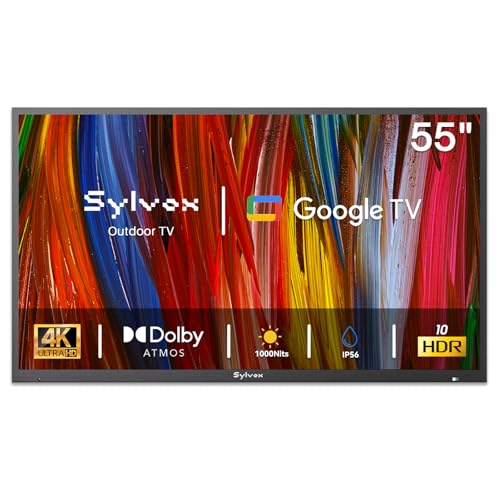
SYLVOX 55 in. Deck Pro 3.0 Outdoor TV (1,000 nits)
Under $2,500A 1,000-nit 55 in. screen with a published IP56 rating, Dolby Atmos and HDR10, built for wall, stand or ceiling mounting. The published IP figure is the reason to take it over the otherwise similar Pool Pro at the same price.
Best for: the standard partly shaded patio
Check price on Amazon
SYLVOX 55 in. Outdoor TV, 1,000 Nits Ultra Bright
Under $2,500Sylvox describes this 1,000-nit panel as about three times brighter than a standard indoor TV, with a voice remote and Firestick compatibility. It sits at the same price as the Deck Pro, so pick on features rather than picture.
Best for: buyers who want the voice remote and streaming stick support
Check price on Amazon
Westinghouse 55 in. Smart Outdoor TV (700 nits, Partial Sun)
Under $2,500Anti-glare tempered glass, a 178 degree viewing angle and an IP55 rating at the lowest price for a 55 in. outdoor screen here. At 700 nits it sits at the bottom of the partial-sun class, so keep it under an overhang.
Best for: a 55 in. screen on a shaded patio on a budget
Check price on Amazon
Furrion Aurora Partial-Sun 2 55 in. Outdoor TV (750 nits)
Under $2,500A 750-nit screen with IK09 impact-resistant glass, IP55 sealing and RangeXtend external Wi-Fi antennas. The antennas are the feature owners of far-from-the-router patios end up wishing they had bought.
Best for: a patio a long way from the household router
Check price on AmazonExpert picks: full sun, big screens and salt air
Everything here is bought for one of three reasons: the wall is in direct sun at viewing time, the seating is far enough back to need 65 in., or the house is near salt water. If none of those apply, the intermediate tier is the better purchase.

SYLVOX 55 in. Full Sun Outdoor TV, 2,000 Nits
Under $2,500A published 2,000 nits, which Sylvox rates for genuinely unshaded installations and also sells into bars and restaurants. It is the cheapest way here to get a watchable picture on a wall in direct afternoon sun.
Best for: an unshaded wall or pool deck
Check price on Amazon
Furrion Aurora Sun 55 in. Full Sun Outdoor TV (1,500 nits)
Under $2,500A 1,500-nit anti-glare screen with IK08 impact-resistant glass, which Furrion rates specifically for an exposed deck, patio or yard rather than leaving you to guess from a nit figure.
Best for: an exposed patio where flying debris is a real risk
Check price on Amazon
SYLVOX 65 in. Outdoor TV, 1,000 Nits Ultra Bright
Under $2,500The 65 in. version of the 1,000-nit panel, and much cheaper than the full-sun 65 in. options. The right choice when the problem is viewing distance rather than sunlight.
Best for: deep patios with 14 ft or more to the far seats
Check price on Amazon
SunBrite 55 in. Solis Full-Sun Outdoor TV (1,500 nits)
$2,500+A 1,500-nit direct-lit anti-glare screen in an industrial IP55 aluminum housing SunBrite rates against salt, snow, dust and heat, with a weatherproof media bay carrying 110V AC and USB behind the screen.
Best for: coastal and poolside installations
Check price on Amazon
SunBrite 65 in. Solis Full-Sun Outdoor TV (1,500 nits)
$2,500+The largest full-sun screen in this catalog, in the same salt-rated aluminum body with integrated down-firing speakers. It is the most expensive item on this site and it should be bought deliberately.
Best for: a large, fully exposed entertaining area
Check price on AmazonWho should not buy this tier: Skip this tier entirely if the screen will hang under a roof, because you are paying for brightness a roof already gives you for free, and a 600-nit Veranda 4 will look better in shade than a full-sun panel will. Skip it if the patio is small enough that 43 or 50 in. fills the view. And skip it if the TV will be seasonal: at these prices, a screen you use six evenings a year costs more per evening than hiring a cinema. A hard enclosure over a TV you already own is the honest answer for occasional use.
How do the outdoor TV picks compare on specs?
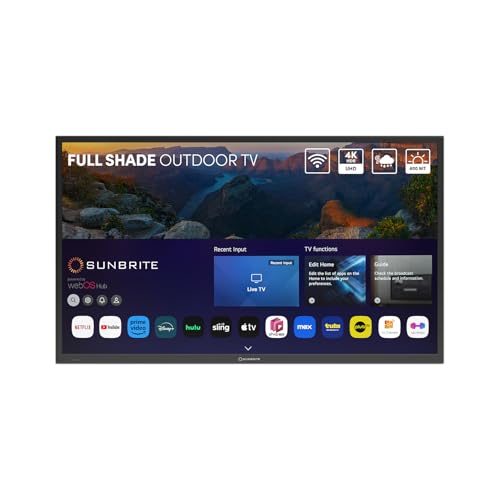
Brightness, weather rating and sun class side by side. Where a maker does not publish a figure, the cell is blank rather than filled with an estimate.
What does an IP rating actually protect against?
The IP number is two digits. The first is solids, the second is water. On the screens here you will see IP54, IP55 and IP56, and the difference is entirely in that second digit.
- IP54, as on the Furrion Aurora Sun, means dust protected and resistant to splashing water from any direction.
- IP55, as on the SunBrite Solis and Westinghouse, adds resistance to low-pressure water jets, which is closer to wind-driven rain.
- IP56, as on the SYLVOX Deck Pro, adds resistance to powerful water jets.
None of these numbers means submersible, and none of them covers the back of the set if you leave a cable gland open. They also say nothing about temperature, which is the other half of outdoor durability. Furrion publishes an operating range of -24F to 122F; many brands publish nothing at all, and a screen that is sealed against rain can still fail from condensation cycling in a cold climate. This is the single strongest argument for buying a purpose-built outdoor TV rather than weatherproofing an indoor one, which is covered in full in outdoor TV vs regular TV outside.
What else do you need besides the TV?
Three things, and the first two are not optional.
A weatherproof mount. An indoor bracket will rust and stain the wall beneath it within a season. Outdoor mounts are powder coated over plated steel with stainless fixings, and the good ones publish a salt spray test duration: 72 hours for the Mounting Dream, 90 for the Mount-It!, 96 for the monTEK. Match the mount to the screen weight, not just the screen size.
Power that is legal and safe outdoors. Covered in the closing note below, and worth reading before you buy anything.
Sound. Outdoor TV speakers fight a losing battle because there are no walls to reflect off. A weatherproof bar such as the SYLVOX IP65 soundbar or a pair of wall speakers like the Polk Atrium 4 changes the experience more than any picture upgrade. See best outdoor speakers for a patio.
And if the screen is not permanently installed, a cover is the cheapest insurance you will ever buy: see best outdoor TV covers.
Which outdoor TV mount should you buy?
An indoor bracket rusts and streaks the wall beneath it within a season, so this is not the place to save twenty dollars. The most useful figure to compare is the salt spray test duration, because it is the closest thing to a published corrosion standard in this category. Match the weight rating to the television's actual weight, not to its screen size.
| Mount | Fits screens | Max TV weight | Extension | Motion | Budget |
|---|---|---|---|---|---|
| monTEK | 32 to 65 in. | Not stated | 19.1 in. | Full motion | Under $50 |
| ELIVED long arm | 42 to 75 in. | 99 lb | 37.9 in. | Full motion | Under $100 |
| Mounting Dream | 42 to 90 in. | 154 lb | 16.54 in. | Full motion | Under $100 |
| VIVO MOUNT-TV80WP | 37 to 80 in. | 110 lb | Not stated | Full motion | Under $100 |
| Mount-It! | 37 to 80 in. | Not stated | 20 in. | Full motion | Under $250 |
| SunBriteTV tilt | 37 to 80 in. | 165 lb | Tilt only | Tilt | Under $250 |
| SunBriteTV dual arm | 37 to 80 in. | 150 lb | 30 in. | Full motion | Under $500 |
Weight ratings and extensions are the manufacturers' published figures, and where a maker does not publish one the cell says so. A full-motion arm at full extension puts far more leverage on the wall anchors than a flush mount does.
Should you buy an outdoor TV or a projector?
Short version: a projector needs darkness, a TV works at 6pm. If you want to watch a game on a Saturday afternoon, no projector at any price on this site will do it, and a 1,000-nit TV will. If you only ever watch films after dark and want a 120 in. image, a projector delivers that for a fraction of the money.
The full breakdown, including screen sizes, ambient light and what each one costs to run, is in outdoor TV vs projector. For projector picks that hold up in residual daylight, see best outdoor projectors for daylight. For the optics and image-quality side of projection, TheaterCalc covers it in more depth than we do at their outdoor projector guide.
How we chose
We did not test these products in person. Picks are researched from manufacturer specifications and owner manuals, engine and safety certifications where they apply, warranty terms, public recall records, and the recurring themes in verified owner reviews. We favor established brands with large review counts and parts support, match each pick to a real yard size or task, and place it in the tier where its price and capability actually belong.
Frequently asked questions
How many nits do I need for an outdoor TV?
Match the nits to the light on the screen at the time you watch. Full shade under a solid roof is comfortable at 600 to 700 nits. A patio with a few hours of indirect glare wants about 1,000. A wall in direct sun at viewing time needs 1,500 or more, and 2,000 is better. Buying more brightness than the location needs is wasted money, and buying less makes the screen unwatchable exactly when you want it.
Can I just put a regular TV outside?
Not safely as a permanent installation. Most indoor TV warranties exclude outdoor use, the vents let in humidity and insects, and condensation forms inside the panel as temperatures swing overnight. A standard 250 to 400 nit screen is also unreadable in daylight. For occasional use under cover, a hard enclosure over an indoor set is a legitimate middle path, and it is much cheaper than a real outdoor TV.
What is the difference between partial sun and full sun outdoor TVs?
It is a brightness class, not a weather class. Partial-sun models typically run around 700 to 1,000 nits and are meant for walls that catch sun for part of the day but are shaded at peak. Full-sun models run 1,500 nits and up with anti-glare treatment for screens in direct light. Both are weatherproof; the full-sun version costs substantially more because the panel and its cooling are doing much harder work.
Do outdoor TVs need to be covered in winter?
A purpose-built outdoor TV is rated to stay outside year round, and Furrion for example publishes an operating range down to -24F. A cover still helps by keeping grit, pollen and standing water off the screen and bezel during months when nobody is watching. What matters more is that the set is rated for your climate in the first place, and that any unused cable entries are properly sealed.
Can an outdoor TV get rained on directly?
Yes, within its IP rating. IP54 handles splashing, IP55 adds low-pressure jets and IP56 adds powerful jets, which covers wind-driven rain for most homes. None of them means submersible, and none protects the set if a cable gland or port cover is left open. Mounting under even a small overhang extends the life of any outdoor TV and cuts how often you clean the screen.
What size outdoor TV should I buy?
Work from the distance to the farthest seat rather than the size of the wall. A 43 to 50 in. screen suits seating within about 8 to 10 ft, 55 in. is comfortable from roughly 10 to 14 ft, and 65 in. earns its cost past about 14 ft. Outdoor seating is usually spread wider than a living room, so err larger if the budget allows, and check the viewing angle figure if chairs sit well off to the sides.
Researched, not professional advice. This page is compiled from published specifications, manuals, labels and owner-review consensus, not hands-on testing. Follow the manufacturer's instructions and product label, and consult a qualified professional where safety, chemicals, fuel or structures are involved.