Outdoor Entertainment
Outdoor TV vs Putting a Regular TV Outside: The Honest Answer
Quick answer
A regular TV outdoors voids most warranties, fails on condensation and is unreadable in sun. If it lives under a roof, a hard enclosure is a legitimate cheap fix. If sun reaches the wall, only a real outdoor TV like the SYLVOX Deck Pro 55 works.
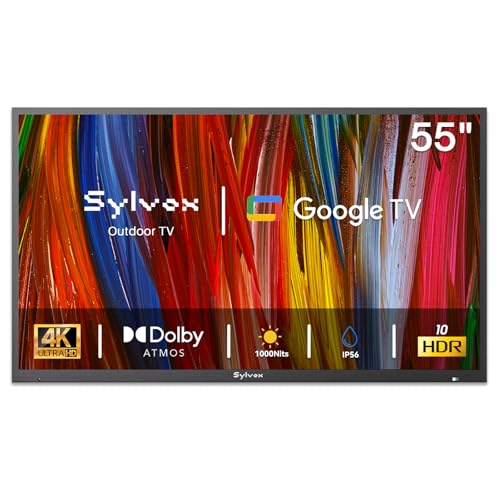
SYLVOX 55 in. Deck Pro 3.0 Outdoor TV (1,000 nits)
Under $2,500Sealed to IP56 and bright enough at 1,000 nits to watch in daylight.
Best for: an exposed deck that needs a published IP rating as well as brightness
Check price on Amazon
MELLCOM Hard Outdoor TV Enclosure with Mount, 45 to 55 in.
Under $250A hard shell and mount for a fraction of the price, if the spot is covered.
Best for: protecting a 55 in. indoor TV on a sheltered patio
Check price on AmazonThis is the question behind most outdoor TV searches, and it deserves a straight answer rather than a sales pitch. People are not wrong to ask it: a 55 in. indoor TV costs a few hundred dollars and a 55 in. outdoor TV costs under $2,500. That gap is worth interrogating.
So here is the honest position. Putting an ordinary television outdoors permanently is a bad idea for three specific, separate reasons, and only one of them can be solved with a cheap accessory. Which of those three apply to your patio decides whether you need to spend the money.
The three failure modes are warranty, moisture and readability. An enclosure fixes moisture. Nothing cheap fixes readability. And the warranty question is usually settled the moment a technician opens the case.
On this page
What actually goes wrong with a regular TV outdoors?
Three distinct problems, with three different answers. Work out which ones apply to your spot before spending anything.
| Problem | What happens | Does an enclosure fix it? | What actually fixes it |
|---|---|---|---|
| Warranty | Most indoor TV warranties exclude outdoor installation, so a moisture-related failure is not covered | No | Buying a TV rated for outdoor use |
| Humidity and condensation | Overnight temperature swings pull damp air through the vents and condensation forms inside the panel | Largely, if it is vented and under cover | An enclosure, or a sealed outdoor TV |
| Insects | Ants and spiders nest in the warm chassis and bridge contacts on the board | Mostly | A sealed outdoor TV |
| Readability in daylight | An indoor screen is roughly 250 to 400 nits and becomes a mirror in daylight | No, not at all | A brighter panel, nothing else |
| Temperature range | Indoor sets are rated for room temperature, not for freezing nights or a wall at 110F | Partly, and it can trap heat | An outdoor TV with a published range |
Furrion publishes an operating range of -24F to 122F for its Aurora range. Most indoor televisions publish nothing comparable, which is itself the answer to whether they are designed for the job.
Why can you not just turn the brightness up?
Because the gap is far larger than a settings menu can close. A typical indoor television produces somewhere around 250 to 400 nits. Outdoor screens start near 600 or 700 nits for shade and run to 2,000 for direct sun. That is four to eight times the output, and it comes from a different backlight and a different thermal design, not from a brightness slider.
There is a second problem that brightness alone does not solve. Outdoor panels add anti-glare treatment, and several use tempered glass rated for impact: the Furrion Partial-Sun 2 carries IK09-rated glass and the Aurora Sun IK08. An indoor screen's glossy finish reflects the sky straight back at you, which is why an indoor TV in shade can still be hard to watch while a 600-nit SunBrite Veranda 4 with an anti-glare screen is comfortable.
Work out what your spot needs with the outdoor TV brightness calculator before deciding. If the answer comes back at 700 nits because the patio is fully roofed, an indoor TV in an enclosure is a genuinely reasonable plan. If it comes back at 1,500, no accessory will get you there.
When is an enclosure the right answer?
An enclosure is the honest middle path, and it is a real product category rather than a compromise. It makes sense when the screen is under a roof, when you already own a television, or when the TV is seasonal. Most ship with their own articulating mount, and several lock, which also solves theft.
MELLCOM Hard Outdoor TV Enclosure with Mount, 45 to 55 in.
Under $250A hard shell plus an articulating bracket with 17.5 in. of extension and glare-reducing tilt, in one box, for well under the price of the cheapest purpose-built outdoor TV.
Best for: a 55 in. indoor TV on a sheltered patio
Check price on Amazon
Regetek Lockable Outdoor TV Enclosure, 46 to 65 in.
Under $500Reinforced locking points and a removable front panel, with published interior limits of 58.2 by 34.5 by 4.25 in. so you can confirm the fit before ordering. The lock itself is not included.
Best for: a screen that needs securing as well as covering
Check price on Amazon
Storm Shell SS-65 Outdoor TV Enclosure, 55 to 65 in.
Under $1,000Two-piece ABS that is waterproof, impact and UV resistant on a heavy-gauge steel bracket, with a fully removable front cover so nothing sits between you and the picture while watching.
Best for: a large screen in a wet climate
Check price on AmazonWhat does each route actually cost?
Comparing like with like on a 55 in. screen, assuming you already own an indoor television in the enclosure column.
| Indoor TV plus enclosure | Real outdoor TV | |
|---|---|---|
| Screen | Already owned | Under $2,500 |
| Protection | MELLCOM enclosure at under $250, mount included | Not needed, though a cover at under $50 keeps it clean |
| Mount | Included with the enclosure | Weatherproof mount from under $100 |
| Brightness | About 250 to 400 nits, shade only | 1,000 nits, partial sun |
| Warranty outdoors | Generally excluded | Rated for outdoor use |
| Works in afternoon sun | No | Yes |
| Suits | A roofed porch, or seasonal use | Any patio, year round |
So which should you buy?
Buy an enclosure if the screen will sit under a solid roof with no direct sun at any hour, you already own the television, the setup is seasonal, or the budget genuinely will not stretch. Under a roof, an indoor panel behind a vented enclosure is watchable and you will have spent under $200.
Buy a real outdoor TV if any direct sun reaches the wall at the hours you watch, the screen will be permanently installed, the climate is harsh or coastal, or you want it to simply work without thinking about it. Start with the SYLVOX 43 in. Patio Series at under $1,000 for a shaded spot, or the Deck Pro 55 for a normal partly shaded patio. See best outdoor TVs for the full range.
And if the real goal is a big picture for film nights rather than daytime viewing, neither may be the answer: read outdoor TV vs projector first.
How we chose
We did not test these products in person. Picks are researched from manufacturer specifications and owner manuals, engine and safety certifications where they apply, warranty terms, public recall records, and the recurring themes in verified owner reviews. We favor established brands with large review counts and parts support, match each pick to a real yard size or task, and place it in the tier where its price and capability actually belong.
Frequently asked questions
Can I put a regular TV outside on a covered patio?
Under a solid roof with no direct sun, yes, with sensible precautions. Use a vented hard enclosure to keep humidity, insects and blowing rain off the set, accept that the manufacturer warranty most likely excludes outdoor use, and bring it in over winter if your climate is harsh. What you cannot fix is daylight readability, so this only works where the roof keeps sun off the screen at all hours.
Does putting a TV outside void the warranty?
In most cases yes. Indoor television warranties routinely exclude damage from moisture, humidity, insects and use outside the stated operating environment, and outdoor installation falls under that. A failure caused by condensation inside the panel is usually straightforward for a technician to identify. Check your specific warranty before assuming, but plan on being uncovered.
Why is my TV unreadable outside even in the shade?
Two reasons. A typical indoor screen produces roughly 250 to 400 nits, which is dim against outdoor ambient light even without direct sun. Second, a glossy indoor panel reflects the open sky straight back at you. Outdoor TVs address both, with brighter backlights and anti-glare screen treatments, which is why a 600-nit outdoor panel can look better in shade than a brighter indoor one.
Is an outdoor TV enclosure worth it?
It is worth it when you already own the television and the spot is covered, because you get weather and insect protection plus a mount for well under $250 against several times that for the cheapest purpose-built outdoor TV. It is not worth it on a sunny wall, where the enclosure solves moisture but leaves you with a screen you still cannot see.
How long will a regular TV last outdoors?
There is no reliable figure, because it depends almost entirely on humidity swings, temperature range and whether the set is protected. Owners report anything from a single season to several years. The failure is usually corrosion or condensation on the board rather than a dramatic event. A purpose-built outdoor TV is sealed and given a published operating range specifically so this is not a gamble.
Researched, not professional advice. This page is compiled from published specifications, manuals, labels and owner-review consensus, not hands-on testing. Follow the manufacturer's instructions and product label, and consult a qualified professional where safety, chemicals, fuel or structures are involved.