Seasonal Lawn Care
Zone 10 Spring Lawn Care Calendar: What to Do and When
Quick answer
Zone 10 lawns never fully go dormant, so spring is an acceleration rather than a wake-up. Water through the tail of the dry season, keep a pre-emergent rotation going because weeds germinate nearly year round, mow St. Augustine at 3.5 to 4 inches, and feed once growth is steady.
Zone 10 covers south Florida, the southern Gulf Coast of Texas and pockets of coastal and desert southern California and Arizona, with winter lows of 30 to 40 F. St. Augustine dominates the humid parts of the zone, with bahia, zoysia, bermuda and seashore paspalum on coastal and sandy sites. The grass grows all year, which means there is no single spring restart to time, and the calendar habits that work in colder zones simply do not transfer.
What does transfer is arithmetic. The sprinkler zone calculator sets run times for sandy soil, the fertilizer calculator keeps each feeding at or under a pound of nitrogen per 1,000 square feet, and the mowing time calculator shows what a year-round mowing season really costs in hours.
On this page
What does a zone 10 spring lawn care schedule look like?
There is no green-up trigger here in the way there is farther north. The useful signals are steady growth, nights staying above about 60 F, and the end of the dry season.
| Task | Trigger | Timing cue | Notes |
|---|---|---|---|
| Keep irrigating | Dry season, little rainfall | Through spring | Often the driest stretch of the year in south Florida |
| Pre-emergent application | Per label interval, not a temperature | Early spring | Soil here rarely drops below 55 F, so weeds germinate year round |
| Increase mowing frequency | Growth accelerating | Early to mid spring | From every 10 to 14 days toward every 7 |
| First feeding of the year | Steady growth, nights above 60 F | Mid spring | 0.5 lb N per 1,000 sq ft; check local ordinances first |
| Chinch bug scouting begins | Warm dry sunny strips | Mid spring | Earlier here than any other zone in this calendar |
| Take-all root rot watch | Warm weather with wet soil | Mid to late spring | Yellow thinning patches, short dark roots, grass lifts easily |
| Sod, plug or sprig repairs | Soil warm and growing | Spring | Best establishment window; SodPods St. Augustine Seville Grass Plugs, 64 Count |
| Core aerate compacted areas | Grass growing hard | Late spring | Only where soil is compacted; sandy soils often need none |
| Check irrigation coverage | Before the hot months | Late spring | Run each zone and look for dry arcs and blocked heads |
| Service the mower | Before peak growth | Late spring | Blades dull fast in a year-round mowing season |
Zone 10 has no reliable frost date and no dormancy, so timing works off rainfall, growth rate and product label intervals rather than temperature triggers.
When should I put down pre-emergent in zone 10?
On a rotation set by the product label, not by a soil thermometer. The standard 50 to 55 F germination trigger assumes soil that gets cold enough to stop weed seed in the first place. In zone 10 soil rarely drops that low, so crabgrass, goosegrass and sedges can germinate across most of the year, and the practical approach is two or three applications spaced at the label interval, commonly 60 to 90 days, within the annual maximum the label sets.
Sprayable Quali-Pro Prodiamine 65 WDG Pre-Emergent Herbicide, 5 lb is the economical way to run that schedule, while granular Scotts Halts Crabgrass and Grassy Weed Preventer, 20.12 lb covers 10,000 square feet and goes down on a dry lawn before watering in. The annual limit matters: exceeding it is both a label violation and a way to thin your own turf. Do not use pre-emergent where you are plugging or sodding. See when to apply pre-emergent, goosegrass and crabgrass.
How do I mow and feed a zone 10 lawn?
Mowing height is the main lever on a lawn that grows every month. Nitrogen totals are annual and get split into small applications across a very long season.
| Grass | Mowing height | Mowing interval in growth | Nitrogen per year |
|---|---|---|---|
| St. Augustinegrass, standard | 3.5 to 4 in | Every 5 to 7 days | 2 to 4 lb per 1,000 sq ft |
| St. Augustinegrass, dwarf types | 2 to 2.5 in | Every 5 to 7 days | 2 to 4 lb per 1,000 sq ft |
| Bahiagrass | 3 to 4 in | Every 7 to 10 days | 1 to 2 lb per 1,000 sq ft |
| Bermudagrass | 1 to 2 in | Every 5 to 7 days | 2 to 5 lb per 1,000 sq ft |
| Zoysiagrass | 1 to 2 in | Every 7 to 14 days | 1 to 3 lb per 1,000 sq ft |
| Seashore paspalum, coastal sites | 1 to 2 in | Every 5 to 7 days | 2 to 4 lb per 1,000 sq ft |
No single application should exceed 1 lb of quickly available nitrogen per 1,000 sq ft, and many counties in this zone restrict nitrogen and phosphorus during the summer rainy season. Seashore paspalum tolerates salt and brackish irrigation better than the other grasses here.
How much should I water a zone 10 lawn in spring?
More than at any other time of year, because spring is the dry end of the dry season across much of the zone. On the deep sands common here, half to three quarters of an inch twice a week suits St. Augustine, while bahia gets by on less. Water in the hours before dawn, and check local watering day and hour restrictions, which apply year round in many counties.
Coverage is worth checking before the hot months arrive. Run each zone, set out straight-sided cans, and look for dry arcs, blocked heads and mismatched nozzles, since most chronic brown patches are irrigation faults rather than pests. Gear rotors such as the Rain Bird 5000 Rotor 20-Pack with Nozzle Trees and Tools or Hunter PGP Ultra Rotor Sprinkler Heads, 4-Pack are the standard fix for an underperforming lawn zone, and Rain Bird AG-5 Pop-Up Impact Sprinkler, 24 to 45 ft handles hard or reclaimed water. A controller such as the Rachio 3 Smart Sprinkler Controller, 8 Zone or Orbit B-hyve Smart Indoor/Outdoor Sprinkler Controller, 12 Zone adjusts run times and skips for rain. See the best lawn sprinklers and Rachio vs Orbit B-hyve.
What gear does a zone 10 spring need?
Irrigation parts and a mower built for a season that never really ends. More options are in the best smart sprinkler controllers.

Rain Bird 5000 Rotor 20-Pack with Nozzle Trees and Tools
$207.95Twenty top-adjustable rotors with Rain Curtain nozzles, 40 to 360 degree arcs and 25 to 50 ft throw at 25 to 65 psi, enough heads to rebuild a typical front and back yard.
Best for: in-ground systems with dry arcs
Check price on Amazon
Rachio 3 Smart Sprinkler Controller, 8 Zone
$199.00An 8 zone smart controller with weather-based scheduling and rain and freeze skips that installs on most existing systems in about 30 minutes, which matters where restrictions set watering days.
Best for: automating an existing system
Check price on Amazon
EGO POWER+ LM2206SP 22 in. Aluminum Deck Self-Propelled Mower Kit
$1,299.00A 22 inch cast aluminum deck that carries a lifetime warranty and will not rust, with EGO listing up to 70 minutes on the 10.0Ah battery. Humidity and irrigation are hard on steel decks here.
Best for: larger lawns mowed most weeks of the year
Check price on Amazon
SodPods St. Augustine Seville Grass Plugs, 64 Count
$109.98Farm-grown 3 by 3 inch Seville plugs, listed at 144 sq ft of coverage at 18 inch spacing once mature, for thin areas left by pests or shade. Note the listing cannot ship to CA or AZ.
Best for: repairing St. Augustine in humid zone 10
Check price on Amazon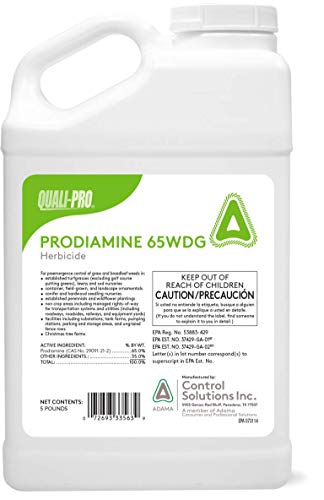
Quali-Pro Prodiamine 65 WDG Pre-Emergent Herbicide, 5 lb
$77.00A sprayable 65 percent prodiamine that tank-mixes with fertilizer and iron, which is the practical way to run repeat applications at label intervals across a year-round weed season.
Best for: sprayer owners treating large areas
Check price on AmazonHow we chose
We did not test these products in person. Picks are researched from manufacturer specifications and owner manuals, engine and safety certifications where they apply, warranty terms, public recall records, and the recurring themes in verified owner reviews. We favor established brands with large review counts and parts support, match each pick to a real yard size or task, and place it in the tier where its price and capability actually belong.
Frequently asked questions
When does my lawn green up in zone 10?
It usually never fully browns, so there is no green-up in the northern sense. Growth slows through the cool months and accelerates as nights stay above about 60 F. Rather than waiting for colour, watch how often the lawn needs mowing: once the interval shortens from every 10 to 14 days toward every 7, the grass is growing well enough to justify the first feeding of the year.
How often should I put down pre-emergent in zone 10?
Two or three times a year on the interval your product label allows, commonly 60 to 90 days apart within an annual maximum. Soil here rarely drops below 55 F, so weed seed can germinate in nearly any month and a single application leaves long gaps. Never exceed the label total, and skip pre-emergent anywhere you plan to plug or sod.
How much water does a zone 10 lawn need in spring?
About half to three quarters of an inch twice a week for St. Augustine on sandy soil, less for bahia, all before dawn. Spring is typically the driest part of the year in south Florida, so this is when irrigation faults show up as brown patches. Check local watering day and hour restrictions first, since they apply year round in many counties.
Can I plant St. Augustine sod or plugs in spring in zone 10?
Yes, and spring into early summer is the best window, because warm soil and increasing rainfall help new runners establish quickly. St. Augustine does not grow from seed, so sod, plugs or sprigs are the only options. Water new plugs lightly and frequently until they root, keep pre-emergent off the area, and hold off on nitrogen until the new grass is growing.
Researched, not professional advice. This page is compiled from published specifications, manuals, labels and owner-review consensus, not hands-on testing. Follow the manufacturer's instructions and product label, and consult a qualified professional where safety, chemicals, fuel or structures are involved. As an Amazon Associate we earn from qualifying purchases.