Seasonal Lawn Care
Zone 10 Summer Lawn Care Calendar: What to Do and When
Quick answer
Zone 10 summer is the rainy season. Turn irrigation down or off, mow St. Augustine at 3.5 to 4 inches every five to seven days, and scout weekly for chinch bugs and tropical sod webworms. Many counties restrict nitrogen and phosphorus fertilizer during these months.
In most of the country summer means watering. In zone 10 it means the opposite. Daily storms through the rainy season often deliver more water than any lawn needs, and the jobs that matter become mowing frequently enough to keep up, scouting for insects and resisting the urge to fertilize a lawn that is already growing fast.
Wet soil plus heavy nitrogen is the combination behind most summer lawn damage here. The fertilizer calculator shows exactly what a bag delivers per 1,000 square feet, and the sprinkler zone calculator helps you decide what a zone should run when rain does not come.
On this page
What does a zone 10 summer lawn care schedule look like?
Everything speeds up: growth, weeds, insects and disease. The schedule below assumes a typical rainy season with frequent afternoon storms.
| Task | Trigger | Timing cue | Notes |
|---|---|---|---|
| Turn irrigation down or off | Regular daily storms | Through the rainy season | A rain sensor or smart controller does this automatically |
| Mow every 5 to 7 days | Peak growth | All summer | Never cut more than one third of the blade height |
| Check fertilizer ordinances | Before any feeding | Start of the rainy season | Many counties restrict nitrogen and phosphorus in these months |
| Scout for chinch bugs weekly | Hot dry sunny strips | All summer | Straw patches that spread and do not respond to water |
| Scout for tropical sod webworms | Notched blades, moths at dusk | Mid to late summer | Damage can appear in days after storms |
| Disease watch | Wet blades, humid nights | All summer | Gray leaf spot on St. Augustine; nitrogen makes it worse |
| Spot-treat sedges and dollarweed | Weeds outgrowing turf between mows | All summer | Ortho Nutsedge Killer for Lawns Ready-to-Spray, 32 oz lists nutsedge, wild violet and dollarweed |
| No broadcast herbicide in heat | Air above 85 to 90 F | All summer | Labels prohibit it; spot-treat early in the morning |
| Sharpen the mower blade | Ragged whitened tips | Mid summer | Wet, fast growth dulls a blade quickly |
| Keep clippings out of storm drains | Every mow | All summer | Blow clippings back onto the lawn, not into the street |
Standing water is the other summer problem here. Areas that stay saturated after storms thin out and invite disease, so note them now and correct drainage or regrade in the dry season.
Should I water my lawn during the rainy season in zone 10?
Usually not. Once storms are falling most days, an irrigation system running on a fixed schedule is simply adding water the lawn cannot use, which wastes money, pushes fungal disease and moves nutrients off site. Turn the controller to a rain-skip setting, or shut it off and run zones manually during a gap in the weather.
A rain sensor is the cheapest fix for a dumb timer, while a smart controller such as the Rachio 3 Smart Sprinkler Controller, 8 Zone or Orbit B-hyve Smart Indoor/Outdoor Sprinkler Controller, 12 Zone skips automatically for rainfall and forecast weather. Where watering is done by hose, timers such as the Orbit B-hyve XD 4-Port Smart Hose Timer with Wi-Fi Hub and the Rachio Smart Hose Timer Bundle, 2 Valves plus WiFi Hub bring the same control to a spigot. If a dry week does arrive mid season, half an inch is usually enough on sand. See the best smart sprinkler controllers.
What is destroying my St. Augustine lawn in summer?
Three causes account for most zone 10 summer damage, and they call for different responses, so identify before you treat.
| Symptom | Likely cause | Where it shows first | What it is not |
|---|---|---|---|
| Straw patches spreading outward, no recovery after water | Chinch bugs | Hot sunny strips by drives and walls | Not drought, though it looks identical at first |
| Blades chewed ragged and notched, turf looks scalped | Tropical sod webworms | Anywhere, often after storms | Not mower damage; check for small tan moths at dusk |
| Spotted lesions on blades, thinning in humid weather | Gray leaf spot | Recently fertilized and shaded areas | Not an insect; nitrogen makes it worse |
| Yellow patches, short dark roots, grass lifts easily | Take-all root rot | Stressed or compacted areas | Not a nitrogen shortage; feeding does not fix it |
| Grass thin and soft in areas that stay wet | Standing water and saturated soil | Low spots after storms | Not a pest; it is a drainage problem |
Part the grass at the edge of a damaged area, where green meets yellow, and look at the soil surface and the base of the blades before buying any product.
Can I fertilize my lawn in summer in zone 10?
Check the local rules first, then keep it light if you feed at all. Many counties in this zone restrict nitrogen and phosphorus fertilizer through the summer rainy season, because heavy rain moves nutrients straight into canals, bays and groundwater. Those restrictions carry penalties, and they exist for good reason in a place where the water table is close to the surface.
Where feeding is allowed, warm-season grass here is already growing fast, so half a pound of nitrogen per 1,000 square feet is plenty, and slow-release sources such as Milorganite Slow-Release Nitrogen 6-4-0 Fertilizer, 5 lb Bag (4-Pack) or a blend such as The Andersons Core 24-6-12 Professional Lawn Fertilizer, 45 lb are safer than quick-release nitrogen in heat. Iron greens a pale lawn without pushing growth. What heavy summer nitrogen actually buys in zone 10 is more mowing, more gray leaf spot and larger chinch bug populations. See how to read a fertilizer label.
What gear helps most in a zone 10 summer?
A mower that survives humidity, irrigation control and sprayers for spot work. See also the best battery lawn mowers.

EGO POWER+ LM2206SP 22 in. Aluminum Deck Self-Propelled Mower Kit
$1,299.00A cast aluminum 22 inch deck with a lifetime warranty that will not rust, and EGO lists up to 11.1 ft-lb of cutting torque with the 10.0Ah battery rated for up to 70 minutes.
Best for: lawns mowed most weeks of the year
Check price on Amazon
Rachio 3 Smart Sprinkler Controller, 8 Zone
$199.00Weather Intelligence skips scheduled watering after rain, which is the single most valuable irrigation feature in a climate where summer storms fall most afternoons.
Best for: existing in-ground systems
Check price on Amazon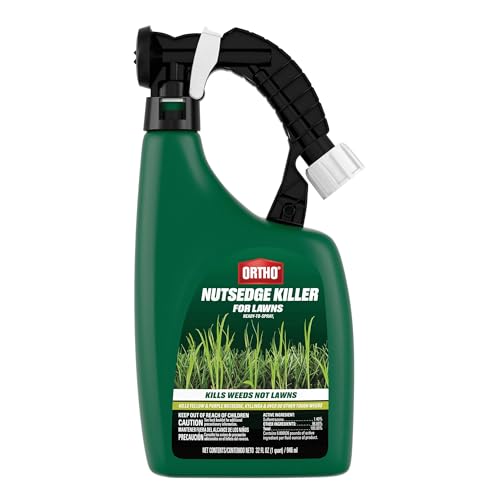
Ortho Nutsedge Killer for Lawns Ready-to-Spray, 32 oz
$21.99A hose-end bottle labeled for nutsedge, kyllinga, wild violet and dollarweed on established turf, covering 5,000 sq ft with no mixing.
Best for: the wet-season weeds of south Florida
Check price on Amazon
EGO Power+ ST1623T 16 in. String Trimmer Kit with 4.0Ah Battery
$299.00A 16 inch trimmer with an auto-feeding LINE IQ head and carbon fiber shaft, with EGO citing up to 60 minutes on the included 4.0Ah battery, for a season when edges grow every week.
Best for: large lots with long bed and walk edges
Check price on Amazon
Chapin 16200 2-Gallon Pump Sprayer
$26.44A 2 gallon poly pump sprayer with an adjustable cone nozzle and in-tank filter, enough for spot treatments finished before the heat and the afternoon storms.
Best for: targeted weed control
Check price on AmazonHow we chose
We did not test these products in person. Picks are researched from manufacturer specifications and owner manuals, engine and safety certifications where they apply, warranty terms, public recall records, and the recurring themes in verified owner reviews. We favor established brands with large review counts and parts support, match each pick to a real yard size or task, and place it in the tier where its price and capability actually belong.
Frequently asked questions
Should I turn my sprinklers off in the rainy season in zone 10?
Turn them down or off. Daily storms often supply more water than the lawn can use, and an irrigation system running on a fixed schedule on top of that pushes fungal disease and washes nutrients off site. A rain sensor or a smart controller handles it automatically, skipping cycles after rainfall and resuming when a dry stretch arrives.
How often should I mow in zone 10 in summer?
Every five to seven days for St. Augustine and bermuda, and every seven to ten days for bahia and zoysia. Growth is at its fastest during the warm wet months, and the one-third rule still applies: a lawn held at 4 inches should be mowed before it passes 6. Skipping a week usually means removing too much at once and stressing the grass.
Can I fertilize my lawn during the summer in zone 10?
Check local ordinances before you do anything, because many counties restrict nitrogen and phosphorus during the summer rainy season. Where feeding is permitted, half a pound of nitrogen per 1,000 square feet from a slow-release source is plenty. Heavy summer nitrogen in this climate produces more mowing, more gray leaf spot and larger chinch bug populations rather than a better lawn.
What are the small moths flying up from my lawn?
Most likely tropical sod webworm adults, which fly up in short bursts when you walk across the grass at dusk. The moths do no damage themselves, but they lay eggs and the larvae chew grass blades ragged and notched, thinning an area within days. Look for chewed blade edges and green frass pellets in the thatch to confirm before treating.
Researched, not professional advice. This page is compiled from published specifications, manuals, labels and owner-review consensus, not hands-on testing. Follow the manufacturer's instructions and product label, and consult a qualified professional where safety, chemicals, fuel or structures are involved. As an Amazon Associate we earn from qualifying purchases.