Seasonal Lawn Care
Zone 6 Summer Lawn Care Calendar: What to Do and When
Quick answer
Zone 6 summers are the hottest in cool-season country, so tall fescue lawns run defensively. Mow at 3.5 to 4 inches, water 1.5 inches per week in one or two deep soakings, expect brown patch once nights hold above 65 F, and apply no nitrogen to cool-season grass until the heat breaks.
This is the season that decides whether a zone 6 lawn needs renovating in fall. Cool-season roots stop growing above roughly 75 F soil, and zone 6 sits there for weeks, so the lawn spends summer living on reserves. Tall fescue handles it better than bluegrass or ryegrass because its roots go deeper, which is why it became the default grass across the transition zone.
Warm-season lawns do the opposite: zoysia grows hardest now and takes its nitrogen through summer. Set watering with the sprinkler zone calculator, check flow over long runs with the hose pressure loss calculator, and time a cut with the mowing time calculator.
On this page
What should I do to my lawn in zone 6 in summer?
Mow high, water deep, treat weeds while they are small, and keep the fertilizer bag closed until the heat breaks.
| Task | Trigger | Timing cue in zone 6 | Notes |
|---|---|---|---|
| Raise tall fescue to 3.5 to 4 in | Air consistently above 80 F | Early summer | The single most effective heat and crabgrass defense you have. |
| Water 1.5 in per week | Footprints stay visible, color goes blue-gray | Through the heat | One or two deep soakings between dawn and mid morning. |
| Brown patch watch | Nights above 65 F with humidity | Mid summer, on tall fescue | Circular tan patches. No nitrogen, morning watering only, improve airflow. |
| Post-emergent crabgrass control | Crabgrass at 1 to 4 leaves, air below 85 F | Early summer | The BASF Drive XLR8 Crabgrass Killer Concentrate, 64 oz is labeled for crabgrass, foxtail and goosegrass. |
| Nutsedge control | Sedge above turf days after a mow | Mid summer, the zone 6 peak | The Sedgehammer Plus Turf Herbicide, 13.5 g Packet or the ready-to-spray Ortho Nutsedge Killer for Lawns Ready-to-Spray, 32 oz. |
| Grub watch | Soil above 70 F, then turf lifting like carpet | Mid to late summer | Count grubs in a cut square foot before treating. |
| No nitrogen on cool-season grass | Air above 85 F | Peak summer | Pale lawns can take the low-burn Milorganite Slow-Release Nitrogen 6-4-0 Fertilizer, 5 lb Bag (4-Pack). |
| Zoysia lawns only: feed now | Fully green and growing | Early to mid summer | Warm-season grass takes its nitrogen in the heat, unlike the lawn next door. |
Disease and grub cues follow extension guidance; all product timing follows the label. Soil temperature is read at 2 inches deep.
How do I stop brown patch in a zone 6 lawn?
Brown patch is a fungal disease that shows as roughly circular tan patches, often a foot to several feet across, with lesions on individual tall fescue blades. It needs three things: night temperatures above about 65 F, extended leaf wetness and, usually, too much nitrogen. You control two of those for free.
Water only between dawn and mid morning so blades dry before dark, and never water in the evening in a humid zone 6 summer. Hold nitrogen entirely once air is consistently above 85 F, because feeding into an outbreak makes it worse. Mow at 3.5 to 4 inches with a sharp blade, since torn tips are open wounds, and avoid mowing wet grass to limit spreading it. Most home lawns recover without a fungicide once weather breaks; if you do treat, a labeled turf fungicide is a preventive tool rather than a cure. More on the grass itself is in tall fescue.
How much water does a zone 6 lawn need in summer?
More than any other cool-season zone. These are weekly totals including rainfall, for lawns you intend to keep green.
| Grass | To stay green | To survive dormant | Note |
|---|---|---|---|
| Tall fescue | 1.5 in | 0.5 in every 2 to 3 weeks | Deepest roots; stays green longest without help |
| Kentucky bluegrass | 1.5 in | 0.5 in every 2 to 3 weeks | Goes dormant readily, recovers from rhizomes |
| Fine fescue | 1 to 1.25 in | 0.5 in every 2 to 3 weeks | Dislikes heavy water; rots in poorly drained heat |
| Zoysiagrass | 1 in | Tolerates extended dry spells | Warm-season, actively growing through the heat |
Deliver the weekly total in one or two deep soakings between dawn and mid morning. Cycling a lawn between green and dormant repeatedly drains reserves and thins the stand more than steady dormancy.
What weeds take over a zone 6 lawn in summer?
Summer annual grasses and sedges, because both love the heat that slows cool-season turf. Crabgrass is the headline, but goosegrass shows up in compacted, wet areas with a flattened whitish center, and dallisgrass forms coarse clumps that come back from rhizomes every year. Yellow nutsedge grows faster than the lawn and stands above it within days of mowing, which is how you identify it from a distance.
Treat them by type, not by guess. Quinclorac products such as the BASF Drive XLR8 Crabgrass Killer Concentrate, 64 oz handle crabgrass and foxtail, sedge needs a halosulfuron product such as the Sedgehammer Plus Turf Herbicide, 13.5 g Packet, and broadleaf concentrates such as the Ortho WeedClear Weed Killer for Lawns Concentrate, 1 gal do nothing to any of them. Nothing works as well as a thick lawn mowed at 4 inches. See goosegrass, dallisgrass and yellow nutsedge.
What gear does a zone 6 summer need?
Irrigation that runs reliably and the two herbicide types summer actually calls for. More in the best smart sprinkler controllers and the best lawn sprayers.

Hunter PRO-HC WiFi Sprinkler Controller, 12 Zone
$354.90A contractor-grade Hydrawise controller with predictive weather scheduling, color touchscreen, sensor inputs, master valve output, wire fault detection and optional flow meter leak alerts.
Best for: larger systems doing the most watering of the year
Check price on Amazon
Nelson Rain Train Traveling Sprinkler, 13,500 sq ft
$77.75A cast iron tractor that follows the laid-out hose up to 200 feet with three speeds and automatic shut-off, covering up to 13,500 square feet in one run.
Best for: big lawns watered from a spigot
Check price on Amazon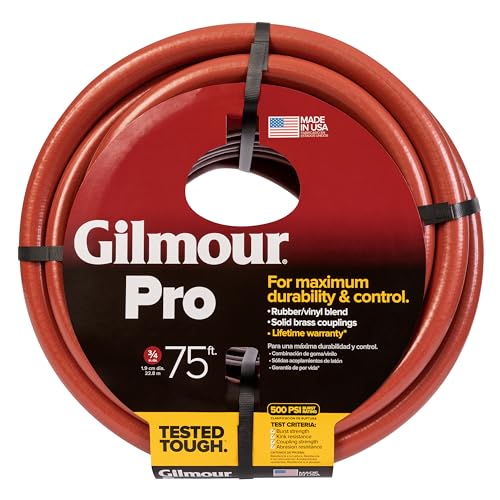
Gilmour Pro Commercial Heavy Duty Hose, 3/4 in x 75 ft
$72.59A double-reinforced commercial rubber and vinyl hose with 400 psi burst strength, brass couplings and a steel spring guard at the spigot, made in the USA.
Best for: feeding impact and traveling sprinklers
Check price on Amazon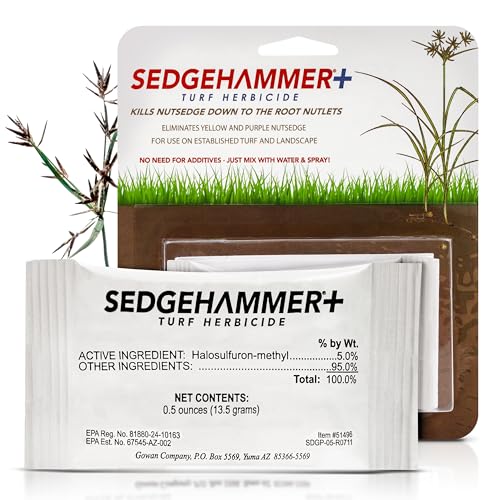
Sedgehammer Plus Turf Herbicide, 13.5 g Packet
$13.99A single pre-measured packet with built-in surfactant that treats purple and yellow nutsedge across 1,000 square feet without harming the turf around it.
Best for: spot-treating sedge patches
Check price on AmazonHow we chose
We did not test these products in person. Picks are researched from manufacturer specifications and owner manuals, engine and safety certifications where they apply, warranty terms, public recall records, and the recurring themes in verified owner reviews. We favor established brands with large review counts and parts support, match each pick to a real yard size or task, and place it in the tier where its price and capability actually belong.
Frequently asked questions
Why does my tall fescue get circular brown patches?
That pattern is usually brown patch, a fungal disease that takes hold when nights stay above about 65 F with high humidity and leaves stay wet. Evening watering and excess nitrogen make it far worse. Water only between dawn and mid morning, stop feeding until the heat breaks, mow at 3.5 to 4 inches with a sharp blade, and expect recovery when the weather changes.
Should I fertilize my zone 6 lawn in summer?
Not if it is cool-season grass. Nitrogen in heat drives soft growth that burns and feeds brown patch, and cool-season lawns take most of their yearly nitrogen in fall. A pale lawn can have a light slow-release application such as Milorganite at label rate. Zoysia is the exception: warm-season grass is growing hardest now and takes its nitrogen through summer.
How high should I mow tall fescue in a zone 6 summer?
At 3.5 to 4 inches, at the top of the range through the hottest weeks. Taller leaf shades the soil, keeps roots cooler, holds moisture and denies crabgrass seed the light it needs to germinate. Follow the one-third rule, which at 4 inches means mowing before the grass passes about 6 inches, and keep the blade sharp so tips are cut rather than torn.
Researched, not professional advice. This page is compiled from published specifications, manuals, labels and owner-review consensus, not hands-on testing. Follow the manufacturer's instructions and product label, and consult a qualified professional where safety, chemicals, fuel or structures are involved. As an Amazon Associate we earn from qualifying purchases.