Weed Control
Creeping Charlie (Ground Ivy): Identification and Control
Quick answer
Creeping Charlie is a perennial mint that spreads by stolons, so pulling it fails and 2,4-D alone barely checks it. Triclopyr is the active that works, applied in fall while the plant is still green, and repeated over more than one season. Shade and thin turf are why it is there.
Creeping Charlie, also sold as ground ivy, is a mint. Crush a handful and you get the smell, and the square stem confirms it. Like other mints it runs sideways on stolons that root at every node, so a patch is often one connected plant and a torn-off handful leaves dozens of rooted crowns behind.
It is a shade specialist. It fills the ground under maples and on the north side of a house where turf has thinned, which means the herbicide is only half the job. Plan the reseeding with the grass seed calculator and pick a grass that tolerates the light you actually have.
On this page
How do I identify creeping Charlie?
| Trait | Creeping Charlie (ground ivy) |
|---|---|
| Weed type | Broadleaf, in the mint family |
| Life cycle | Perennial; stolons and roots survive winter |
| Season | Cool season; flowers in spring, grows again through fall |
| How it spreads | Stolons rooting at every node, plus seed |
| Stem | Square in cross-section, the classic mint giveaway |
| Leaf | Round to kidney-shaped with scalloped edges, opposite each other on the stem, minty when crushed |
| Flower | Small purple to blue funnel-shaped flowers in spring, in clusters at the leaf joints |
| What it says about the lawn | Shade, moist and often fertile soil, and turf too thin to hold the ground |
Common mallow and henbit are the usual mix-ups. Mallow leaves are rounder with no mint smell, and henbit is an upright winter annual rather than a creeper.
Why is creeping Charlie taking over my lawn?
It grows where grass cannot. Ground ivy tolerates shade that thins Kentucky bluegrass and it likes damp, fertile soil, so the ground under trees and along shaded foundations is ideal. Once a stolon reaches bare soil it roots and keeps going, spreading horizontally under the mower where blades never touch it.
Mowing is no help and can hurt, since chopped stolon pieces root where they land. Raking a patch out has the same effect. The two cultural levers that matter are light and turf density: thin the tree canopy where you reasonably can, and overseed with a shade-tolerant grass such as fine fescue. Options are compared in the best grass seed for shade.
What kills creeping Charlie without killing grass?
This is a weed where the active ingredient genuinely decides the outcome. Products built on 2,4-D alone tend to burn the tops and leave the stolons alive.
| Method | When | What it involves |
|---|---|---|
| Triclopyr products | Fall, while plants are green and growing | The most reliable home-lawn active on ground ivy. Check the turf list, since triclopyr can injure warm-season grasses. |
| Three-way broadleaf mixes | Fall, second choice | Mixes with dicamba do better than straight 2,4-D, but expect partial control and a repeat application. |
| Repeat treatment | Following fall, per label interval | Plan on two or three rounds across more than one season. A single application almost never finishes a patch. |
| Overseed shade-tolerant grass | Late summer to early fall, soil 50 to 65 F | Fine fescue or a dense shade mix, so the cleared ground does not simply refill with ground ivy. |
| Reduce shade where possible | Any time | Thinning lower tree limbs raises light at ground level and shifts the balance back toward turf. |
| Hand pulling | Small new patches only | Every rooted node must come up. Fragments left behind restart the patch, so this works on new invasions, not established mats. |
| Borax home remedies | Not recommended | Extension guidance warns that the margin between injuring ground ivy and injuring turf is narrow, and boron builds up in soil. |
Treat in fall rather than spring. The plant is moving sugars to its roots then, and a systemic herbicide moves with them.
Which products should I look at?
For the chemistry that works, look for a triclopyr concentrate and read its turf list before buying. Among catalog broadleaf products, Ortho WeedClear Weed Killer for Lawns Concentrate, 1 gal is labeled for over 250 weeds on most turf types and treats up to 64,000 sq ft, and Spectracide Large Plot Weed Stop for Lawns Concentrate, 1 gal is the lower-cost equivalent, rainproof after 6 hours. Both are worth using on a mixed weed problem, but on ground ivy specifically expect to repeat.
For the reseeding half of the job, Pennington Smart Seed Dense Shade Mix, 7 lb covers 1,750 sq ft in 2 to 6 hours of sun, and Scotts EZ Seed Patch and Repair Sun and Shade, 10 lb handles small bare patches with seed, mulch and fertilizer in one bag. Do not reach for Roundup Weed and Grass Killer4 Concentrate, 1 gal in turf: it is non-selective and kills the grass you are trying to restore.
What gear helps with creeping Charlie?
A sprayer for the fall application and seed for the ground you win back. Details on the overseeding step are in how to overseed a lawn.

Smith Performance Sprayers R200 2-Gallon Compression Sprayer
$55.97A 2 gallon compression sprayer with Viton seals and a stainless wand, built to survive the repeated herbicide use this weed demands.
Best for: multi-season spot spraying
Check price on Amazon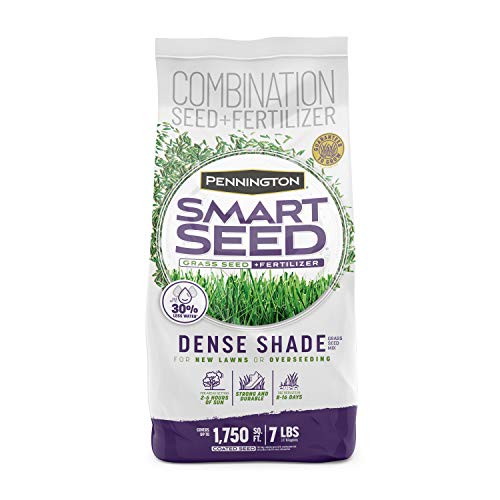
Pennington Smart Seed Dense Shade Mix, 7 lb
$28.47A ryegrass, bluegrass and fescue blend for areas seeing 2 to 6 hours of sun, with fertilizer included and 1,750 sq ft of coverage.
Best for: reseeding under trees
Check price on Amazon
Yard Butler ID-6C Manual Lawn Coring Aerator
$48.95A step-on coring tool pulling two plugs per push, which gives new seed pockets of loose soil in shaded, compacted ground.
Best for: small shaded areas before overseeding
Check price on AmazonHow we chose
We did not test these products in person. Picks are researched from manufacturer specifications and owner manuals, engine and safety certifications where they apply, warranty terms, public recall records, and the recurring themes in verified owner reviews. We favor established brands with large review counts and parts support, match each pick to a real yard size or task, and place it in the tier where its price and capability actually belong.
Frequently asked questions
Why does my weed killer not work on creeping Charlie?
Most home products lean on 2,4-D, which is weak on ground ivy. The plant also spreads by stolons, so burning off the tops leaves rooted nodes that regrow within weeks. Look for triclopyr on the label, apply in fall while the plant is still green and actively growing, and plan a repeat application. Spring treatments on this weed are noticeably less effective.
Can I pull creeping Charlie out by hand?
Only on small, new patches. The stems root at every node, so a mat is anchored in dozens of places and any fragment you leave restarts it. Pulling also breaks stolons into pieces that root where they fall, which is why raking or tilling a patch usually makes it worse. On established mats, a fall herbicide application is the practical route.
Will creeping Charlie come back after I kill it?
Often, for two reasons. Surviving stolon nodes regrow, which is why two or three treatments over more than one season is normal. More importantly, the shaded thin ground that let it in is still shaded and thin after the herbicide works. Overseed with a shade-tolerant grass and raise light levels where you can, or the cleared area simply refills.
Researched, not professional advice. This page is compiled from published specifications, manuals, labels and owner-review consensus, not hands-on testing. Follow the manufacturer's instructions and product label, and consult a qualified professional where safety, chemicals, fuel or structures are involved. As an Amazon Associate we earn from qualifying purchases.