Seasonal Lawn Care
Zone 9 Summer Lawn Care Calendar: What to Do and When
Quick answer
Zone 9 summers are hot, wet and long. Mow St. Augustine and bahia at 3.5 to 4 inches every five to seven days, turn irrigation down or off once the rainy season starts, and watch for chinch bugs and sod webworms. Many counties restrict nitrogen during the rainy months.
A zone 9 summer is the opposite of a northern one. Grass grows flat out, afternoon storms often supply more water than any sprinkler would, and the problems are insects, disease and weeds rather than drought. The most useful thing many owners do all summer is turn the irrigation controller down.
Two numbers keep the season under control: how much water actually lands on the lawn, and how much nitrogen goes on at once. The sprinkler zone calculator gives run times for an inch of water, and the fertilizer calculator keeps each feeding at or under a pound of nitrogen per 1,000 square feet.
On this page
What does a zone 9 summer lawn care schedule look like?
Peak growth runs for months here, not weeks. Expect to mow on a five to seven day interval and to spend more time on pests than on fertilizer.
| Task | Trigger | Timing cue | Notes |
|---|---|---|---|
| Mow every 5 to 7 days | Full-speed growth | All summer | Never cut more than one third of the blade at a time |
| Cut irrigation back | Regular afternoon storms | Through the rainy season | Rain sensors and smart controllers pay for themselves here |
| Check local fertilizer rules | Before any summer feeding | Start of the rainy season | Many counties restrict nitrogen and phosphorus during these months |
| Light feeding where allowed | Actively growing turf | Every 6 to 8 weeks | 0.5 lb N per 1,000 sq ft; slow release is safer in heat |
| Chinch bug check on St. Augustine | Hot dry sunny strips, soil above 70 F | Through summer | Straw patches that spread and do not respond to water |
| Sod webworm check | Ragged, notched blades and moths at dusk | Mid to late summer | Damage looks like a bad scalping that will not grow out |
| Disease watch | Humid nights and wet leaf blades | Through summer | Gray leaf spot on St. Augustine, especially after nitrogen |
| Spot-treat sedges | Sedge outgrowing turf between mows | Early to mid summer | Sedgehammer Plus Turf Herbicide, 13.5 g Packet or Ortho Nutsedge Killer for Lawns Ready-to-Spray, 32 oz |
| Hold off broadcast herbicide | Air above 85 to 90 F | Peak summer | Labels prohibit it; injury risk outweighs weed control |
| Sharpen the blade mid season | Ragged, whitened cut tips | Mid summer | A long mowing season dulls a blade twice over |
Wet soil plus heavy nitrogen is the combination behind most summer disease in this zone. When in doubt during the rainy season, mow high, water less and feed later.
How much should I water a zone 9 lawn in summer?
Sandy soils across much of zone 9 hold little water, so the pattern that works is smaller amounts more often, not a single long soak. Rain counts toward every figure below.
| Situation | Per session | Sessions per week | Notes |
|---|---|---|---|
| Sandy soil, St. Augustine | 0.5 to 0.75 in | 2 | Water runs through deep sand before an inch is applied |
| Loam or clay, St. Augustine | 0.75 to 1 in | 1 to 2 | Split the run if water starts to run off |
| Bahiagrass | 0.5 to 0.75 in | 1 | Deep roots; tolerates dry spells better than St. Augustine |
| Bermudagrass | 0.5 to 0.75 in | 2 | Recovers from drought fastest of any grass here |
| Rainy season, any grass | None | 0 | Turn the system off and let rain do the work |
| Watering restrictions in force | Per local schedule | Per local schedule | Many counties set watering days and hours; check before you set a controller |
Water before dawn. Evening watering leaves blades wet through a humid night, which is the condition gray leaf spot and brown patch need.
Why does my St. Augustine have straw coloured patches in summer?
Work through the three usual causes in order. Chinch bug damage starts in the hottest, driest, sunniest strips, often along a driveway or south wall, spreads outward, and does not recover when you water it. Part the grass where green meets yellow and look at the soil surface for small moving insects. Sod webworm damage looks different: blades chewed ragged and notched, turf that looks badly scalped, and small tan moths flying up at dusk. Disease such as gray leaf spot produces spotted lesions on the blades and follows nitrogen and wet leaves.
The response differs for each, which is why identification comes first. Whatever the cause, mowing height helps: hold 3.5 to 4 inches, since short mowing worsens all three. Thin areas can be repaired in the warm months with plugs such as SodPods St. Augustine Seville Grass Plugs, 64 Count. More on the grass is on the St. Augustinegrass page.
Can I fertilize my lawn during the summer in zone 9?
Sometimes, and lightly. Warm-season grass is growing fast enough to use nitrogen, but heavy summer nitrogen in a humid climate drives gray leaf spot, feeds chinch bug populations and builds thatch. Half a pound of nitrogen per 1,000 square feet every six to eight weeks is plenty for St. Augustine, and centipede should get none at all beyond its one small annual feeding.
Local rules matter as much as agronomy here. Many counties in this zone restrict nitrogen and phosphorus fertilizer during the summer rainy season to keep nutrients out of waterways, and those restrictions carry real penalties. Where feeding is allowed, slow-release products such as Milorganite Slow-Release Nitrogen 6-4-0 Fertilizer, 5 lb Bag (4-Pack) or a balanced professional blend such as The Andersons Core 24-6-12 Professional Lawn Fertilizer, 45 lb are gentler than quick-release nitrogen in heat. Liquid options such as Simple Lawn Solutions Advanced 16-4-8 Liquid Lawn Fertilizer, 1 gal suit light, frequent feeding. See liquid vs granular fertilizer and the best lawn fertilizers.
What gear helps most in a zone 9 summer?
Smart irrigation, a mower that holds height through months of growth, and sprayers for spot work. See the best smart sprinkler controllers.

Rachio 3 Smart Sprinkler Controller, 8 Zone
$199.00An 8 zone smart controller whose Weather Intelligence skips watering after rain and adjusts for forecast conditions, which is the single most useful device in a rainy-season climate.
Best for: homes with an existing in-ground system
Check price on Amazon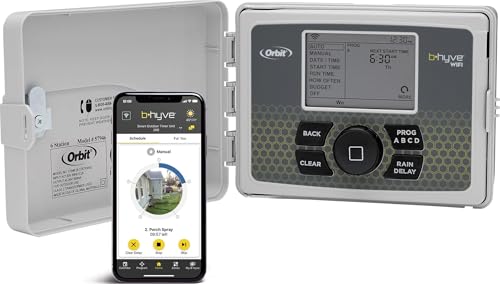
Orbit B-hyve Smart Indoor/Outdoor Sprinkler Controller, 12 Zone
$138.00A 12 zone app-controlled timer in a weatherproof case for garage or exterior mounting, at a lower price per zone than most smart controllers.
Best for: larger systems on a budget
Check price on Amazon
SENIX 22 in. Variable Speed RWD Self-Propelled Gas Mower, 201cc
$509.99A 201cc gas self-propelled mower with a 1.25 to 4 inch height range and variable-speed rear-wheel drive, sized for a lawn that gets mowed most weeks of the year.
Best for: St. Augustine and bahia lawns
Check price on Amazon
My4Sons M4 Battery Powered Backpack Sprayer, 4.5 Gallon
$249.99A 12V battery backpack with adjustable pressure from 20 to 80 psi and a stainless wand, so spot treatments get finished before the heat of the day.
Best for: large lawns treated by hand
Check price on Amazon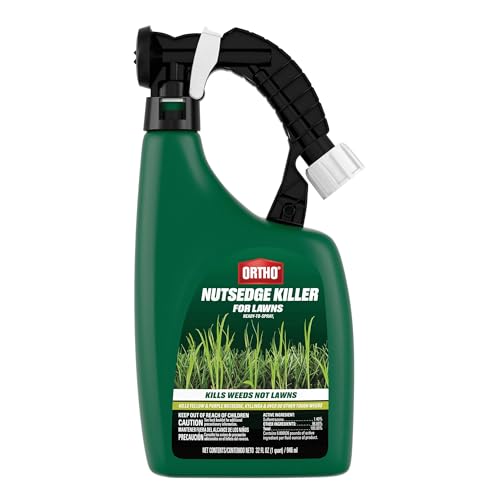
Ortho Nutsedge Killer for Lawns Ready-to-Spray, 32 oz
$21.99A hose-end bottle labeled for nutsedge, kyllinga, wild violet and dollarweed on established turf, covering 5,000 sq ft with no mixing or measuring.
Best for: homeowners who do not want to mix concentrate
Check price on AmazonHow we chose
We did not test these products in person. Picks are researched from manufacturer specifications and owner manuals, engine and safety certifications where they apply, warranty terms, public recall records, and the recurring themes in verified owner reviews. We favor established brands with large review counts and parts support, match each pick to a real yard size or task, and place it in the tier where its price and capability actually belong.
Frequently asked questions
How often should I water my lawn in zone 9 in summer?
Often less than you expect. On sandy soil, about half to three quarters of an inch twice a week suits St. Augustine, and once a week suits bahia. During the rainy season, turn the system off and let rain do the work. Water before dawn rather than in the evening, and check local watering day and hour restrictions before programming any controller.
Can I fertilize my lawn in summer in zone 9?
Lightly, and only where local rules allow it. Many counties restrict nitrogen and phosphorus fertilizer during the summer rainy season. Where feeding is permitted, half a pound of nitrogen per 1,000 square feet every six to eight weeks is enough for St. Augustine. Heavy summer nitrogen in a humid climate drives gray leaf spot, feeds chinch bugs and builds thatch.
What is eating my St. Augustine grass in summer?
Two pests account for most damage. Chinch bugs cause straw coloured patches in hot sunny strips that do not recover with watering, and they can be seen at the soil surface where green meets yellow. Sod webworms chew blades ragged and notched, with small tan moths flying up at dusk. Identify which one you have before buying a product, since the treatments differ.
How short should I cut St. Augustine in zone 9?
Not short at all. Standard St. Augustine types are mowed at 3.5 to 4 inches, and dwarf varieties such as Seville at 2 to 2.5 inches. Cutting lower removes the leaf area the grass uses to shade its own runners, opens the lawn to weeds and makes chinch bug and disease damage worse. Mow every five to seven days so no single cut removes more than a third.
Researched, not professional advice. This page is compiled from published specifications, manuals, labels and owner-review consensus, not hands-on testing. Follow the manufacturer's instructions and product label, and consult a qualified professional where safety, chemicals, fuel or structures are involved. As an Amazon Associate we earn from qualifying purchases.