Seasonal Lawn Care
Zone 7 Winter Lawn Care Calendar: What to Do and When
Quick answer
Zone 7 winters drop to 0 to 10 F, so bermuda and zoysia go fully dormant and straw colored while tall fescue stays partly green. Mowing nearly stops, no lawn gets nitrogen, and the real work is freeze prep for hoses and irrigation plus winter weed control and equipment service.
Winter is the only season in zone 7 when the lawn asks for almost nothing. Warm-season grass is dormant, which is a survival state, not a dead one, and cool-season grass is holding color without growing much. The temptation to fix something is the main risk: fertilizer, traffic on frozen turf and a stray herbicide application all do more harm in winter than at any other time.
Spend the time on equipment and planning instead. The mowing time calculator shows what next season costs in hours per mow, and the lime calculator estimates lime if a soil test came back acidic, since winter freeze and thaw helps work lime into the soil.
On this page
- What does a zone 7 winter lawn care schedule look like?
- Is my bermuda lawn dead or dormant in winter?
- Should I overseed dormant bermuda with ryegrass in zone 7?
- How do I protect equipment and irrigation from a zone 7 freeze?
- Can I kill weeds in a zone 7 lawn in winter?
- What gear is worth buying in a zone 7 winter?
What does a zone 7 winter lawn care schedule look like?
There is no snow program here in the way there is farther north, but zone 7 does get hard freezes, ice storms and the occasional snowfall. Most winter tasks protect equipment and plumbing rather than grass.
| Task | Trigger | Timing cue | Notes |
|---|---|---|---|
| Final mow of the season | Growth has stopped | Late fall into early winter | Fescue at 3 to 3.5 in; do not scalp it going into cold |
| Occasional winter mow | Fescue past one third above height | Mild spells | One or two cuts at most; mow only when the turf is dry and unfrozen |
| Drain hoses and shut off spigots | First hard freeze forecast | Early winter | Disconnect hoses; a connected hose can split the spigot |
| Blow out or drain irrigation | Before sustained freezing | Early winter | Upper zone 7 freezes deep enough to break heads and backflow devices |
| Stay off frozen or frosted turf | Frost on the blades | Every cold morning | Footprints on frozen grass show as brown tracks for weeks |
| Winter annual weed control | Weeds green and growing, air above 50 F | Mid winter | Henbit, chickweed and annual bluegrass are easiest to see now |
| No nitrogen on any lawn | All winter | All winter | Dormant turf cannot use it; it feeds weeds and runs off |
| Service the mower | Off season | Any time | Sharpen or replace blades, change oil, clean the deck, stabilize fuel |
| Service the spreader and sprayer | Off season | Any time | Rinse, dry and oil; dried fertilizer destroys spreader gears |
| Plan and order seed and pre-emergent | Before soil hits 50 F | Late winter | Pre-emergent goes down earlier than most people expect |
Zone 7 winter lows run 0 to 10 F. Warm-season lawns are dormant, not dead, and green up again as soil passes about 65 F in spring.
Is my bermuda lawn dead or dormant in winter?
Dormant, almost always. Bermuda and zoysia in zone 7 turn uniformly straw brown after the first hard freezes and stay that way until soil warms past about 65 F in spring. Dormancy is a survival state: the crowns, rhizomes and stolons at and below the surface are alive while the leaf blades are not.
The quick check is to dig a small plug and look at the stolons and roots. Firm, white roots and pale but pliable stolons mean a live lawn. Mushy brown crowns across an entire area suggest winterkill, which in zone 7 usually follows late fall nitrogen, heavy shade, poor drainage or scalping right before cold. Do not try to green up a dormant lawn with fertilizer or extra water. Grass profiles are on bermudagrass, zoysiagrass and tall fescue.
Should I overseed dormant bermuda with ryegrass in zone 7?
Winter overseeding puts a temporary green cool-season grass over dormant warm-season turf. It is common on southern lawns and a closer call in zone 7, where spring transition is harder on bermuda.
| Consideration | If you overseed | If you do not |
|---|---|---|
| Winter color | Green through winter | Uniform straw brown |
| Seed cost and rate | Perennial ryegrass at 5 to 7 lb per 1,000 sq ft, new-stand rate | None |
| Winter mowing | Regular mowing continues through mild spells | Nearly none |
| Spring transition | Ryegrass competes with bermuda green-up, slowing it | Bermuda greens up on its own schedule |
| Spring pre-emergent | Restricted, because it would also stop overseeded grass | Normal program on schedule |
| Water and fertilizer | Winter irrigation and light feeding needed | None |
Rates follow the perennial ryegrass figures used by the grass seed calculator. Annual ryegrass is coarser, cheaper and dies out faster in spring; it is not in our rate table, so follow the bag.
How do I protect equipment and irrigation from a zone 7 freeze?
Disconnect every hose from every spigot before the first hard freeze. A hose left attached traps water in the bib, and that is what splits pipe inside a wall. Coil hoses such as the Flexzilla Garden Hose, 5/8 in x 50 ft somewhere above freezing, since a frozen hose left full can crack, and drain hose-end timers like the Orbit B-hyve XD 4-Port Smart Hose Timer with Wi-Fi Hub and store them indoors.
In-ground systems need the backflow preventer and lines drained or blown out. Upper zone 7 freezes deep enough to break heads such as the Rain Bird 5000 Rotor 20-Pack with Nozzle Trees and Tools and split brass backflow assemblies, which is an expensive spring surprise. On the mower, either run the fuel out or stabilize it, sharpen the blade, change the oil and clean the underside of the deck; the MoJack ZR350 45005 Riding Mower Lift lifts a lighter tractor for that work. A step-by-step is in lawn mower maintenance.
Can I kill weeds in a zone 7 lawn in winter?
Yes, and it is an underused window. Winter annuals such as henbit, common chickweed and annual bluegrass are green and growing while the lawn is not, which makes them easy to see and easy to hit. Spot-treat on a mild day when air is above 50 F and the weeds are actively growing, using a product labeled for your grass, such as Ortho WeedClear Weed Killer for Lawns Concentrate, 1 gal or Spectracide Large Plot Weed Stop for Lawns Concentrate, 1 gal, with a small sprayer like the Smith Performance Sprayers R200 2-Gallon Compression Sprayer.
Two cautions. Herbicide applied to frozen, frosted or drought-stressed turf injures the grass, and several products are not labeled for St. Augustine or centipede, which do appear in the warmest parts of zone 7. Weed-by-weed detail is on henbit, common chickweed and annual bluegrass, and the safety rules are in the weed killer safety guide.
What gear is worth buying in a zone 7 winter?
Service tools and the things you will need before soil hits 50 F in early spring. Off-season is also when pressure washers get used on patios and drives.

MoJack EZ MAX 45001 Riding Mower Lift
$329.99Lifts the front of a lawn tractor or zero turn 24 inches by hand crank or drill, rated to 450 lb, so blade sharpening and deck cleaning happen safely in the garage.
Best for: riding mower owners who sharpen their own blades
Check price on Amazon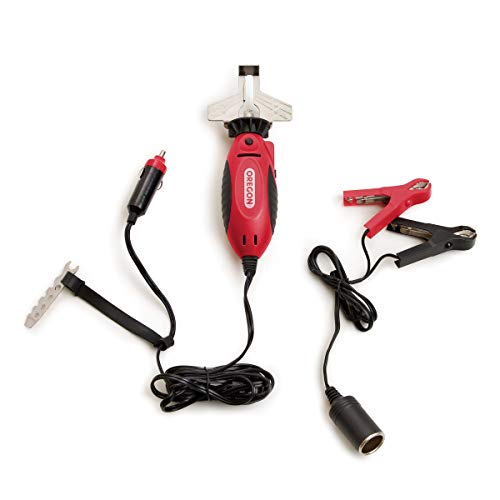
Oregon 12V Sure Sharp Electric Chain Sharpener
$38.74A 12V electric sharpener for chainsaw chains, useful during winter storm cleanup when a dull chain turns a small limb job into an afternoon.
Best for: anyone cutting storm-downed limbs
Check price on Amazon
Greenworks 3000 PSI 2.0 GPM Brushless Electric Pressure Washer
$349.99A 3000 PSI, 2.0 GPM brushless electric pressure washer for drives, walks and patios on the mild days when the lawn wants to be left alone.
Best for: concrete and paver cleaning between seasons
Check price on Amazon
Scotts Halts Crabgrass and Grassy Weed Preventer, 20.12 lb
$49.02A granular crabgrass and grassy weed preventer covering 10,000 sq ft, with no fertilizer mixed in. It has to be on the shelf before soil reaches 50 to 55 F in early spring.
Best for: getting ahead of the spring pre-emergent window
Check price on Amazon
Smith Performance Sprayers R200 2-Gallon Compression Sprayer
$55.97A pro-grade 2 gallon compression sprayer with a stainless wand and Viton seals that survive repeated herbicide use, sized for spot-treating winter annuals.
Best for: targeted cool-weather weed control
Check price on AmazonHow we chose
We did not test these products in person. Picks are researched from manufacturer specifications and owner manuals, engine and safety certifications where they apply, warranty terms, public recall records, and the recurring themes in verified owner reviews. We favor established brands with large review counts and parts support, match each pick to a real yard size or task, and place it in the tier where its price and capability actually belong.
Frequently asked questions
Do I need to mow my lawn in winter in zone 7?
Barely. Bermuda and zoysia are dormant and need no mowing at all. Tall fescue keeps a little color and may grow enough during a mild spell for one or two cuts at 3 to 3.5 inches. Mow only when the turf is dry and unfrozen, since driving or walking on frozen grass crushes the crowns and leaves brown tracks that show for weeks.
Should I fertilize my lawn in winter in zone 7?
No. Dormant warm-season grass cannot take up nitrogen, and cool-season grass is growing too slowly to use much, so most of it either feeds winter weeds or washes off into storm drains. The last cool-season feeding belongs in late fall and the last warm-season feeding four to six weeks before the first frost. Save the rest for the next growing season.
What should I do to my bermuda lawn in winter?
Leave it alone and keep it clean. Blow or sweep leaves and debris off the dormant turf so crowns get light on warm days, keep vehicles and heavy traffic off it, and apply no nitrogen. Spot-treat winter annual weeds on mild days with a product labeled for bermuda. Then spend the time servicing the mower and spreader before spring green-up at 65 F soil.
When should I winterize my irrigation system in zone 7?
Before the first sustained freeze, which in zone 7 generally means early winter. Shut off the supply, drain or blow out the lines, and drain the backflow preventer, which is the part most often cracked by ice. Disconnect every garden hose from its spigot at the same time, since a connected hose traps water in the bib and can split pipe inside the wall.
Researched, not professional advice. This page is compiled from published specifications, manuals, labels and owner-review consensus, not hands-on testing. Follow the manufacturer's instructions and product label, and consult a qualified professional where safety, chemicals, fuel or structures are involved. As an Amazon Associate we earn from qualifying purchases.