Weed Control
Yellow Woodsorrel (Oxalis): Identification and Control
Quick answer
Yellow woodsorrel has three heart-shaped leaflets and yellow flowers, and its seed capsules fling seed several feet, so patches spread fast. Three-way broadleaf products containing triclopyr work best, applied while plants are actively growing and repeated. Thin, dry, underfed turf is what lets it in.
Yellow woodsorrel, usually called oxalis, gets mistaken for clover constantly. The quick test is leaflet shape and flower color: woodsorrel leaflets are heart-shaped with a notch at the tip and the flowers are yellow, while white clover has oval leaflets with a pale watermark and white flower heads. They need different expectations, because oxalis is harder to control.
Its real advantage is seed dispersal. The upright pods split explosively when ripe and throw seed several feet, so one plant seeds a circle around itself. Feeding and density matter here, so start with the fertilizer calculator.
On this page
How do I identify yellow woodsorrel?
| Trait | Yellow woodsorrel (oxalis) |
|---|---|
| Weed type | Broadleaf |
| Life cycle | Perennial in much of its range, behaving as an annual in colder areas |
| Season | Grows spring through fall, most aggressive in warm weather |
| How it spreads | Explosive seed capsules that fling seed several feet, plus creeping stems that root at nodes |
| Leaf | Three heart-shaped leaflets with a notch at the tip, folding down at night |
| Flower | Small bright yellow flowers with five petals |
| Seed pod | Upright, narrow, pointed capsules like tiny okra pods, held above the leaves |
| What it says about the lawn | Thin turf, drought stress, low fertility, and often compacted or sandy soil |
Compare with white clover, which has oval leaflets, a white watermark and white flowers, and black medic, which has yellow flowers but oval leaflets with the middle one on a short stalk.
Why does oxalis spread so quickly?
The seed pods do it. When ripe they split under tension and eject seed several feet from the plant, which is why a single oxalis turns into a scattered colony in one season rather than a slowly widening patch. Stems also root where nodes touch soil, so established plants hold ground while the seed does the expanding.
Conditions matter as much as biology. Oxalis takes thin, dry, underfed turf, and it tolerates heat and drought that stall cool-season grass. A lawn on a real feeding program, mowed high and watered deeply, closes most of the openings. Compare feeding approaches in liquid vs granular fertilizer and pick from the best lawn fertilizers.
What kills oxalis in a lawn?
Oxalis is one of the more stubborn common broadleaf weeds. Expect repeat applications and pair them with the fertility and density work, or it recolonizes from its own seed bank.
| Method | When | What it involves |
|---|---|---|
| Feed and thicken turf | Through the season, most in fall | Dense turf is the only control that keeps working. Oxalis colonizes thin, hungry lawns first. |
| Raise mowing height | Every mowing | Shades the low growth and reduces the bare soil its seed needs. |
| Water deeply in dry spells | Summer | Oxalis handles drought better than cool-season turf, so a dormant lawn gives it an opening. |
| Three-way broadleaf herbicide | Spring and fall, on actively growing plants | Mixes with 2,4-D, dicamba and mecoprop. Partial control is common, so plan a repeat. |
| Products containing triclopyr | Fall for best results | Triclopyr improves control on oxalis compared with 2,4-D alone. Check the turf list for warm-season grasses. |
| Repeat applications | Per label interval | Normal rather than exceptional. Seed keeps germinating after the standing plants die. |
| Pre-emergent herbicide | Spring | Reduces new seedlings, though it does nothing to established perennial plants. |
| Hand pulling | Small infestations, moist soil | Take the whole plant with its rooted stems. Remove pods carefully, since ripe capsules scatter seed when disturbed. |
Do not pull plants with ripe pods and shake them over the lawn. Bag them, because handling a mature plant is an efficient way to seed a wider area.
Which products work on oxalis?
Spectracide Large Plot Weed Stop for Lawns Concentrate, 1 gal and Ortho WeedClear Weed Killer for Lawns Concentrate, 1 gal are the broadleaf concentrates to start with, both listing large numbers of weeds and covering whole lawns economically. For better results on this particular weed, look for a product containing triclopyr, which handles waxy and stubborn broadleaf perennials better than 2,4-D alone.
Syngenta Tenacity Turf Herbicide, 8 oz is a mesotrione option on cool-season lawns with pre and post activity, bleaching treated plants white for a week or two. On the fertility side, The Andersons Core 24-6-12 Professional Lawn Fertilizer, 45 lb covers 15,500 sq ft with quick and slow release nitrogen plus iron, and Milorganite Slow-Release Nitrogen 6-4-0 Fertilizer, 5 lb Bag (4-Pack) is a low-salt slow-release option for hot, dry stretches when burn risk is higher.
What gear helps with oxalis?
A sprayer you will actually use repeatedly, and a spreader for the feeding that closes the turf. Sprayer choices are in the best lawn sprayers.

Smith Performance Sprayers R200 2-Gallon Compression Sprayer
$55.97A 2 gallon compression sprayer with a stainless wand and Viton seals, built to survive the repeated herbicide use oxalis requires.
Best for: multiple applications per season
Check price on Amazon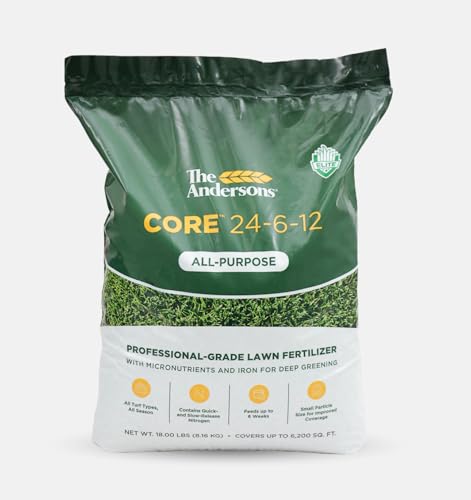
The Andersons Core 24-6-12 Professional Lawn Fertilizer, 45 lb
$89.88Super-fine granules with quick and slow release nitrogen plus iron and micronutrients, labeled for all turf types at 15,500 sq ft per bag.
Best for: even pro-grade feeding
Check price on Amazon
EarthWay 2150 Commercial 50 lb Broadcast Spreader
$279.99A commercial 50 lb push spreader with pneumatic tires and side-spread control for feathered edges along beds.
Best for: lawns up to about an acre
Check price on AmazonHow we chose
We did not test these products in person. Picks are researched from manufacturer specifications and owner manuals, engine and safety certifications where they apply, warranty terms, public recall records, and the recurring themes in verified owner reviews. We favor established brands with large review counts and parts support, match each pick to a real yard size or task, and place it in the tier where its price and capability actually belong.
Frequently asked questions
Is yellow woodsorrel the same as clover?
No, though they are confused constantly. Yellow woodsorrel has three heart-shaped leaflets with a notch at the tip and bright yellow five-petal flowers. White clover has oval leaflets marked with a pale watermark and round white flower heads. The distinction matters because clover signals low nitrogen and often retreats when you feed the lawn, while oxalis needs repeat herbicide applications as well.
Why does oxalis keep coming back after spraying?
Because the seed bank outlives the plants. Ripe capsules fling seed several feet, so treated ground is already seeded for the next flush, and surviving rooted stems regrow. Products built on 2,4-D alone also give only partial control. Use a product containing triclopyr, follow the label interval for repeat applications, and thicken the turf so new seedlings have nowhere to establish.
Does oxalis mean my lawn needs fertilizer?
Often yes, indirectly. Yellow woodsorrel colonizes thin, drought-stressed and underfed turf because it tolerates those conditions better than grass does. It does not fix its own nitrogen the way clover and black medic do, so it is less of a direct fertility signal, but a lawn full of it is usually a lawn that is thin. A soil test tells you what is actually short.
Researched, not professional advice. This page is compiled from published specifications, manuals, labels and owner-review consensus, not hands-on testing. Follow the manufacturer's instructions and product label, and consult a qualified professional where safety, chemicals, fuel or structures are involved. As an Amazon Associate we earn from qualifying purchases.